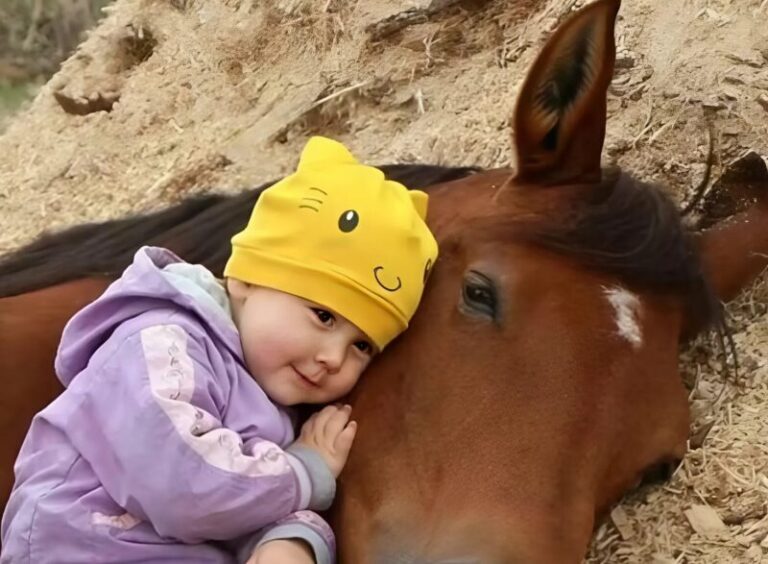
In a peaceful rural area where daily life moved slowly and predictably, a young family lived near a stable that housed a calm and well-trained horse. The environment was simple, surrounded by open fields, wooden fences, and natural landscapes that created a sense of safety and routine. Life in such places often allows for close interactions between humans, animals, and nature, especially when neighbors share land and space in a cooperative way. At the center of this story was a very young child, only two years old, who began spending time near the horse under supervision.
At that early age, children are naturally curious and drawn to movement, sound, and gentle interaction. The horse, known for its calm temperament, did not show signs of aggression or discomfort, which allowed the child to observe it from a safe distance. The parents were careful and attentive, as any responsible caregivers would be. They ensured that all interactions remained supervised and safe. At first, they treated the visits as occasional moments of curiosity rather than something significant. Nothing unusual appeared in the early stages, and the environment remained peaceful and controlled.
Development of a Gentle and Familiar Bond
As time passed, the child became more familiar with the presence of the horse. She would often sit nearby, watching its movements or gently reaching out under supervision. The horse remained calm, responding with patience and slow movements that did not cause alarm. This created a sense of trust between the child, the animal, and the environment.
The family began to view these interactions as harmless and even positive for the child’s emotional development. Spending time around animals is often considered beneficial for children, as it can help develop empathy, awareness, and comfort with nature. In this case, nothing in the behavior of either the child or the horse suggested danger or concern during the early period.
The horse’s calmness contributed to a growing sense of reassurance within the family. There were no incidents, no signs of stress, and no visible reasons for worry. Over time, what began as cautious observation became part of a normal routine in their rural lifestyle.
Subtle Changes That Were Difficult to Explain
After several months, a subtle shift in behavior began to appear in the horse. It was not sudden or dramatic, but rather a gradual change that only someone familiar with the animal could notice. The horse became slightly more attentive whenever the child was present, often focusing its attention more directly on her movements.
It would sometimes stand closer than usual or adjust its position in a way that kept the child within its line of sight. At times, it appeared to be more alert, as if responding to something specific in her presence. These behaviors were not aggressive or fearful, but they were noticeably different from its earlier calm and passive state.
The neighbor who cared for the horse began to observe these patterns more carefully. He had extensive experience with animals and was familiar with normal versus unusual behavior. While he could not identify a specific cause, he felt that the change was consistent enough to be worth mentioning.
A Careful Conversation With the Family
Eventually, the neighbor decided to speak with the child’s parents. He approached the conversation with caution, knowing that raising concerns about a child’s health could be sensitive. He explained what he had observed regarding the horse’s behavior and emphasized that he was not making assumptions, but rather sharing something that stood out over time.
The parents listened attentively. They were surprised, as they had not noticed any direct signs of concern themselves. However, they respected the neighbor’s experience and took his observations seriously. The conversation created a moment of reflection, as they considered whether something subtle might have gone unnoticed.
The neighbor suggested, in a careful and non-alarming way, that it might be wise to have the child evaluated by a medical professional. His intention was not to create fear, but to encourage caution in light of the behavioral changes he had observed in the animal.
A Decision Based on Caution and Responsibility
After discussing the situation, the parents decided to proceed with a medical check-up for their daughter. Their decision was not based on panic, but on responsibility and the desire to ensure their child’s well-being. Even though she appeared healthy and active in everyday life, they felt it was important to be certain.
The medical evaluation included standard examinations appropriate for her age. The process was routine, but carried emotional weight for the family due to the circumstances that led them there. Waiting for results created understandable concern, even though there were no obvious symptoms beforehand.
Eventually, medical professionals identified a condition that required attention. Importantly, it was detected at an early stage, which significantly improved the ability to manage it effectively. Early detection is often a key factor in successful treatment outcomes, especially in pediatric cases.
Early Intervention and Medical Response
Following the diagnosis, the child was placed under appropriate medical care. Treatment began according to established medical guidelines, and the family followed all recommended procedures closely. Medical teams emphasized the importance of early intervention, which allowed for more effective management of the condition.
Over time, the child’s health began to improve. Regular monitoring and treatment helped stabilize her condition, and her overall well-being gradually returned. The family remained closely involved throughout the process, attending appointments and supporting her recovery.
Although the experience was emotionally difficult, the early identification of the condition played a crucial role in preventing further complications. Medical professionals often highlight that early awareness and timely action can significantly improve outcomes in similar cases.
Reflection on the Role of Observation and Awareness
As time passed and the child recovered, the family reflected on the chain of events that led to the diagnosis. They recognized that it was not a single dramatic moment, but rather a combination of small observations and decisions that made a difference.
The neighbor’s willingness to speak up, the parents’ decision to listen, and the medical evaluation all contributed to the outcome. The horse’s behavioral changes, while not medically diagnostic, became part of a sequence of observations that encouraged caution and attention.
The family did not interpret the situation as something supernatural or extraordinary. Instead, they viewed it as a reminder of the importance of awareness, communication, and timely response when something seems unusual, even if the signs are subtle.
Returning to Normal Life With Greater Awareness
As the child’s health stabilized, life gradually returned to a normal rhythm. She continued to grow, explore, and enjoy her surroundings in a healthy and active way. The family resumed their daily routines, though with a deeper sense of attentiveness than before.
The horse remained part of the environment, continuing its calm presence in the stable. Interactions between the child and the animal continued under supervision, but now with a more mindful approach. The family appreciated the peaceful coexistence that had been part of their rural life from the beginning.
A Story of Care, Attention, and Timing
In the end, the experience became a reminder of how important it is to observe small changes and respond thoughtfully. It highlighted the value of communication between neighbors, families, and caregivers when something seems slightly out of the ordinary.
While interpretations of animal behavior can vary widely, the key takeaway for the family was the importance of not ignoring subtle signs and seeking professional guidance when uncertainty arises. The combination of awareness, caution, and timely action played a meaningful role in the outcome.
This story is often shared as an example of how attention to detail in everyday life can sometimes lead to important decisions. It is not about extraordinary claims, but about responsibility, care, and the value of listening when concerns are raised.
