
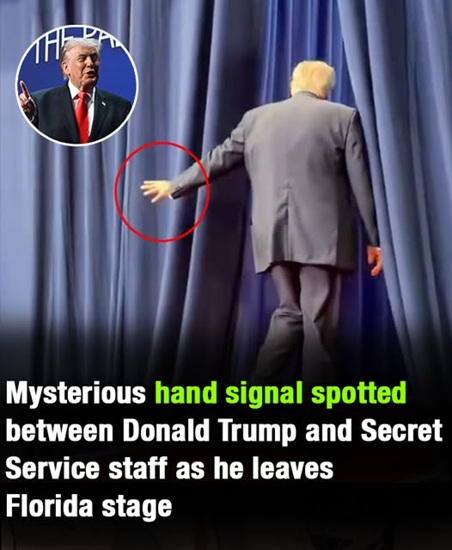
A recent public appearance by Donald Trump in Florida has drawn widespread attention after a short video clip circulated online showing a brief moment during and after his speech. The event reportedly took place at The Villages, a well-known retirement community where political rallies and public speaking engagements are often held. As with many high-profile appearances, the event was attended by supporters, staff, and security personnel.
Including individuals associated with the United States Secret Service, whose role is to provide protection and coordinate safety procedures. During the event, Trump delivered remarks to the audience covering political themes, policy-related commentary, and personal anecdotes. Like many of his public appearances, the speech followed a familiar structure that included audience interaction and informal commentary. Attendees recorded portions of the event, and these recordings later circulated on social media platforms, where they reached a much larger audience beyond those physically present.
The moment that later attracted online attention occurred near the end of the event, when Trump was seen moving away from the stage area. In a short segment of footage, a subtle hand movement can be observed as he exits. At the same time, a partially obscured figure can be seen near stage curtains, which led some viewers to focus on the interaction. Because the footage was brief and recorded from a limited angle, the context of the movement is not fully visible.
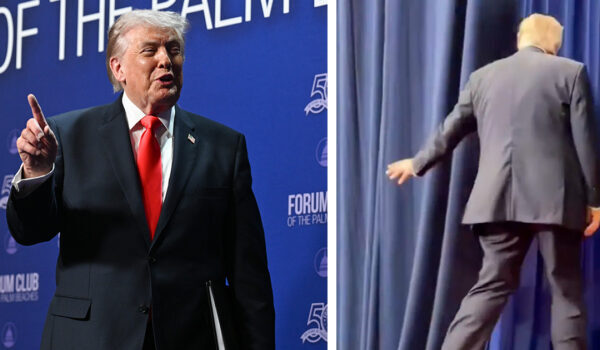
Once the clip was shared widely online, users began discussing its possible meaning. Some interpreted the gesture as a form of communication between the speaker and nearby staff, while others suggested it may simply be part of routine stage exit coordination. In large public events, it is common for staff and security teams to manage movement using subtle cues, especially when coordinating the exit of high-profile individuals.
Social media platforms, particularly X (formerly Twitter), played a significant role in amplifying the discussion. Users shared slowed-down versions of the clip, added commentary, and debated what the hand movement might represent. As is often the case with viral political content, the lack of full backstage footage contributed to differing interpretations among viewers.
At public events involving figures such as Donald Trump, security procedures are typically highly structured. The United States Secret Service and event staff operate with coordinated systems designed to ensure safety and smooth transitions. These systems often involve non-verbal communication methods, such as hand signals or visual cues, which are standard in environments where noise, distance, or crowd presence can limit verbal communication.
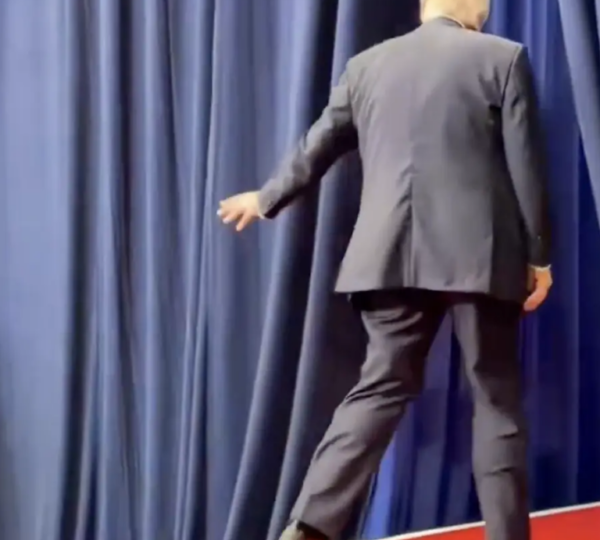
Experts in event security and stage management note that backstage activity during political events can appear unclear when viewed in isolation. What may look unusual to an outside viewer is often part of routine procedures that include timing coordination, secure movement, and crowd control. Because these processes are not always visible to the public, short clips can sometimes lead to misunderstanding when shared without context.
As the video continued to circulate, discussion became divided. Some users suggested that the interaction appeared unusual, while others emphasized that no additional evidence supports interpretations of hidden meaning or coded communication. In many cases involving viral content, viewers tend to assign meaning to brief visual moments that are not fully explained by the footage itself.
It is important to note that no official statement has confirmed any special significance behind the hand movement seen in the clip. In most documented cases of public political events, similar gestures are commonly associated with logistical coordination, such as signaling readiness for movement, confirming timing, or managing stage clearance.
The role of the United States Secret Service in such environments is well established. Agents and support staff are trained to operate efficiently in dynamic public settings where quick coordination is necessary. This often includes subtle visual communication that ensures security protocols are followed without disrupting the event or drawing attention.
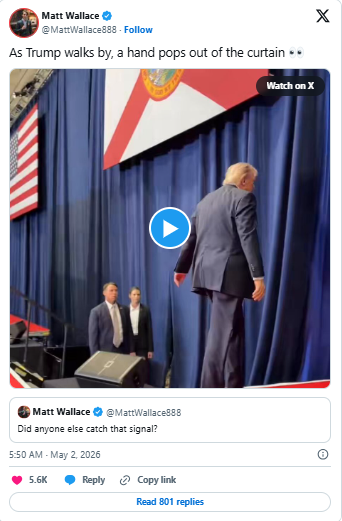
In the digital age, short video clips from political events frequently gain traction online and are reinterpreted in multiple ways. This phenomenon is not unique to any single public figure but is especially common when the subject is highly visible in political discourse. As a result, even ordinary movements can become widely discussed topics when shared in isolation.
Observers of media behavior often highlight that viral content tends to prioritize immediacy over context. A few seconds of video can be viewed millions of times before any clarifying information is available. This dynamic can lead to a wide range of interpretations, some grounded in routine explanations and others based on speculation.
In this case, the clip remains a brief moment from a larger public appearance with no verified indication of unusual activity. While viewers may interpret the gestures differently, there is no confirmed evidence suggesting that the movement carried any coded message or extraordinary significance beyond normal event coordination.
Political events involving Donald Trump are often subject to heightened scrutiny due to his long-standing public profile and strong public interest. As a result, even minor details from appearances can become topics of online discussion. This level of attention is common in modern political communication, where video content spreads rapidly across platforms.
Ultimately, the viral nature of the clip reflects broader trends in how political media is consumed today. Short-form recordings, social media commentary, and rapid sharing contribute to the formation of narratives that may not always reflect the full context of an event. Without complete footage or official clarification, interpretations remain speculative.
At present, the available information indicates that the video captures a routine moment during the conclusion of a public appearance. While online discussion continues, no verified reporting suggests that the hand movement represents anything beyond standard event procedures.

