
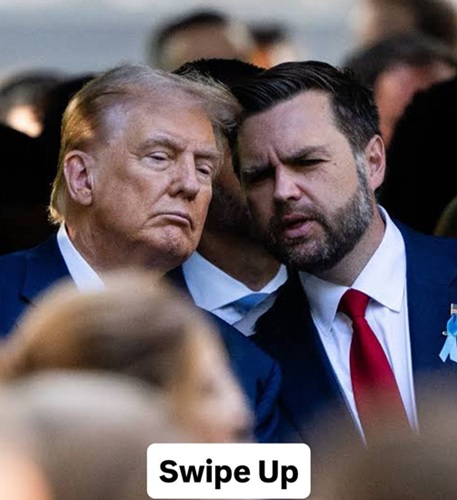
The White House Correspondents’ Dinner, one of Washington’s most anticipated annual gatherings, is traditionally a night marked by humor, media reflection, and high-profile appearances. Held at the Washington Hilton in Washington, D.C., the event typically brings together journalists.Political leaders, and notable public figures for an evening that blends politics with lighthearted commentary. However, during the latest edition of the event.
Online discussions quickly turned toward claims of a possible security incident, creating confusion and concern among audiences following the story. Early social media posts and unverified reports suggested that something unusual had taken place inside the venue shortly after the program began. Some accounts claimed that security personnel moved quickly within the ballroom, while others described what they believed to be loud noises. These claims spread rapidly across platforms, with users sharing secondhand descriptions and speculation about what might have occurred.
However, at the time of writing, no credible or official confirmation supports the claim that gunfire or an active threat took place inside the event. High-profile figures reportedly in attendance included former President Donald Trump, First Lady Melania Trump, and Vice President JD Vance, along with members of the administration and media leadership.
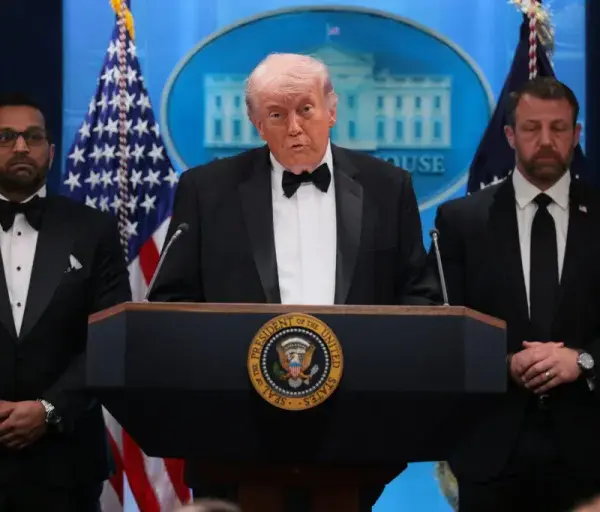
Events of this scale are always accompanied by a significant security presence, often led by the United States Secret Service. It is not uncommon for security teams to act quickly and decisively in response to any perceived irregularity, even if it later turns out to be a precaution rather than a confirmed threat.
As speculation continued to grow, several widely recognized news organizations, including CNN and Fox News, were cited in online discussions. However, careful review shows that these outlets did not confirm claims of a shooting inside the ballroom. This highlights a common issue in fast-moving news cycles, where misinformation can spread rapidly when people rely on incomplete or misinterpreted information.
Inside the ballroom, attendees reportedly reacted to the uncertainty in different ways. In situations where confusion arises, it is natural for individuals to prioritize safety, which may include moving away from perceived danger or following instructions from event staff and security personnel. Large gatherings are typically prepared for a variety of scenarios, and contingency plans are in place to ensure that guests can be guided safely if needed.
Amid the online speculation, no official statement confirmed that a suspect had been apprehended or that a violent incident had occurred. Claims that statements were posted on platforms such as Truth Social should also be treated cautiously unless they can be directly verified from primary sources. In situations like this, distinguishing between confirmed updates and unverified claims is essential to maintaining an accurate understanding of events.
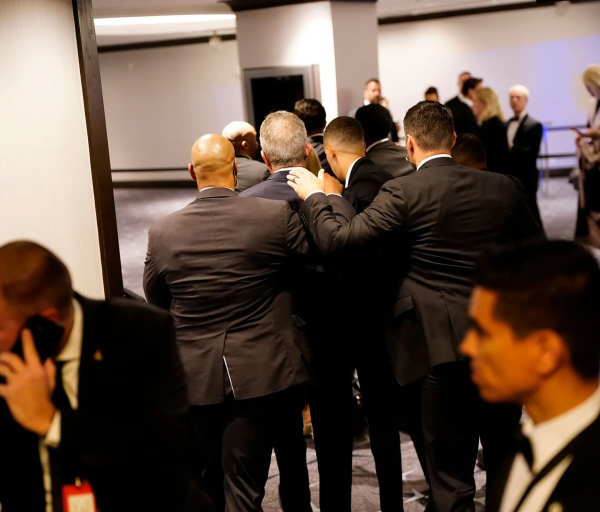
The role of the White House Correspondents’ Association, led by figures such as Weijia Jiang, includes ensuring that the event runs smoothly and that attendees are informed appropriately. In any scenario involving uncertainty, organizers typically coordinate closely with security officials before making announcements. This helps prevent panic and ensures that information shared with the public is accurate and responsible.
Situations like this demonstrate how quickly narratives can develop in the digital age. A combination of high-profile attendees, heightened public interest, and rapid social media sharing can lead to widespread confusion, even when the underlying facts remain unclear. This is why professional journalism relies on verification, multiple sources, and official confirmation before reporting major incidents.
In conclusion, while the claims surrounding a dramatic security situation at the White House Correspondents’ Dinner gained attention online, there is no verified evidence supporting the idea that shots were fired or that a confirmed attack occurred. Readers are encouraged to rely on trusted news sources and verified statements when evaluating such stories. As more information becomes available, credible outlets will provide updates, helping to separate fact from speculation.

