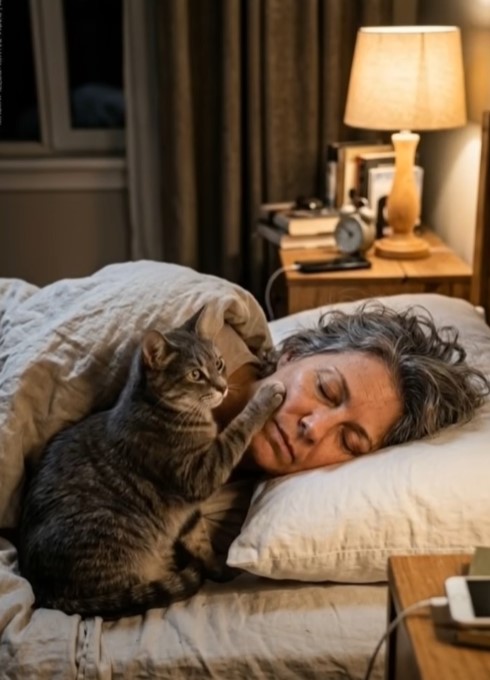
Pets can be a source of comfort and companionship, yet sometimes their actions may leave us puzzled. Anna, a woman in her fifties, found herself facing an unusual situation with her cat, Luna. For months, Luna’s persistent nighttime behavior disrupted Anna’s sleep, but it was only after a visit to the veterinarian that Anna discovered the deeper, life-changing reason behind it. This story highlights not only the bond between humans and their pets but also how seemingly ordinary actions can signal hidden health issues.
A Strange and Persistent Pattern
Anna’s problem started months ago. Each night, between three and four in the morning, Luna would wake her. At first, the behavior seemed like an odd quirk—just a cat being a cat. Luna would lightly tap Anna’s face with her paw, seeking attention. If Anna didn’t respond immediately, Luna would escalate her actions, gently biting or tugging at the blankets. This persistent behavior ultimately forced Anna to leave the bedroom and retreat to the living room in search of sleep. Once Anna was out of bed, Luna would settle down in the bedroom, curl up on the pillow, and peacefully sleep until morning.
Despite Anna’s initial belief that Luna’s behavior was just a strange habit, the nightly interruptions continued for over three months. The lack of sleep began to take a toll on Anna’s well-being. She began to suspect that her stress and exhaustion might be affecting her perception of the situation. After a failed attempt to manage the issue with therapy and prescribed sedatives, Anna turned to a veterinarian for help.
The Appointment: A Calm Beginning with Serious Concerns
When Anna arrived at the veterinarian’s office, she appeared composed and carefully dressed, as if she were accustomed to keeping her life in order. She carried Luna, a sturdy gray cat with thick fur and wide, attentive eyes, into the clinic. Luna appeared calm, showing no signs of distress or aggression. Despite the cat’s calm demeanor, Anna’s story was filled with frustration.
Anna explained to the veterinarian that Luna’s nighttime disruptions had been consistent and unexplainable. Anna, who had initially thought it was a behavioral problem, was now convinced something more serious was going on. She had sought therapy for potential stress and was prescribed sedatives, but they had not worked. Luna’s behavior, while odd, seemed to be the root cause of Anna’s sleeplessness.
The Search for a Medical Explanation
The veterinarian’s first step was to perform a thorough examination of Luna to rule out any underlying health issues. After checking Luna’s heart rate, breathing, and weight, the veterinarian found nothing abnormal. Luna appeared to be in perfect health. She was active, her vital signs were normal, and there were no signs of illness, discomfort, or stress. Luna seemed like a perfectly healthy, content cat, leaving the veterinarian to consider other possibilities for Anna’s sleep disturbance.
Shifting Focus: A Surprising Discovery
After ruling out any medical issues with Luna, the focus shifted to Anna herself. The behavior of pets is often linked to subtle changes in their owners’ physical or emotional states. It’s possible that Luna, with her keen instincts, was reacting to changes in Anna’s health—changes that Anna herself hadn’t even noticed. The veterinarian asked Anna a key question: how did she feel when Luna woke her?
Anna’s response was a revelation. She described feeling sudden physical discomfort when awakened by Luna. Her heart raced, her mouth became dry, and she sometimes felt short of breath. Her blood pressure would spike during these episodes, and she would often feel lightheaded. These symptoms seemed connected to the nighttime interruptions. When Anna moved to the living room, her condition would gradually improve, suggesting that the problem was not with Luna, but with Anna’s health.
The Critical Clue: Breathing Patterns
Anna recalled a crucial detail shared by a neighbor: the neighbor had noticed her unusual breathing patterns while she slept. According to the neighbor, Anna would sometimes breathe very quietly, followed by sudden gasps for air. This observation, combined with Anna’s symptoms, pointed to a possible medical condition rather than a behavioral problem with Luna.
The cat’s behavior, it seemed, was a reaction to something physical happening with Anna’s health, such as difficulty breathing or changes in heart rate. Animals, particularly cats, are known to be highly sensitive to changes in their environment, including their owners’ physical states. Luna’s attempts to wake Anna may have been an instinctive response to these changes, perhaps perceiving them as a sign of danger or distress.
A Turning Point: Medical Investigation
Although the veterinarian couldn’t provide a definitive diagnosis on the spot, it was clear that Anna’s health needed further investigation. The veterinarian recommended a comprehensive medical evaluation to explore the possibility of underlying conditions such as sleep apnea, heart issues, or metabolic disorders. Anna was advised to have her blood sugar levels checked, undergo a full heart examination, and monitor her sleep patterns to check for interruptions in breathing.
The Life-Changing Results
A week later, Anna called the veterinarian with the results of her medical tests. Her voice sounded different—calmer, more energized. The tests had revealed several important health issues.
First, Anna’s blood sugar levels were elevated, suggesting a metabolic concern that required attention. Additional tests showed that Anna had undiagnosed heart problems, which could explain the racing heart and shortness of breath she experienced during the night. Most importantly, tests revealed that Anna was suffering from sleep apnea, a condition in which breathing is interrupted during sleep, leading to oxygen deprivation and disturbed sleep patterns.
A New Path Forward: Treatment and Recovery
The diagnosis marked a new chapter for Anna. With proper medical treatment for her heart condition, along with a focus on improving her sleep patterns, Anna began to feel significant improvements. Her physical symptoms, including the racing heart and difficulty breathing, gradually diminished. With time and careful attention to her health, Anna’s sleep patterns became more regular, and the disruptive nighttime episodes became less frequent.
Luna’s behavior also changed. Once Anna’s health started improving, Luna stopped waking her in the middle of the night. The cat’s behavior shifted from urgent interventions to a more peaceful, calm presence beside Anna during the night.
The Remarkable Bond Between Humans and Animals
Looking back on the experience, Anna recognized how crucial Luna’s behavior had been in alerting her to a serious health condition. Without Luna’s persistent attempts to wake her, Anna might not have sought medical help when she did, and her condition could have worsened over time.
The story of Luna and Anna serves as a reminder that pets are more than just companions—they can also serve as early warning systems for health issues that we might not even be aware of. Luna’s actions, which seemed disruptive at first, turned out to be a vital clue that led to life-saving treatment for Anna.
Conclusion: The Importance of Paying Attention to Pet Behavior
This experience underscores the importance of paying close attention to the behaviors of both our pets and ourselves. Seemingly minor or unusual actions, like a cat waking its owner in the middle of the night, can sometimes indicate a much deeper issue. In Anna’s case, Luna’s persistent attempts to wake her led to the discovery of a critical health condition that might have gone undiagnosed for much longer.
The story of Anna and Luna highlights the powerful, sometimes life-saving connection between humans and their pets. What began as an annoying behavior turned into an invaluable health alert. In the end, Anna not only learned to appreciate Luna’s quiet role in her life, but she also learned to be more aware of her own health and well-being.
Luna’s seemingly simple behavior helped change Anna’s life, and this story serves as a reminder to always observe and listen to our pets—sometimes, they know more about our health than we think.
