
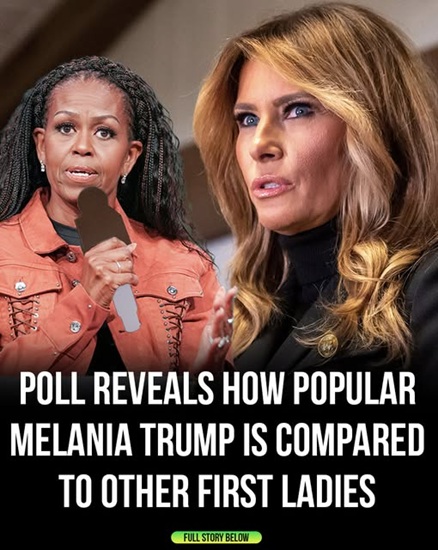
A recent public opinion poll examining how Americans view both current and former First Ladies has generated renewed discussion across political and cultural circles in the United States. The survey, which included responses from roughly 2,255 adults, asked participants to evaluate several First Ladies based on their public image and overall legacy. The results highlight how historical perception, political affiliation, and modern polarization all influence how these figures are remembered and rated by the public.
The findings reflect a broader trend in American political opinion, where even traditionally non-political roles such as the First Lady are increasingly viewed through a partisan lens. While some First Ladies continue to enjoy strong and enduring public approval, others receive more divided or negative evaluations depending on political identity and historical context. This dynamic illustrates how public memory and political perception evolve over time.
Among all the figures included in the survey, Jacqueline Kennedy Onassis stands out as the most positively regarded First Lady overall. Her legacy continues to be associated with cultural influence, historical significance, and a lasting public image that transcends political divisions. Many respondents view her time in the White House as a symbol of grace and national identity during a transformative period in American history.
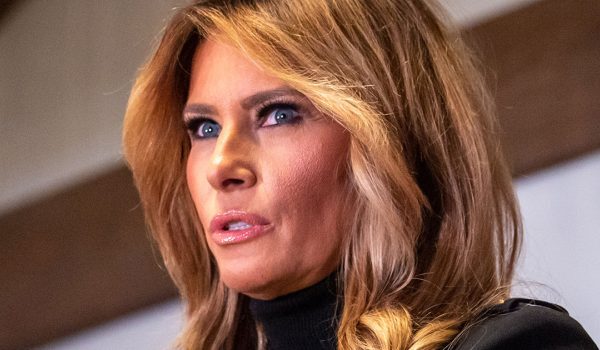
Other First Ladies who received relatively strong favorable ratings include Rosalynn Carter, Nancy Reagan, Lady Bird Johnson, Barbara Bush, Michelle Obama, and Laura Bush. These individuals were generally viewed positively across various demographic groups, although the degree of approval varied. Their public perception is often tied to their advocacy work, public appearances, and roles in shaping social or humanitarian initiatives during their time in the White House.
Michelle Obama, in particular, remains one of the most consistently well-regarded modern First Ladies in public opinion research. Her initiatives related to health, education, and youth development continue to influence how she is viewed by many Americans. Similarly, Rosalynn Carter and Nancy Reagan are often remembered for their humanitarian efforts and their involvement in social causes that extended beyond ceremonial duties.
In contrast, more recent First Ladies tend to receive more mixed evaluations, reflecting the increasing polarization of modern American politics. According to the survey results, Melania Trump received a net negative rating overall, placing her in a lower tier among the First Ladies included in the study. Jill Biden also received a slightly negative net rating, though her results were less pronounced in comparison.
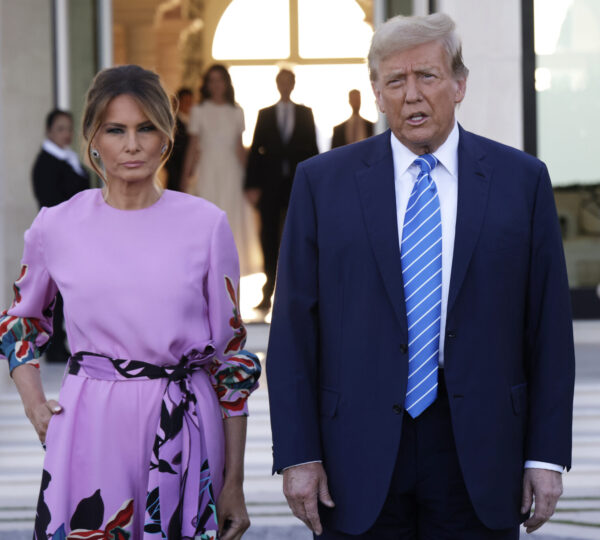
Hillary Clinton, who served as First Lady before later becoming a U.S. Senator and presidential candidate, also received a negative net rating in the poll. These results highlight how public perception of First Ladies is often shaped not only by their role in the White House but also by their later political involvement and public life. In many cases, their broader political identity influences how they are evaluated in retrospective opinion surveys.
The poll also revealed a significant partisan divide in how First Ladies are viewed, particularly in the case of Melania Trump. Respondents identifying with different political parties tended to rate her differently, reflecting the broader polarization that characterizes modern American political opinion. This pattern is consistent across many public figures associated with recent presidencies.
One of the key observations from the survey is that historical distance appears to play a role in shaping public perception. Earlier First Ladies, especially those from the mid-20th century, tend to receive more stable and consistently positive ratings. Their public image is often shaped by historical legacy, cultural memory, and long-term contributions, rather than ongoing political developments.
In contrast, more recent First Ladies are evaluated in a more immediate and politically charged environment. Their public perception is influenced not only by their actions but also by current political debates and media narratives. This creates a more volatile pattern of approval and disapproval, which can shift depending on the broader political climate.
The methodology of the survey reflects an effort to capture a representative snapshot of American public opinion. Participants were selected to reflect diversity in age, gender, education, geographic region, and political affiliation. The data was also weighted to align with recent voting behavior and demographic trends in the United States, ensuring a balanced and representative sample.
The results also show how the role of the First Lady has evolved over time. In earlier decades, the position was often viewed primarily as ceremonial or supportive. However, in more recent administrations, First Ladies have taken on more active public roles, often involving policy initiatives, advocacy campaigns, and media engagement. This evolution has contributed to greater visibility but also increased scrutiny.
Public expectations of First Ladies have also changed significantly. While earlier figures were often judged based on grace, diplomacy, and public presence, modern First Ladies are frequently evaluated based on both personal image and perceived political influence. This shift has contributed to more polarized opinions, particularly in highly divided political environments.
The survey findings also reflect how public memory tends to elevate certain historical figures over time. Jacqueline Kennedy Onassis, for example, continues to be widely admired decades after her time in the White House. Her enduring popularity suggests that historical figures often benefit from long-term cultural legacy, which can soften or stabilize public perception over time.
At the same time, the data underscores how modern political figures are subject to more immediate and fluctuating public judgment. This includes both First Ladies and presidents, whose approval ratings often reflect current events, media coverage, and political sentiment. As a result, their public image is more dynamic and less fixed than that of historical figures.
In conclusion, the poll offers insight into how Americans view First Ladies not only as individuals but also as symbols shaped by time, politics, and cultural memory. While some figures maintain strong and lasting approval across generations, others remain closely tied to the political climate of their era. The findings highlight the complexity of public perception in a modern, highly polarized society, where even traditionally non-political roles are influenced by broader national attitudes.

