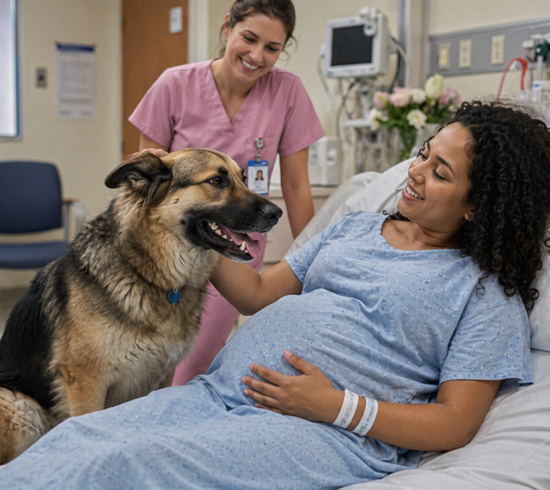
Sarah had worked as a charge nurse in the maternity department at St. Jude’s Medical Center in Portland for nearly seventeen years. Over time, she had become accustomed to the rhythm of the ward—quiet mornings, routine checkups, and carefully monitored pregnancies. Each day followed structured medical protocols designed to ensure the safety of both mothers and unborn children. Despite the emotional weight of the job, Sarah found comfort in its predictability and the sense of purpose it brought.
That particular morning began like many others. Rain tapped softly against the hospital windows, and the hallway lights reflected gently off the polished floors. One of Sarah’s patients, Emily, was a thirty-six-week pregnant woman admitted for observation due to elevated blood pressure. It was her first pregnancy, and like many first-time mothers, she experienced a mixture of excitement and anxiety. The medical team was monitoring her closely to prevent complications and ensure a safe delivery.
A Routine Walk That Became the Start of Something Unexpected
As part of her care plan, Emily was encouraged to take a short, supervised walk through the maternity hallway. This is a common medical practice used to support circulation and reduce discomfort during late pregnancy. Sarah observed from the nurses’ station as Emily slowly walked with careful steps, occasionally resting her hand on her lower back.
For several minutes, everything appeared completely normal. The hospital environment was calm, filled with quiet conversations and the steady beeping of medical monitors. However, that sense of routine was suddenly interrupted by an unusual sound echoing down the corridor. It was fast, irregular, and clearly not part of the normal hospital activity.
The Arrival of a Stray Dog Inside a Restricted Medical Area
Within moments, a large German Shepherd mix appeared in the hallway. The dog was visibly wet from the rain and moved with urgency, its paws echoing sharply against the hospital floor. Its presence immediately caused confusion among the staff, as animals are strictly prohibited in restricted medical units unless part of approved service programs.
Sarah quickly stood up, attempting to assess the situation and ensure patient safety. The dog, however, did not behave in a chaotic or random manner. Instead, it moved directly toward Emily, ignoring other staff members completely. The situation escalated quickly as the dog reached Emily, causing her to lose balance and fall.
Medical staff immediately rushed to assist her, prioritizing both her physical condition and the well-being of the unborn baby. The fall created immediate concern, even though there was no visible external injury.
Medical Evaluation and Unexpected Observations
After the initial incident, Emily was moved to a nearby examination room for assessment. The medical team conducted standard checks to ensure there were no immediate complications from the fall. At first, everything seemed stable, and there were no clear signs of trauma.
However, during further evaluation, subtle abnormalities were detected that required additional investigation. These findings were not caused by the fall itself but were likely pre-existing conditions that had not been fully visible in earlier routine scans. This discovery changed the medical approach immediately, prompting a more detailed diagnostic process.
The healthcare team acted quickly, understanding that pregnancy complications can develop rapidly and require urgent intervention when detected.
Emergency Response and Delivery Procedure
Due to the seriousness of the findings, Emily was transferred to the operating room for emergency care. A multidisciplinary team, including obstetricians, anesthesiologists, and neonatal specialists, was assembled to manage both maternal and fetal risks.
The delivery process required careful coordination under high-pressure conditions. The medical team worked systematically to ensure the safest possible outcome. After a critical period, the baby was successfully delivered but required immediate respiratory assistance.
The neonatal team responded instantly, providing life-support measures in the first minutes of life. After initial instability, the baby’s condition gradually improved, and vital signs stabilized under continuous monitoring.
Recovery and Ongoing Care for Mother and Child
Following delivery, Emily was transferred to intensive postnatal care. Her condition required close observation and continued medical support, but she gradually began to stabilize with treatment. The hospital staff remained focused on ensuring her recovery progressed safely.
The newborn was admitted to the neonatal intensive care unit for specialized care. Over time, medical staff observed positive signs of improvement, including stable breathing patterns and improving vital functions. While the situation had been critical, the coordinated response of the medical team played a key role in the positive outcome.
Reviewing the Incident and Understanding the Dog’s Behavior
After the emergency had been resolved, hospital security reviewed surveillance footage to determine how the dog had entered the building. The footage showed the animal being abandoned near the hospital entrance before running inside during heavy rain.
From there, the dog appeared to move through the building in a direct path toward the maternity ward. While unusual, such behavior in animals can sometimes be influenced by scent tracking or environmental cues, although no definitive explanation was confirmed.
The dog was later taken into custody by animal control for evaluation and safety assessment, as hospital protocol requires careful handling of unauthorized animals in medical facilities.
Emotional Reactions and Human Interpretation
In the days following the incident, emotional interpretations began to emerge among those involved. Emily’s family shared memories of a childhood dog, which added emotional meaning to the situation for them personally. However, from a medical standpoint, there was no scientific link established between past pets and the events that occurred.
Healthcare professionals like Sarah often witness how emotional experiences can shape human interpretation of stressful or unexpected situations. While emotions are valid and meaningful, they are separate from clinical findings and medical explanations.
Sarah remained focused on the medical facts, while also acknowledging the emotional weight the event carried for the family involved.
Medical Perspective on Unexpected Hospital Events
From a healthcare standpoint, the most important outcome of the situation was the timely detection of a serious medical condition. The unexpected incident led to closer examination, which ultimately helped guide necessary medical intervention.
Hospitals are environments where unpredictable events can sometimes occur, and staff are trained to respond quickly and efficiently. In this case, the coordinated response between nurses, doctors, and emergency staff ensured that both mother and baby received appropriate care at critical moments.
The presence of an external factor, such as the stray animal, did not determine the medical outcome, but the rapid clinical response did.
In the end, both Emily and her baby survived the medical emergency and continued to recover under hospital supervision. The situation became a memorable case for staff due to its unusual beginning and complex progression.
Sarah returned to her duties in the maternity ward with a reinforced understanding of how unpredictable healthcare can sometimes be. While most days follow routine patterns, unexpected events can occur at any time, requiring immediate professional response and calm decision-making.
The incident ultimately highlighted the importance of medical readiness, teamwork, and timely intervention in ensuring patient safety. Although the stray dog’s presence created confusion and concern, the final outcome depended entirely on medical expertise and rapid action.
