
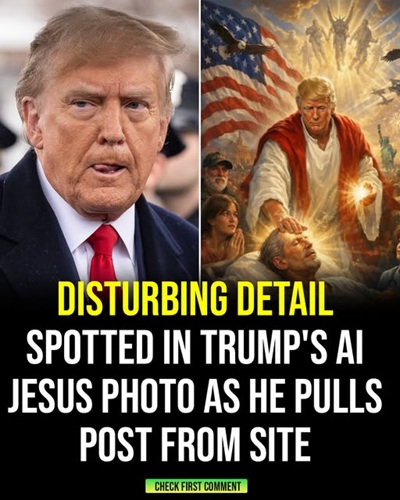
In recent years, the rise of artificial intelligence tools has significantly changed how images, videos, and digital content are created and shared across the internet.
Political figures are now frequently included in AI-generated visuals that spread rapidly on social media platforms, often without proper verification or context.
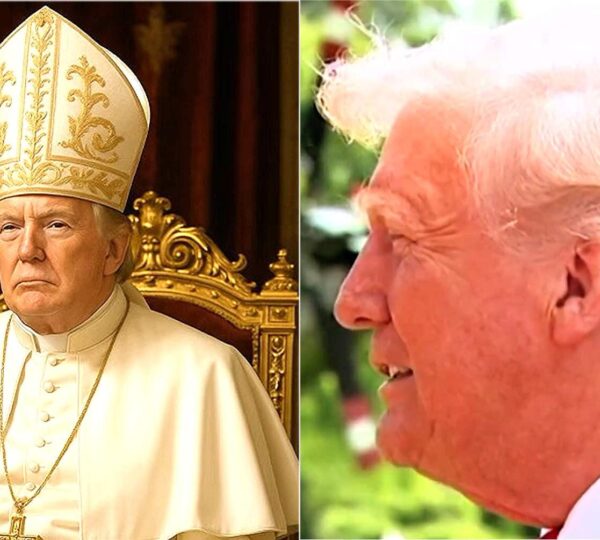
One such widely circulated example involves an alleged AI-generated image connected online to former U.S. President Donald Trump.
The image and its variations have been discussed across multiple social media platforms, although there is no verified evidence confirming its official origin, authenticity, or distribution through verified political channels.
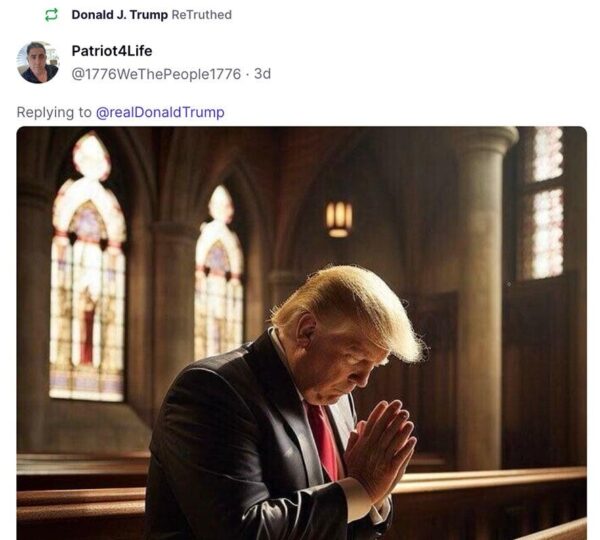
According to online posts and user discussions, the image is described as portraying Donald Trump in a symbolic, religious-style visual composition.
However, these descriptions originate primarily from social media commentary rather than confirmed reports from established and reputable news organizations.
At present, there is no credible or verified documentation proving that such an image was officially posted, endorsed, or shared by Donald Trump himself or any authorized political communication account. This distinction is important when analyzing viral digital content.
Many viral images involving public figures are often created using AI image generation tools, which can produce highly realistic visuals that resemble real photographs.
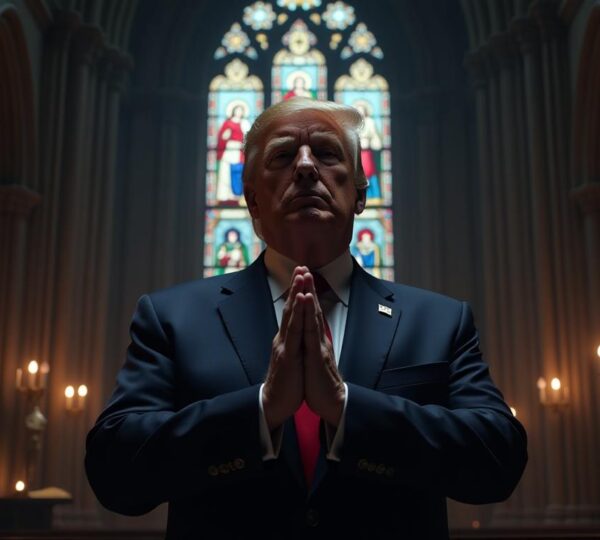
These tools can easily be used for satire, parody, political commentary, or even misleading content designed to attract attention online.
In this specific case, the image is said by users to include symbolic religious and national elements, though exact descriptions vary widely across different social media posts.
Some users claim it includes imagery such as flags, monuments, or allegorical figures, but none of these claims have been independently verified.
Other online discussions suggest that the image may have originated from or been inspired by political fan content or influencer-created media. However, no confirmed source or original upload has been identified that can reliably establish its creation or intent.
As the image circulated, reactions online became highly divided. Some users interpreted it as political satire or symbolic commentary, while others criticized it as inappropriate or misleading, particularly due to its perceived religious associations.
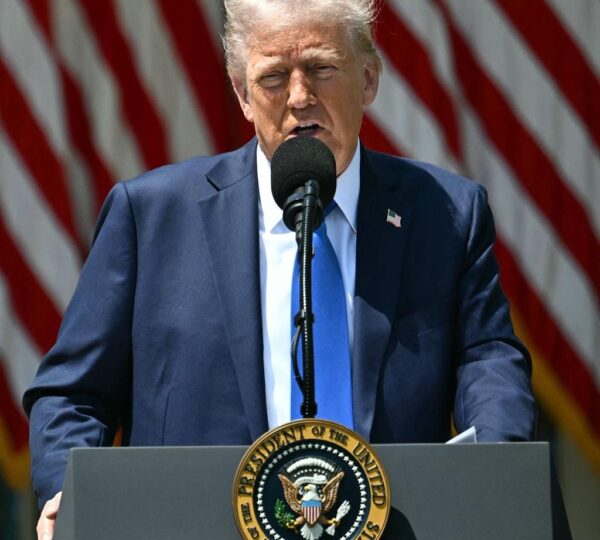
These reactions were largely expressed through social media platforms such as X (formerly Twitter), Facebook, and similar services. However, they represent individual opinions rather than verified statements from official institutions or recognized authorities.
It is also important to highlight that viral digital content often evolves as it spreads. Users may edit, remix, or re-upload altered versions of the same image, which can lead to multiple conflicting interpretations and descriptions of what the original image actually showed.
Because of this, establishing the true origin of such content requires careful verification, including metadata analysis, source tracking, and confirmation from credible reporting outlets. In many viral cases, this level of verification is never completed publicly.
At the time of writing, no major or reputable international news organization has confirmed that Donald Trump posted or deleted any specific AI-generated religious-themed image matching the descriptions circulating online. This lack of confirmation is a key point in assessing the reliability of the claim.
Claims that connect the image to specific political events or international developments are also not supported by verified evidence. Online narratives sometimes attempt to link viral content to real-world geopolitical situations, but these connections are often speculative.
The broader context of this situation reflects a growing global concern about misinformation and AI-generated media. As technology advances, distinguishing between real photographs and artificial images has become increasingly difficult for the average viewer.
Experts in digital media and misinformation studies have warned that AI-generated content can spread rapidly and influence public perception before fact-checking processes can take place. This is especially true when content involves well-known political figures.
In political environments, images carry strong emotional and symbolic weight. When AI-generated visuals depict public leaders in religious or dramatic contexts, they can trigger strong reactions and quickly go viral regardless of authenticity.
Because of these dynamics, fact-checking organizations emphasize the importance of verifying original sources before accepting or sharing viral content as real. Without verification, misleading narratives can easily form and spread.
In this case, due to the absence of reliable confirmation, the alleged image should be treated as unverified online content rather than an established factual event. This helps prevent the spread of misinformation.
It is also worth noting that AI-generated political imagery has become a common form of digital expression. These images are often used for commentary, humor, criticism, or engagement, rather than as factual documentation.
However, the problem arises when such content is shared without context. Once removed from its original intent, AI-generated images can be mistaken for real events or official actions, leading to confusion among audiences.
For this reason, media literacy has become increasingly important. Users are encouraged to question the source of viral content, check whether reputable outlets have reported it, and avoid assuming authenticity based solely on social media circulation.
In summary, the story surrounding the alleged AI-generated image linked to Donald Trump remains unverified and should be understood within the broader context of online misinformation and AI-generated media trends. No confirmed evidence supports it as an official post or real documented event.

