
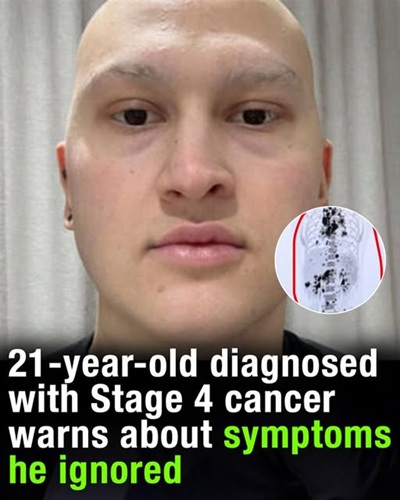
A 21-year-old Australian man has shared his experience of initially mistaking serious cancer symptoms for a simple chest infection before later being diagnosed with stage 4 Hodgkin’s lymphoma.
His story has drawn attention for highlighting how easily early warning signs of serious illness can be overlooked, especially among young adults who often assume symptoms are temporary or harmless.
The young man, identified as Jay Shew, explained that he initially continued his normal daily life without suspecting anything serious was wrong with his health in the early stages of his condition.
At the time, he believed he was dealing with a routine respiratory issue, as his symptoms appeared mild and did not immediately interfere with his ability to function or carry out everyday activities.
Looking back, he described how he, like many others his age, tended not to seek medical attention quickly, often assuming that symptoms would resolve on their own without professional evaluation.

He later reflected on this mindset, noting that many young men in particular tend to ignore early physical warning signs, which can sometimes delay important medical diagnoses.
The first unusual sign in his case came from a routine blood test, which showed elevated calcium levels despite him not feeling significantly unwell at the time.
He stated that he felt normal during this period and had no clear indication that anything serious was developing inside his body at that stage of the process.
Initially, he did not understand the medical significance of the test results and did not connect them to any underlying health condition requiring immediate attention.
Medical professionals later explained that elevated calcium levels can sometimes be associated with serious underlying conditions, including cancers that affect internal organs or bone activity.
Over the following weeks, his physical condition began to change noticeably, even though he personally struggled to recognize the extent of the changes occurring in his body.
Standing at approximately 6-foot-2, he experienced significant and rapid weight loss, eventually dropping to around 154 pounds over a relatively short period.

Friends and family members began to express concern, noticing that he appeared unusually thin, pale, and visibly different from his normal physical appearance.
Despite these comments, he explained that he did not fully perceive the severity of the changes when looking at himself in the mirror during that time.
He described a disconnect between how others viewed him and how he perceived himself, which is common in some cases of gradual physical decline.
At one point, people close to him even questioned whether he might be seriously ill, although he initially dismissed these concerns as unlikely or exaggerated.
As time progressed, his symptoms became more severe and harder to ignore, gradually affecting his daily comfort, sleep patterns, and overall energy levels.
He began experiencing intense lower back pain that would wake him during the night and make normal rest increasingly difficult and uncomfortable.
He described the pain as extremely severe at times, comparing it to a feeling of internal pressure or breaking sensations in his lower back.

Alongside the pain, he also experienced episodes of excessive night sweating, which caused confusion and distress due to their sudden and intense nature.
These night sweats became so severe that he initially misinterpreted them, not immediately realizing they were related to a serious underlying health issue.
During the day, he also experienced extreme fatigue, often requiring frequent rest despite not engaging in physically demanding activities.
Simple daily tasks became increasingly difficult, as his energy levels dropped significantly and his ability to remain active for long periods decreased.
He also reported additional symptoms such as persistent itching, dry skin, and general discomfort in the chest area, which added to his overall health concerns.
Although each symptom individually may have seemed minor, their combination over time formed a pattern that later proved to be medically significant.
He later reflected that many of these symptoms are commonly associated with serious illnesses but are often overlooked when they appear gradually.

As his condition progressed, he initially believed he was suffering from a chest infection or bronchitis due to the presence of respiratory-like symptoms.
He was treated with antibiotics, which provided temporary relief, leading him to believe that the issue might have been a standard infection.
However, shortly after completing treatment, his symptoms returned with increased intensity, suggesting that the underlying cause had not been addressed.
At this stage, his health continued to decline, prompting doctors to conduct more detailed investigations, including advanced imaging scans.
A CT scan was eventually ordered to better understand the cause of his ongoing symptoms and rapid physical deterioration.
The scan revealed that he had stage 4 Hodgkin’s lymphoma, a serious form of cancer affecting the lymphatic system, which plays a key role in immunity.
Hodgkin’s lymphoma occurs when certain white blood cells grow abnormally and can spread through the body if not diagnosed and treated early.
Although it is considered a treatable form of cancer in many cases, its symptoms can closely resemble common illnesses, making early detection challenging.
Common symptoms include swollen lymph nodes, fatigue, night sweats, unexplained weight loss, fever, and persistent itching, many of which he had experienced.
In his case, these symptoms had developed gradually, which contributed to the delay in recognizing the seriousness of his condition.
After diagnosis, he began undergoing treatment aimed at controlling and reducing the spread of the disease in its advanced stage.
The treatment process required significant physical endurance and emotional adjustment as he adapted to the challenges associated with cancer therapy.
After approximately three months of treatment, he shared that he had entered remission, marking a major milestone in his recovery journey.
He described this stage as a turning point in his life, allowing him to begin focusing more on recovery and rebuilding his physical strength.
Reflecting on his experience, he emphasized how quickly life can change and how important early medical attention can be in similar situations.
He encouraged others not to ignore unusual symptoms and to seek medical advice sooner rather than later when something does not feel normal.
He also highlighted that even a simple blood test can sometimes provide early warning signs that may lead to life-saving diagnoses.
He acknowledged that his experience affected not only him but also his family and close friends, who experienced emotional stress during his illness.
Although he mentioned lifestyle factors such as smoking and diet, he also recognized that the exact cause of cancer is often complex and not always clearly identifiable.
His current focus remains on maintaining recovery and raising awareness about the importance of early detection and listening to one’s body.
By sharing his story, he hopes to encourage others, especially young people, to take their health seriously and avoid delaying medical checkups.
His experience serves as a reminder that serious medical conditions can develop even when initial symptoms appear mild or unrelated to major illness.
Today, he continues to recover while using his experience to promote awareness, early diagnosis, and the importance of timely medical care.

