
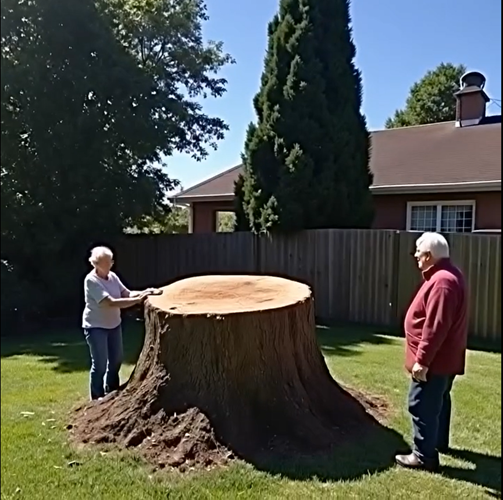
The evening light stretched across our backyard in long, uneven shadows, revealing a stark emptiness where the old oak tree had once stood tall, casting shade and marking seasons for decades.
Its absence felt unnatural, as if a familiar presence had been erased overnight, leaving behind exposed soil, broken roots, and a silence that made the entire yard feel unfamiliar and unsettled.
My parents stood beside me near the back door, both staring at the space where the tree once dominated, their expressions heavy with disbelief, confusion, and a growing sense that something was deeply wrong.
Earlier that day, we had reviewed security footage showing a work crew entering the property boundary, and the footage clearly captured the removal process, raising immediate questions about permission and responsibility.
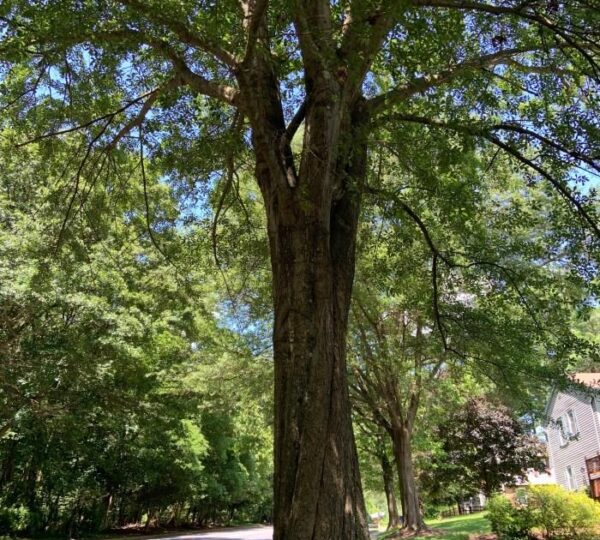
What made the situation more troubling was the involvement of Mr. Collins, our longtime neighbor, who had always appeared friendly, polite, and cooperative during years of casual interaction and shared community living.
The contrast between his usual demeanor and the actions captured on video created a sense of emotional conflict, making it difficult to reconcile the person we thought we knew with the events that had occurred.
Inside the kitchen, the atmosphere was quiet and tense as we gathered around a laptop, replaying the footage again in search of clarity, answers, and a better understanding of what had led to the decision.
My father’s expression remained fixed and serious, his eyes focused on the screen, analyzing each detail carefully while trying to determine whether there had been a misunderstanding or deliberate action involved.
My mother broke the silence first, her voice calm but firm, emphasizing that the tree had been part of our home for many years and represented both emotional and historical significance to our family.
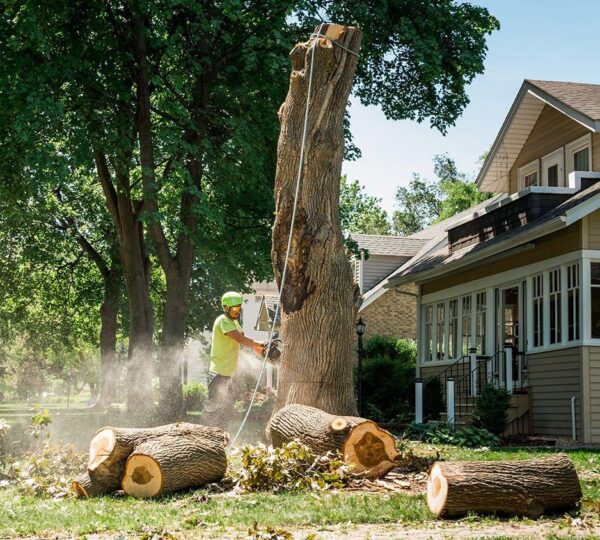
She explained that it was not simply a matter of property maintenance, but rather a loss of something that had become deeply connected to our memories, routines, and sense of stability over time.
My father agreed, though more cautiously, noting that regardless of intent, any action taken without permission on private property required formal review and proper communication through appropriate local channels.
After discussing the situation further, we decided it was necessary to report the matter to the municipal office, bringing all available documentation, including video evidence and a written account of events.
The following morning, we visited the city office, where we were directed to a staff member responsible for property and environmental concerns, who listened carefully as we presented our situation in detail.
We explained the timeline of events, the sudden removal of the tree, and the lack of prior notice or consent, while also providing copies of the footage showing the contractors at work.
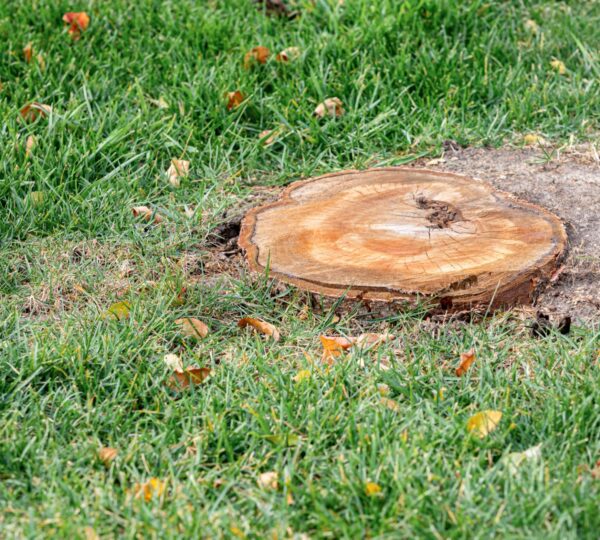
The official maintained a neutral but attentive demeanor, asking clarifying questions to better understand the sequence of events and the nature of any permits or approvals that may have been involved.
After reviewing the materials, she acknowledged that property-related disputes involving vegetation removal could be complex, especially when private boundaries and perceived safety concerns intersected.
She assured us that the matter would be reviewed thoroughly, including checks on whether any authorization had been submitted or whether external contractors had acted under incorrect instructions.
Returning home afterward, the absence of the tree felt even more pronounced, as the yard no longer had its natural focal point, shade structure, or sense of visual balance.
The space where it once stood now appeared exposed, altering not only the physical environment but also the emotional atmosphere of the home we had lived in for years.
Days passed without immediate updates, and during that time, we found ourselves repeatedly looking out the window, adjusting to a landscape that no longer felt complete or familiar.
Mr. Collins continued his routine next door, maintaining his property as usual, which only deepened our uncertainty about whether the situation had been a misunderstanding or a deliberate decision.
The lack of communication created emotional distance between the households, replacing previous familiarity with hesitation, unanswered questions, and quiet discomfort whenever we thought about the incident.
 F
F
Eventually, we received a visit from a city representative accompanied by a professional mediator experienced in resolving neighborhood and property disputes through structured communication and agreement.
They explained that they had spoken with Mr. Collins, who confirmed that he had arranged for the tree’s removal based on his concern that it could pose a potential risk.
According to the mediator, Mr. Collins believed he was acting in preventive interest, although he later acknowledged that proper consultation and permission had not been adequately secured beforehand.
The explanation did not erase the emotional impact of the loss, but it provided context that allowed the situation to be viewed through a more structured and procedural lens.
The mediator proposed a resolution involving restorative action, including the planting of a new tree at no financial cost to us, selected based on our preference and the suitability of the environment.
While it could not replace the original tree or the decades of growth it represented, it was presented as a symbolic step toward repairing the disruption caused by the incident.
After discussing it privately as a family, we agreed to the proposal, recognizing that while the outcome was imperfect, it allowed for closure and the beginning of environmental restoration.
A few days later, preparations were made for planting a new sapling, with careful attention given to soil conditions, spacing, and long-term growth potential in the same location.
As the young tree was placed into the ground, it appeared fragile yet full of potential, standing in contrast to the strength and maturity of what had once occupied that space.
We watched quietly as the soil was carefully packed around its base, marking the beginning of a new chapter in the landscape that had been altered by unexpected loss.
In the weeks that followed, the sapling remained small but steady, adjusting to its environment while gradually establishing roots in the place where something older had once stood.
Over time, the presence of the new tree began to change the atmosphere of the yard again, slowly restoring a sense of balance, even if the memory of the original still remained.
The experience left a lasting impression on our family, highlighting the importance of communication, responsibility, and respect when making decisions that affect shared or neighboring environments.
It also reinforced the idea that while loss can be sudden and disruptive, recovery often comes in gradual stages that require patience, cooperation, and willingness to rebuild.
Standing by the newly planted tree one evening, we realized that although the past could not be restored, the future still offered space for growth, healing, and renewed understanding.

