
In the late 1960s and early 1970s, a period marked by rapid cultural change and evolving childhood entertainment, a simple yet highly engaging toy emerged that would later become widely recognized as Clackers.
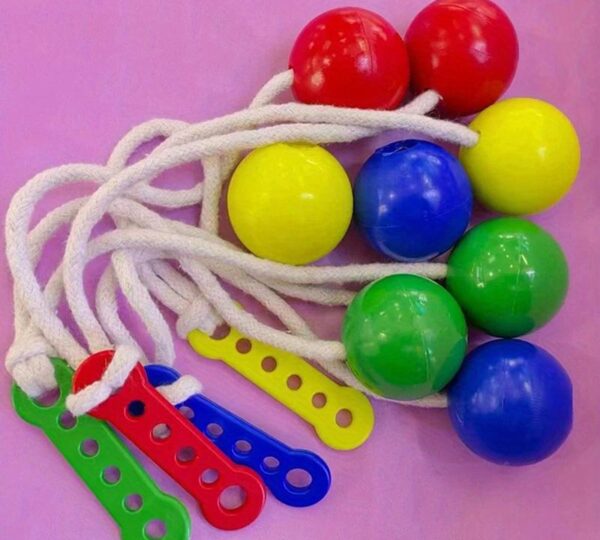
These toys, also known in some markets as “Lik-Klaks,” consisted of two solid spheres connected by a durable string attached to a central finger ring or handle designed for repetitive swinging motion.
At first glance, Clackers appeared extremely simple in design, yet their appeal lay in the mechanical rhythm and physical coordination required to make the spheres repeatedly collide in controlled motion.
When used correctly, the spheres swung above and below the hand in a rhythmic pattern, producing a distinct “clack-clack” sound that became instantly recognizable in playgrounds and neighborhoods across many regions.
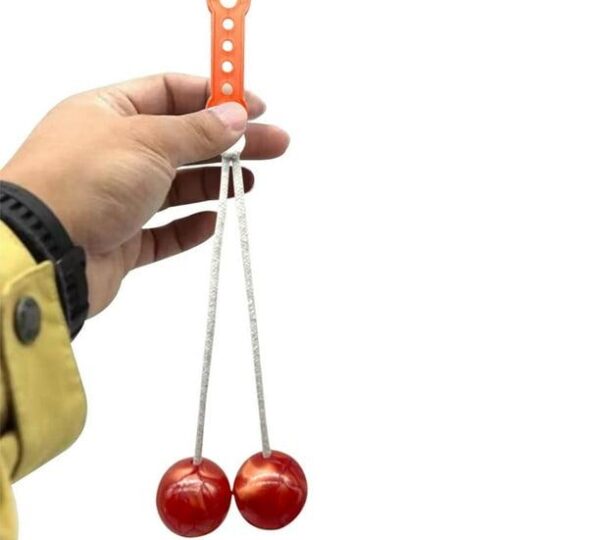
The toy required practice and timing, as beginners often struggled with controlling the momentum, leading to irregular movement, missed collisions, or accidental contact with the hand during early attempts.
Over time, however, users developed coordination and rhythm, turning simple swinging motions into structured patterns that demonstrated increasing skill and control over the toy’s physical dynamics.
The Clackers phenomenon is often associated with the American toy company Wham-O, which played a major role in introducing and popularizing several iconic toys during the mid-twentieth century.
Wham-O had already gained success with products such as the Hula Hoop, Frisbee, and Super Ball, all of which emphasized physical activity, coordination, and simple but engaging mechanical design principles.
In 1969, the company introduced Clackers to the market, promoting them as an exciting new form of active play that encouraged movement, skill development, and competitive interaction among children.
Marketing efforts for Clackers included television advertisements, printed promotions, and in-store demonstrations that highlighted the satisfying sound and rhythmic motion produced by repeated use of the toy.

The product quickly gained popularity, especially among school-aged children, who were drawn to the challenge of mastering its movement and performing continuous, controlled swings without interruption.
Within a relatively short time, Clackers became a widespread playground trend, with children gathering to compare techniques, compete for endurance, and showcase increasingly complex swinging patterns.
The appeal of Clackers was not only visual but also auditory, as the repetitive collision of the spheres created a rhythmic sound that reinforced timing and coordination during play sessions.
Despite their popularity, Clackers also presented certain safety concerns due to the materials used in early versions, which typically included hard plastic or glass-like acrylic spheres designed for durability and weight.
In some cases, repeated impact caused the spheres to crack or break, which led to reports of minor injuries when fragments were produced during vigorous or prolonged use of the toy.
As awareness of these issues increased, some schools and local authorities began to discourage or restrict their use, particularly in supervised environments where safety standards were more strictly enforced.
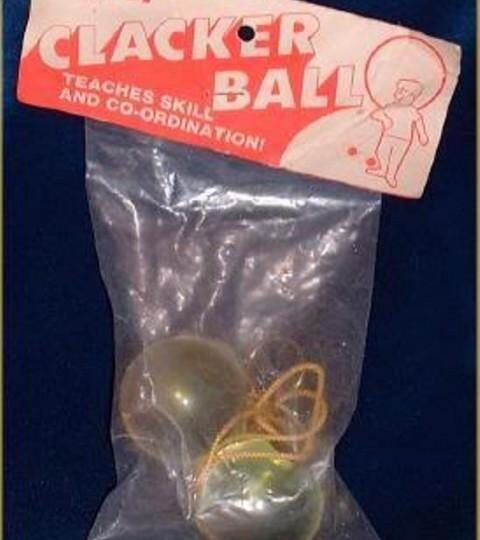
Manufacturers responded by attempting to redesign the toy using safer materials intended to reduce breakage while maintaining the original sound and mechanical function that made Clackers appealing.
However, by the time these modifications were introduced, the initial wave of enthusiasm had already begun to decline as newer toys and forms of entertainment entered the market.
The cultural significance of Clackers lies in their emphasis on physical interaction, rhythm, and repetition, which required users to actively engage their motor skills rather than passively consume entertainment.
Unlike many modern digital forms of play, Clackers demanded practice, patience, and repeated effort, making mastery a visible and rewarding achievement for those who invested time in learning their use.
Children who became proficient often developed informal demonstrations or routines, turning individual play into shared experiences that encouraged social interaction and friendly competition.
In many communities, playgrounds became informal spaces of learning where children exchanged techniques, observed each other’s progress, and gradually improved their coordination through repeated practice.

The toy also reflected broader trends of the era, where simple mechanical designs were valued for their accessibility and ability to provide entertainment without complex instructions or additional equipment.
As the popularity of Clackers declined in the mid-1970s, they were gradually replaced by safer and more diverse toy options that aligned with evolving safety standards and changing consumer preferences.
Even though production diminished, Clackers did not completely disappear from cultural memory, as they continued to be remembered by those who experienced them during their peak popularity.
In later years, they became objects of nostalgia, often discussed in retrospectives about vintage toys and childhood experiences from previous decades, particularly among those who grew up during that era.
Collectors and enthusiasts sometimes seek original sets, valuing them as historical examples of toy design that reflect both creativity and the evolving standards of safety in consumer products.
Modern reproductions of Clackers exist, though they are typically made with safer materials and modified designs that reduce risk while preserving the basic concept of rhythmic swinging motion.
However, many users note that these modern versions often lack the exact feel, sound, and weight of the original toys, which contributed significantly to their distinctive experience.
The legacy of Clackers is often discussed in the context of physical play and its role in developing coordination, focus, and persistence in childhood learning environments.
They serve as an example of how simple mechanical toys can encourage repetitive practice, skill improvement, and social engagement without reliance on advanced technology or digital systems.
In contemporary discussions about childhood development, Clackers are sometimes referenced as part of a broader conversation about balancing digital entertainment with physical and hands-on activities.
Their historical popularity highlights how entertainment trends evolve over time while still preserving certain universal elements of play, such as challenge, achievement, and sensory feedback.
Ultimately, Clackers remain a memorable example of mid-twentieth-century toy innovation, demonstrating how even the simplest designs can create widespread cultural impact and lasting nostalgic value.
Their rhythmic sound and physical engagement continue to symbolize an era when play was primarily tactile, social, and skill-based, leaving behind a legacy that still resonates in discussions of classic childhood toys.
