
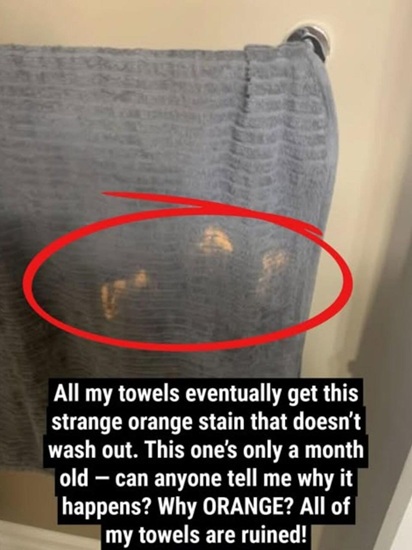
Benzoyl peroxide, a common active ingredient in acne treatments, is a potent oxidizer widely found in products like PanOxyl, Clearasil, Neutrogena, and prescription-strength creams, prized for its ability to reduce inflammation and kill bacteria.
Although highly effective on skin, benzoyl peroxide has a notorious side effect: it reacts strongly with fabrics. On towels.
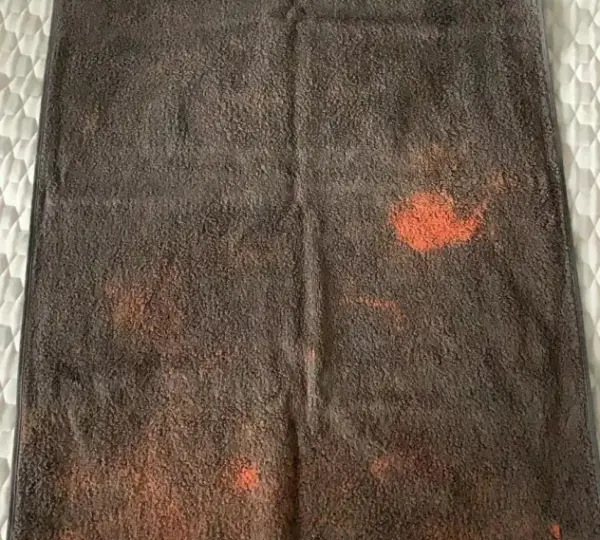
It can break down dyes and fibers, leaving behind orange, yellow, or pale patches that seem impossible to remove. Dark-colored towels—especially black, navy, deep gray, or charcoal—are particularly vulnerable.
The chemical strips the surface dyes, revealing lighter undertones. Once this oxidation occurs, normal laundering or stain treatments cannot restore the original color.
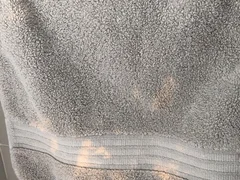
A useful method to identify the type of discoloration is by examining the spot’s shade relative to the towel. Lighter marks indicate bleaching, while darker spots usually result from residual dirt or soap deposits.
These oxidized marks can easily transfer. Washing affected towels with other laundry risks spreading residue, causing damage to garments that may have otherwise remained safe, compounding the frustration of losing favorite fabrics.
Benzoyl peroxide isn’t the only culprit. Rust from aging pipes or hard water can create reddish-brown stains, particularly in bathrooms with metallic fixtures or older plumbing, which interacts with minerals and moisture to discolor fabrics.
Another potential contributor is the bacterium Serratia marcescens, which thrives in damp environments. This microorganism can form pink or orange films on towels or bathroom surfaces, but unlike chemical bleaching, it can usually be cleaned away with routine sanitation.
Prevention is key for avoiding towel disasters. One approach is to designate white or light-colored towels specifically for facial use, reducing the risk of permanent discoloration when using acne products containing oxidizers.
Thorough rinsing of skin after applying benzoyl peroxide also minimizes residue. Removing excess cream before drying off can prevent chemical interaction with fibers, preserving towel color while still maintaining effective skincare.
Switching to alternative acne treatments, such as salicylic acid-based cleansers, may also help. These ingredients treat pores and inflammation without the oxidizing properties that can damage colored fabrics, making them safer for daily towel use.
For towels that are already affected, don’t immediately discard them. Repurposing damaged towels as gym rags, cleaning cloths, or dusting towels can give them a second life while keeping them out of landfills.
Understanding the chemistry of benzoyl peroxide is essential. The compound releases oxygen radicals when exposed to heat, friction, or moisture, initiating a reaction that breaks down color molecules embedded in the textile fibers.
Environmental factors exacerbate the effect. Hot water, prolonged exposure to sunlight, or repeated wash cycles can accelerate dye degradation, turning once-vibrant towels into blotchy, unevenly colored fabric over time.
Repeated exposure to oxidizers is cumulative. Even small amounts of benzoyl peroxide left on skin or towels can slowly compromise the integrity of textile fibers, eventually causing brittle texture and fading that extends beyond visual discoloration.
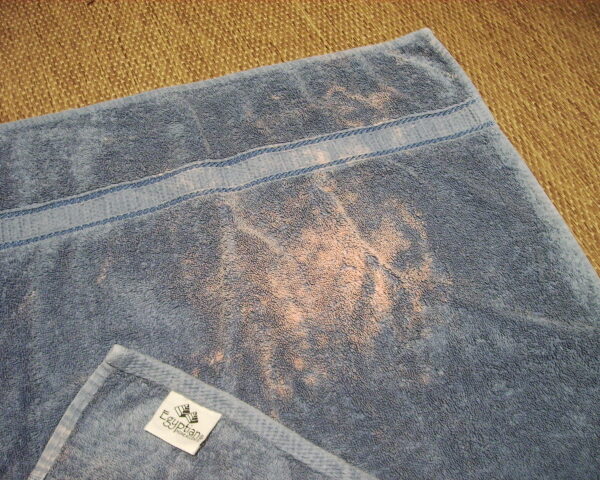
The type of fabric matters as well. Cotton towels, while absorbent and soft, are especially prone to chemical bleaching, whereas synthetic blends may resist the reaction slightly but are still susceptible to color fading and fiber weakening.
Laundry habits play a significant role in preservation. Using mild detergents, avoiding high-heat drying, and separating chemical-exposed towels from other laundry can prevent the spread of oxidizing agents and prolong fabric life.
Even small design choices can impact longevity. Dark stripes, embroidery, or printed patterns often degrade unevenly when exposed to benzoyl peroxide, resulting in patchy discoloration that is more noticeable than solid-colored towels.
Benzoyl peroxide stains aren’t limited to towels. Sheets, pillowcases, bathrobes, and even clothing can suffer similar effects, highlighting the importance of careful product application and fabric management in bathrooms and bedrooms.
Consumer awareness has grown as social media and skincare forums document these common mishaps. Users frequently share tips on fabric-safe routines and creative ways to salvage or repurpose damaged items.
For households with teenagers or frequent acne treatment users, proactive labeling of towels and assigning dedicated facial towels can prevent accidental bleaching and preserve communal laundry items for longer.
Beyond household tips, manufacturers sometimes suggest formulations with reduced peroxide concentrations for at-home use, lowering the risk of damage to textiles while maintaining therapeutic effectiveness for acne-prone skin.
Even professional laundry services face challenges when treating chemically bleached towels. The oxidation alters the fabric at a molecular level, making conventional dye restoration or stain removal treatments largely ineffective.
Some DIY enthusiasts explore fabric dyeing as a solution for salvaging damaged towels. While this can restore color, the results vary depending on fiber type, previous damage, and choice of dye, requiring careful experimentation.
Water quality can influence chemical interactions. Hard water with high mineral content can intensify bleaching reactions or cause uneven marks, while soft water may mitigate the speed but not the inevitability of discoloration.
Towel texture can be affected as well. Repeated exposure to oxidizers can leave cotton fibers weaker, less fluffy, and prone to fraying, which changes both the appearance and functional absorbency of the textile.
Ultimately, the orange, yellow, or pale patches on towels are a visible reminder of chemistry at work in everyday life. Simple bathroom habits, awareness, and careful product management can prevent most damage.
The interaction of benzoyl peroxide with fabric illustrates a broader principle: highly effective chemicals often come with trade-offs. Knowledge of these reactions allows consumers to make informed decisions about skincare and textile care.
Repurposing damaged towels also promotes sustainability. By redirecting items to cleaning, gym use, or DIY projects, households reduce waste while still benefiting from the towel’s functional utility despite cosmetic imperfections.
Over time, awareness campaigns by dermatologists and fabric experts stress the importance of reading product instructions, following proper application guidelines, and considering the downstream effects on clothing and household fabrics.
For families and individuals, adopting these precautions ensures both effective acne treatment and long-lasting textiles. Proper separation, rinsing, and fabric choice are small but meaningful steps that protect investments in towels.
In conclusion, benzoyl peroxide remains a powerful ally in skincare but a formidable adversary for fabrics. By understanding its oxidizing properties, practicing preventive routines, and repurposing damaged items, users can manage both beauty and household hygiene successfully.

