
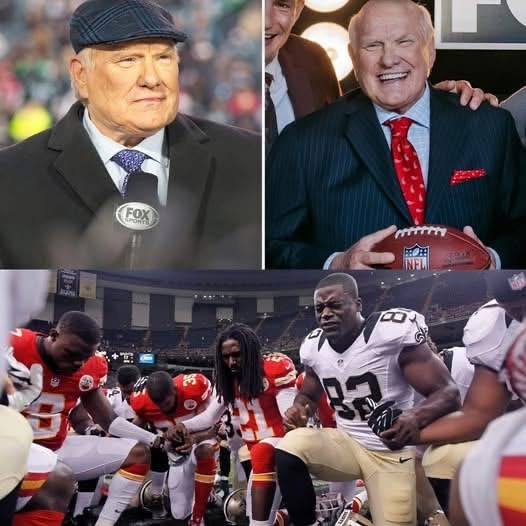
On any given Sunday in the 1970s, Terry Bradshaw embodied the pinnacle of American athleticism, a quarterback whose cannon arm and calculated poise defined the Pittsburgh Steelers’ dynasty during the “Steel Curtain” era of dominance.
Fans saw only the golden boy with four Super Bowl rings and a gap-toothed grin, but behind the helmet, Bradshaw was quietly grappling with emotional wounds and pressures that no playbook could address or resolve.
Bradshaw’s early life in Shreveport, Louisiana, shaped his character and resilience. As a self-described “momma’s boy,” he grew up surrounded by family love but also faced the insecurities of a small-town youth yearning for wider recognition.
Being selected first overall in the 1970 NFL Draft thrust him into the harsh scrutiny of national sports media, a young Southern quarterback navigating an industrial city that demanded immediate excellence and rarely offered compassion.
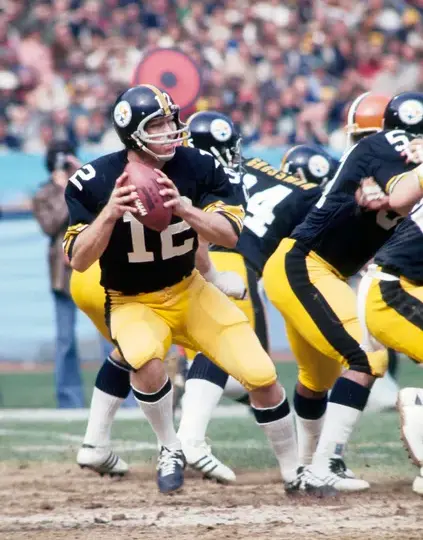
Critics were relentless. Analysts mocked his accent and initial stumbles on the field, labeling him “dumb” or “slow” despite his innate intelligence. For years, Bradshaw faced a dual challenge: professional performance and personal credibility.
Each game became a battle against performance anxiety and fear of failure, amplified by stadium boos, televised commentary, and the merciless judgment of fans. Every pass carried the weight of national expectation and personal pressure.
Yet, Bradshaw transformed adversity into fuel. Instead of succumbing to ridicule, he leaned into the stubbornness and determination that had defined his upbringing, channeling criticism into motivation for excellence on the field.
His perseverance catalyzed the Steelers’ unprecedented success. The “Immaculate Reception” era featured Bradshaw’s most iconic plays, moments that combined athletic precision with a strategic intelligence often overlooked by early detractors.
Bradshaw’s career statistics—Super Bowl MVPs, playoff wins, and passing records—only partially convey his mental fortitude. The true measure of his success lies in overcoming the internal battles invisibly waged throughout his career.

Off the field, he quietly battled depression and anxiety, navigating fame and public expectation while maintaining professionalism, discipline, and composure in a time when mental health discussions were largely stigmatized and ignored.
Despite intense scrutiny, Bradshaw embraced his identity. He leaned into the humor, charm, and self-deprecating persona that later defined his broadcasting career, transforming perceived weakness into a public strength that resonated with millions.
As a broadcaster, Bradshaw’s wit and relatability redefined post-career legacy for athletes. His humor allowed fans to connect with his humanity while subtly illustrating the mental and emotional resilience behind the laughter.
He also used his platform to openly discuss mental health, including depression and personal struggles. His candor helped destigmatize mental health conversations, particularly for professional athletes navigating similar pressures and public exposure.
Bradshaw’s life is a masterclass in personal reinvention. From small-town Southern boy to NFL legend to beloved broadcaster, he continually adapted, learning to turn criticism into opportunity, and private struggle into public inspiration.
Even the physical challenges of his career—shoulder injuries, concussions, and the toll of decades of football—were compounded by mental strain, yet he consistently demonstrated resilience and the ability to persevere against both visible and invisible obstacles.
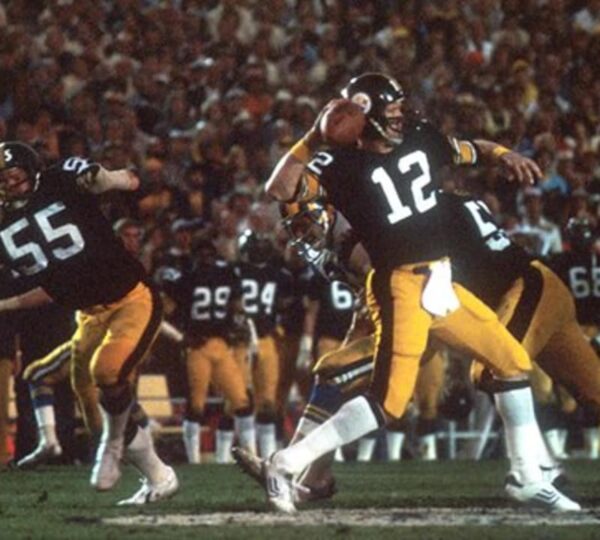
The evolution of Bradshaw’s public persona reflects careful cultivation. Early derision transformed into comedic brilliance, humanizing him while simultaneously conveying his intelligence, emotional insight, and ability to connect authentically with viewers.
Bradshaw’s influence extends beyond football. He became a role model for persistence, demonstrating that public humiliation, professional pressure, and personal struggle do not define ultimate success, but rather, how one responds to adversity.
In interviews, he emphasizes the importance of gratitude, family support, and resilience. His journey illustrates that strength is not measured solely by physical or professional achievements, but by the courage to confront internal battles.
Bradshaw’s life shows the duality of fame: public celebration juxtaposed with private vulnerability. The rings, accolades, and highlights are visible; the internal victories over self-doubt and depression are often invisible yet profound.
Through candid storytelling and public speaking, he educates audiences about mental health challenges athletes face, offering insight into coping strategies, therapy, and the importance of openness, thereby helping others navigate their own struggles.
Bradshaw’s story exemplifies the intersection of talent, grit, and emotional intelligence. His achievements are multidimensional, blending athletic prowess with psychological resilience, personal growth, and eventual public advocacy for mental well-being.

He reminds us that success is not merely trophies or statistics. True achievement lies in enduring criticism, confronting inner demons, and continuing to perform, inspire, and innovate despite internal and external pressures.
Even in retirement, Bradshaw continues to impact the football community and beyond. Mentorship, media presence, and advocacy work illustrate his ongoing commitment to leveraging personal experience for societal benefit.
Bradshaw’s legacy is also defined by humility. Despite fame and accolades, he consistently credits teammates, coaches, and family for his journey, emphasizing collaboration, trust, and the human connections necessary for sustained success.
The juxtaposition of his public humor and private struggles highlights an essential truth: mental fortitude often masquerades behind charm, wit, and charisma, demonstrating that even celebrated heroes face internal battles unseen by the public.
Bradshaw’s journey illustrates resilience as both a personal and professional necessity. Mastery over anxiety, public scrutiny, and self-doubt allowed him to perform consistently, shaping a career that inspires beyond the field of play.
His life is a reminder that vulnerability is not weakness. Acknowledging personal struggles, seeking help, and maintaining emotional honesty are forms of strength, enabling him to maintain a balanced and meaningful life post-football.

Today, Terry Bradshaw is celebrated not only as an NFL legend but as a humanist, advocate, and role model. His story reinforces that character, persistence, and resilience are equally important as athletic accomplishment.
From Shreveport to Pittsburgh to national television, Bradshaw exemplifies the power of perseverance. He demonstrates that personal evolution and mental resilience are integral to lasting influence and public respect.
In totality, his journey underscores the profound complexity of human achievement. Athletic greatness is impressive, but enduring personal struggles with grace and strength defines a legacy that resonates across generations.
Terry Bradshaw’s story is a testament to the fact that true champions conquer both external opponents and the internal obstacles that threaten confidence, identity, and purpose, illustrating the holistic nature of triumph.
Through reflection, advocacy, and humor, Bradshaw has transformed private challenges into public lessons, making him a beacon of resilience, demonstrating that enduring personal battles can be as heroic as athletic feats.
Ultimately, Terry Bradshaw teaches that strength is measured not by how others perceive you, but by how faithfully you continue forward despite criticism, pain, and internal struggle. True greatness requires heart as much as skill.
His life shows that championship rings may shine outwardly, but the courage to confront and overcome personal adversity forms the inner steel that defines enduring legacy and inspires millions to confront their own challenges.
Bradshaw’s narrative remains a blueprint for anyone facing public scrutiny or personal trials: combine talent with resilience, embrace vulnerability, leverage humor, and maintain integrity to navigate a lifetime of triumph and challenge.
Even decades later, Terry Bradshaw stands as a living reminder that legacy is multi-layered, blending athletic accomplishment, emotional intelligence, and unwavering perseverance into a life story that informs, educates, and inspires.
In every interview, broadcast, and public appearance, Bradshaw embodies the intersection of experience, reflection, and empathy, proving that true champions are defined not only by wins on the scoreboard but by victories over adversity.

