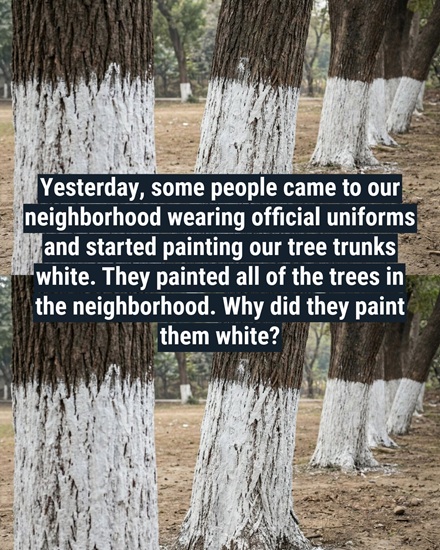
If you have ever driven past an orchard in full winter sunlight or a suburban garden with meticulously pruned trees, you might have noticed trunks painted a brilliant white.
At first glance, it may appear purely decorative or a whimsical landscaping choice. However, in arboriculture, this technique—known as trunk whitewashing—is far more than an aesthetic preference.
It is a vital protective measure designed to safeguard trees from a dangerous physiological condition that can silently damage or even kill them.
The principal threat this white paint combats is sunscald, a condition that occurs primarily during winter months. Trees, especially young or thin-barked varieties, are highly vulnerable when their cells misinterpret sunlight for springtime warmth.
During dormancy, trees slow their metabolic processes to survive freezing temperatures. But when bright winter sun strikes dark bark, the heat absorbed can awaken localized tissue, triggering cellular activity at precisely the wrong time.
As soon as night falls or a cold snap sweeps through, these active cells freeze instantly. The result is bark rupture, deep fissures known as frost cracks, and compromised vascular tissue that exposes the tree to pathogens.
Fruit trees, maples, and young saplings are especially susceptible because their bark is thinner and less insulated. Each crack or lesion increases vulnerability to bacterial infections, fungal growth, and infestation from insects seeking a warm, protected habitat.
By painting trunks white, arborists harness basic physics. The reflective pigment reduces heat absorption, keeping bark temperature consistent. This prevents dangerous “yo-yo” cycles of warming and freezing that lead directly to sunscald damage.
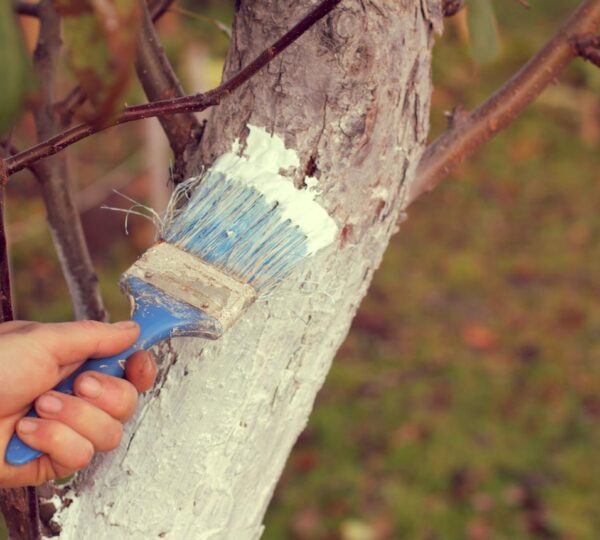
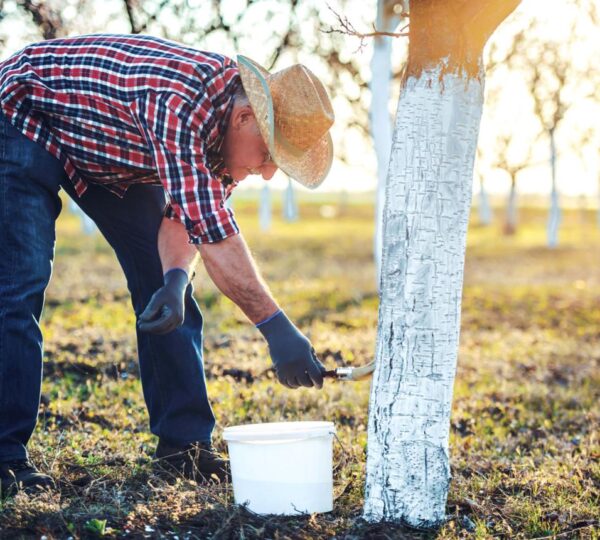
Application is more than slopping paint on a tree. Experts use water-based interior latex, avoiding oil-based paints that can suffocate the tree by clogging lenticels—the tiny pores that allow respiration and gas exchange.
The paint is typically diluted in a 50/50 ratio with water to ensure it coats the bark without suffocating it. Some seasoned orchardists even incorporate joint compound or antifungal additives for extra protection.
This thicker mixture not only reflects sunlight but also serves as a physical barrier, reducing the risk of insect egg-laying and deterring small pests that can exploit natural cracks in bark.
Traditionally, whitewashing is done manually with a heavy brush, forcing paint into bark crevices for complete coverage. This method ensures protection in areas that high-pressure sprayers cannot reach, making manual application the preferred technique.
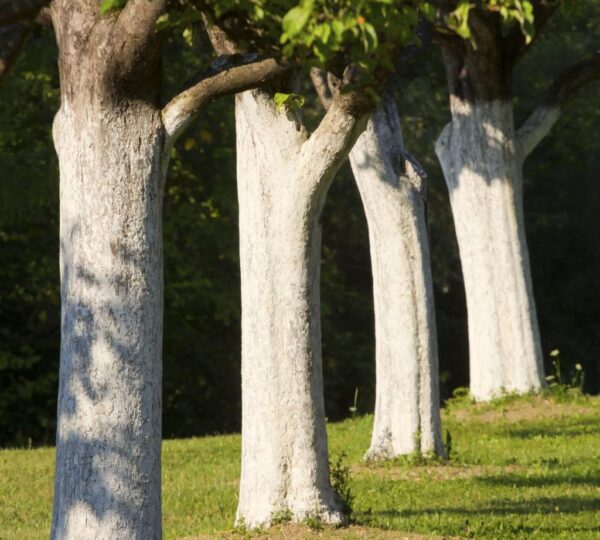
White trunks are a visual testament to expert care. Among forests and orchards, they stand out as an indication of diligence, signaling a gardener’s commitment to preserving tree health and productivity during harsh conditions.
Historically, tree whitewashing has been practiced for centuries. Ancient European orchardists recognized that trees with sun-exposed trunks were more prone to splitting and disease, and the practice has been passed down and refined through generations.
In the American Midwest, orchardists discovered that fruit trees could fail to bear consistently if sunscald damage was left unchecked. Painting trunks became a preventive standard, saving countless crops and ensuring long-term economic viability.
While the forest is full of visual markers, such as orange dots for timber harvest or purple stripes for property boundaries, white-painted trunks symbolize preservation rather than extraction. They indicate foresight and biological understanding.
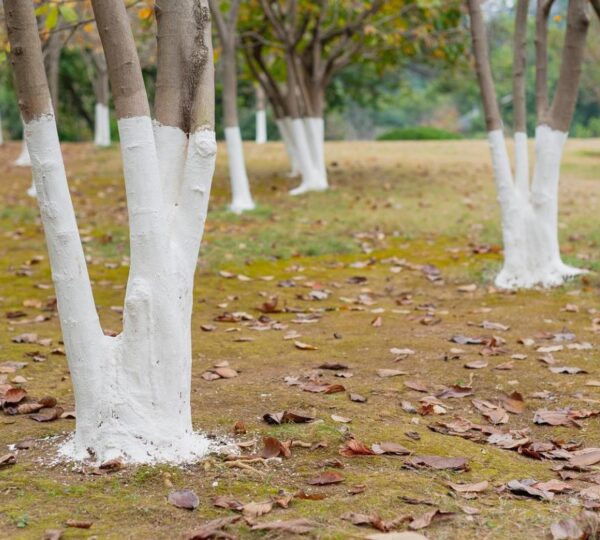
The protective benefits extend beyond frost and sunscald. Reflective white paint also shields against rapid temperature fluctuations, reduces the risk of bark beetle infestation, and discourages certain fungi that thrive on exposed wood surfaces.
Young trees are particularly vulnerable because their cambium layer is less insulated, and sudden temperature swings can irreversibly damage vascular tissues. Whitewashing acts as an artificial thermal buffer, protecting critical growth zones.
Gardeners often time whitewashing carefully, applying it late in fall after leaves have dropped but before the first hard freeze. This timing maximizes protection while allowing trees to remain dormant naturally.
The exact composition of whitewash varies by region. Some use lime-based formulas that also provide mild antifungal properties, while others rely on water-based latex for ease of application and long-lasting reflectivity.
Veteran orchardists sometimes incorporate additional compounds, such as kaolin clay, to increase UV reflectivity and provide a more durable coating that withstands wind, rain, and the abrasion of wildlife activity.
Beyond prevention, whitewashing has an educational aspect. It signals to employees, neighbors, and visitors that trees are being actively managed and cared for, increasing awareness of arboricultural practices and seasonal risks.
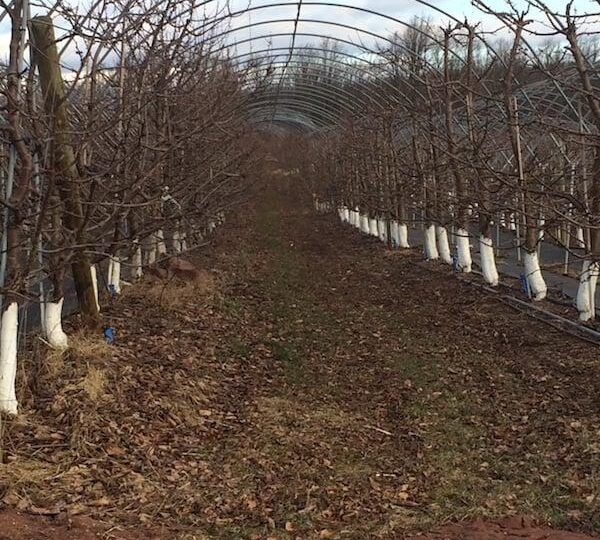
In large commercial orchards, white trunks provide a practical monitoring system. Caretakers can quickly inspect for paint wear, cracks, or early signs of disease, ensuring timely intervention before small problems become catastrophic.
The practice also helps in urban forestry, where trees along streets or parks face additional challenges. Reflective paint can reduce sunscald in young maples, elms, or oaks planted in heat-reflective environments like concrete-lined avenues.
Whitewashing is a low-cost, high-impact measure compared to other interventions. Unlike expensive frost blankets, irrigation management, or structural modifications, a simple coat of paint delivers consistent protective benefits over the entire exposed surface.
In addition to functional benefits, whitewashing can improve visibility. Painted trunks are more noticeable in low-light conditions, reducing the likelihood of accidental damage from lawn equipment, vehicles, or construction activity.
Arborists often combine whitewashing with pruning and mulching, creating a holistic winter care strategy that addresses mechanical, thermal, and biological stresses. Together, these practices increase survival rates and long-term tree health.
Proper technique matters. Brushes must be clean, paint mixed thoroughly, and coverage uniform. Gaps or thin spots can create vulnerable zones where sunscald or pests can attack, emphasizing the need for attention to detail.
Whitewashing also serves as a teaching tool. For students, hobbyists, and community gardeners, observing the seasonal ritual reinforces understanding of plant physiology, dormancy cycles, and the interaction between sunlight and cellular activity.
Environmental benefits are subtle but meaningful. By preventing sunscald and frost damage, whitewashing reduces the need for chemical treatments or premature tree removal, indirectly contributing to sustainable horticulture practices.
In orchards, fruit quality benefits from whitewashing as well. Damaged trunks can stress trees, leading to smaller, less flavorful fruit. Preventing sunscald ensures the tree maintains healthy vascular function, directly supporting crop yield and consistency.
Even ornamental trees benefit. In suburban landscapes, white trunks enhance resilience in young saplings exposed to winter sun and reflective surfaces like driveways or patios, extending the life and beauty of decorative plantings.
The science behind whitewashing demonstrates that simple interventions can solve complex problems. By reflecting infrared radiation, white paint maintains a consistent bark temperature, directly mitigating the cellular disruptions that cause winter sunscald.
Many nurseries now recommend whitewashing as standard care for certain species, including apples, pears, cherries, maples, and oaks. Adoption of this practice reflects a growing understanding of plant physiology and proactive horticultural management.
Whitewashing’s effectiveness is enhanced by combined winter strategies, including windbreaks, mulching, and controlled irrigation, all of which help trees maintain metabolic stability and reduce stress during the harshest months.
The visual impact of white trunks also has cultural resonance. In some regions, painted trees symbolize stewardship, responsibility, and human care, blending practical science with a subtle expression of aesthetic order in managed landscapes.
Ultimately, a white-painted trunk is both protection and pride. It signals knowledge, diligence, and respect for the biology of trees. It reflects a commitment to long-term tree health rather than short-term appearance or convenience.
By shielding trunks from deceptive winter warmth, caretakers preserve vascular integrity, maintain fruit and timber quality, and prevent long-term structural damage that could compromise the tree’s life and productivity.
Whitewashing is a ritual of care, repeated annually, that embodies the principle that sometimes the most effective technology in nature is elegantly simple: a bucket of paint applied thoughtfully to the living architecture of a tree.
