
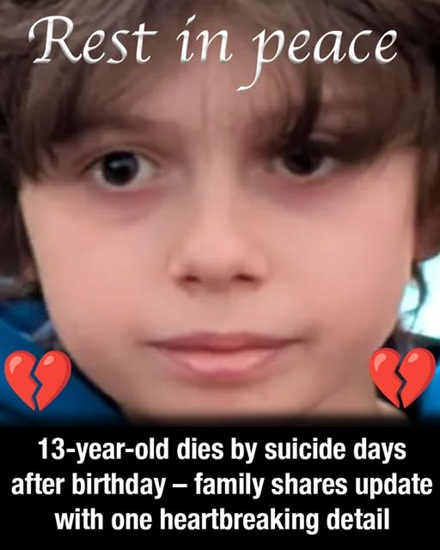
The death of 13-year-old Josiah Michael Dwinell has left a grieving family and a wider community struggling to process the unimaginable loss, raising painful questions about warning signs, intervention, and the responsibility of those around him.
Josiah had just celebrated his 13th birthday on March 4. Eight days later, his life ended suddenly, leaving family, friends, and neighbors heartbroken.
The short span between celebration and tragedy underscores the urgency of understanding mental health struggles. According to relatives, concerns about bullying and Josiah’s emotional well-being had been repeatedly raised in the months leading up to his death. His aunt, Shaena Stebbins, shared that his struggles were often visible at home.
“He was being bullied at school and on the bus… not one person outside his home tried to help him,” Stebbins explained. Her words reflect a family’s profound frustration over a system that failed to intervene.
Josiah’s life had already been marked by loss. His biological mother passed away more than five years ago, leaving him in the care of his grandmother, who provided consistent emotional support and stability during challenging times.
Family members describe his grandmother as a constant presence, actively advocating for him and attempting to navigate the complex support systems meant to address bullying and mental health concerns for young people.
Hospital visits and conversations about his mental health were part of their ongoing efforts to support Josiah. Despite these attempts, his family felt that the seriousness of his emotional distress was often underestimated or overlooked entirely.
Stebbins shared, “His Mimi sat by his side… trying to get him the help he was seeking, and his mental health was overlooked.” Her words highlight how easily subtle warning signs can be dismissed, sometimes with tragic consequences.
Family members said some concerns were interpreted as attention-seeking rather than distress, a distinction that can critically affect how children in crisis are treated and supported by adults and professionals alike.
Bullying played a significant role in Josiah’s emotional struggles. Family members believe the ongoing harassment, both at school and on the bus, became overwhelming, contributing to his tragic decision to end his life.
“My nephew decided after a bus ride home that he couldn’t handle the bullying anymore,” Stebbins explained. The statement reflects both heartbreak and a sobering question about how many warning signs are needed before action occurs.
In the days following Josiah’s death, loved ones emphasized not only the challenges he faced but also who he was beyond those struggles, remembering the joy and light he brought into their lives.
“He was an amazing brother, son, nephew… Josiah brought light and joy to our lives,” family members wrote, highlighting the importance of recognizing children as more than their struggles or vulnerabilities.
Grief in cases like this extends far beyond the household, impacting schools, communities, and public conversations about responsibility, mental health awareness, and effective strategies for preventing bullying and supporting children.
Bullying remains a serious issue in schools. Each tragic case, like Josiah’s, underscores the importance of how educational institutions and social systems respond — whether they provide sufficient intervention or fail to act effectively.

Mental health concerns in children often present subtly. Signs of distress can be misinterpreted or overlooked, leaving vulnerable youth without proper support, which may intensify feelings of isolation, helplessness, and despair over time.
Expressions of emotional distress may not fit expectations. Children often mask struggles, use indirect communication, or display behaviors that adults might mistakenly dismiss, highlighting the need for attentive and empathetic observation.
In Josiah’s case, his family’s repeated efforts to seek support were met with challenges, reflecting a broader societal issue where children’s cries for help may not always be recognized or acted upon adequately.
It is important to acknowledge that tragedies like this rarely have a single cause. Mental health, personal history, bullying, and the surrounding support system all intersect in ways that complicate both prevention and understanding.
Identifying these intersections is not about assigning blame but about learning where interventions might have changed outcomes, improving awareness and responsiveness to children at risk in the future.
The emotional weight of such losses is profound. Families experience a combination of grief, guilt, and questions about what could have been done differently, navigating a landscape of unanswered “what ifs” that rarely resolves fully.

Josiah’s short life reminds us of the urgency of listening and responding. Every child’s expression of distress carries significance, and taking time to understand the underlying causes can be life-saving.
The tragedy also highlights a societal need for better mental health education, accessible resources, and consistent support within schools, communities, and healthcare systems to recognize and address warning signs effectively.
Family members organized support for medical and funeral expenses, demonstrating both resilience and the communal effort often necessary after sudden youth deaths, as local networks step in to assist grieving loved ones.
Support systems, including friends, relatives, teachers, and counselors, play a critical role in recognizing early signs of distress and creating safe spaces where children feel heard and understood.
Preventing such tragedies requires a combination of attentive listening, mental health awareness, proactive interventions, and consistent follow-up when concerns about a child’s well-being are raised repeatedly.
In the United States, help is available for those struggling with mental health or suicidal thoughts. Resources include the 988 Suicide & Crisis Lifeline (call or text 988) and Crisis Text Line (text MHA to 741741).
Immediate intervention is also possible through emergency services when there is an urgent risk. Acting promptly when warning signs are evident can significantly reduce the likelihood of irreversible outcomes.
Tragedies like Josiah’s underscore a quieter but essential message: adults and communities must pay attention to children’s mental health, responding with seriousness, empathy, and timely action.
Listening attentively, validating experiences, and providing consistent support can make a meaningful difference in outcomes for youth struggling with bullying, trauma, or other challenges impacting their emotional health.
Every small intervention counts. Speaking up, asking questions, and ensuring children have access to professional help is crucial, because often the first step in prevention is simply noticing and responding.
Awareness campaigns, school policies, and community programs that focus on mental health literacy, bullying prevention, and emotional support are vital tools in preventing future tragedies among young people.
This tragedy is a reminder that children are vulnerable and that the responsibility to protect them is collective, spanning family, schools, healthcare systems, and broader communities committed to their safety.
Josiah’s life, though brief, carries an enduring lesson about listening, taking warning signs seriously, and ensuring children never feel their struggles are dismissed or ignored by those around them.
Families, educators, and peers are encouraged to engage in open conversations, practice empathy, and create environments where children can express concerns without fear of judgment or minimization.
Preventive action, awareness, and consistent mental health support can help reduce risks for children and teenagers, transforming communities into places where vulnerability is met with care rather than dismissal.
Ultimately, remembering Josiah means advocating for stronger mental health support, attentive listening, and proactive intervention, ensuring that future generations receive the help they need when it matters most.
For anyone struggling, immediate support is available. Reaching out can save lives, and simply acknowledging that a child’s pain is real can be the most important step toward prevention.
The loss of Josiah Michael Dwinell is both a heartbreaking reminder of vulnerability and a call to action: to listen, respond, and act whenever children show signs of emotional distress, no matter how small they may appear.

