
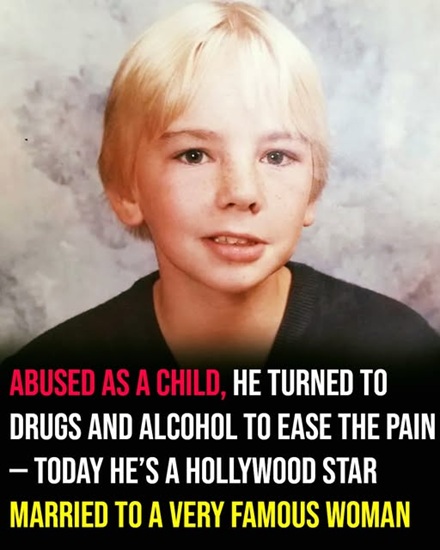
Some lives don’t take a smooth, straight path toward success. For many, including Dax Shepard, the road winds through pain and uncertainty before leading to stability, understanding, and purpose.
Born Dax Randall Shepard on January 2, 1975, in Ypsilanti, Michigan, Shepard’s early life was marked by upheaval. His parents divorced when he was just three, a separation that shaped his emotional world.
Shepard grew up primarily in Walled Lake, Michigan, moving often and living in several Detroit suburbs. His childhood stability was compromised, leaving him to seek comfort in creative expression later in life.
One of the most profound traumas of Shepard’s early years was sexual abuse at age seven — a secret he kept private for more than a decade before eventually speaking about it publicly.
Once silent about that experience, Shepard later noted its lasting impact on his emotional development, explaining how it contributed to his later struggle with addiction and self‑blame.
As a young boy, Shepard’s earliest relationship influences included his mother, Laura Louise LaBo, whose determination bore witness to resilience. She worked her way up from janitorial work at General Motors to owning multiple businesses.
Shepard has publicly credited his mother’s commitment to hard work and perseverance as instrumental in teaching him to keep moving forward despite hardship — a lesson that would later inform his own drive.
During his teen years, Shepard traveled with his mother to racetrack events, often working alongside her and learning firsthand about tenacity, hustle, and the challenges of a career built from the ground up.
Shepard also shared that he is dyslexic, a learning difference that influenced his creative path. Rather than turning away from performance, he leaned into acting as an expressive outlet.
After graduating from Walled Lake Central High School in 1993, Shepard moved toward comedy and acting by enrolling in The Groundlings, a famed Los Angeles improv group known for developing influential comedic talent.
The Groundlings training became a turning point. For years, Shepard had felt unsure about his direction, but improv helped him harness vulnerability, experiment with characters, and build confidence in front of audiences.

While The Groundlings sharpened his skills, Shepard’s early Hollywood years were filled with rejection. He auditioned for major roles for nearly a decade before landing his first real breakthrough.
His first notable television role came on Punk’d, a hidden‑camera comedy show created by Ashton Kutcher that showcased celebrities unknowingly pranked. Shepard became recognizable for his comedic timing.
The visibility from Punk’d helped Shepard build a foundation in entertainment, leading to roles in films like Without a Paddle (2004), Zathura: A Space Adventure (2005), and Employee of the Month (2006).
He continued expanding his filmography with Idiocracy (2006), Let’s Go to Prison (2006), and Baby Mama (2008), demonstrating versatility across genres from satire to romantic comedy.
Shepard’s growth as an actor also included writing and directing. He co‑wrote, directed, and starred in films like Hit and Run (2012) and CHiPs (2017), blending humor with personal creative style.
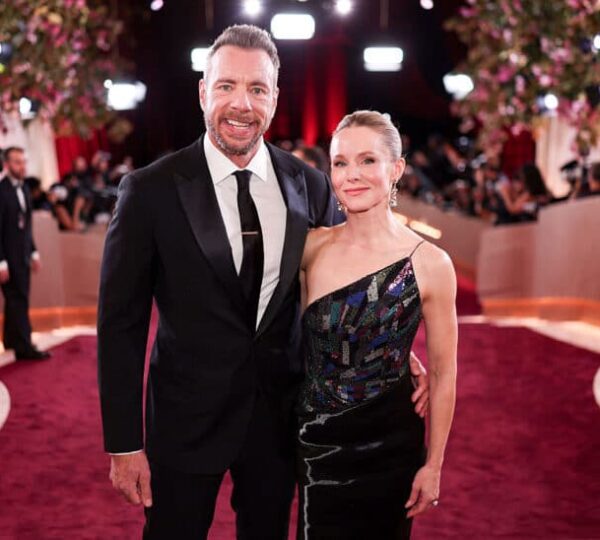
Among these projects, Shepard also acted in the romantic comedy When in Rome (2010), where he worked alongside Kristen Bell, the actress who would later become his wife.
Meeting Kristen Bell changed Shepard’s life in ways both personal and professional. Their chemistry on set eventually developed into a deep relationship built on honesty, commitment, and shared creative interests.
Their relationship wasn’t without difficulty. Shepard has openly discussed how his unresolved trauma and emotional struggles initially made intimacy and trust challenging early in their romance.
Bell has also spoken publicly about how challenging it was at first to believe Shepard could sustain a family life given his past battles with addiction and instability.
Despite uncertainty, the relationship endured. In 2013, Shepard and Bell married in a modest ceremony in Los Angeles, celebrating a bond rooted in humor, mutual respect, and emotional honesty, rather than grand spectacle.
The couple went on to have two daughters, Lincoln and Delta, shaping a family centered on openness and communication — even about hard topics like addiction and mental health.
Shepard’s path to sobriety was neither linear nor easy. He has candidly described how unresolved childhood pain fueled a reliance on drugs and alcohol in his late teens and early adult years.
“From age 18 onward I was … a heavy drinker, drug addict,” Shepard once recalled, acknowledging how deeply addiction had taken hold of his life.
Shepard achieved sobriety in September 2004 after years of struggle with alcohol, cocaine, and pills, crediting his early recovery to a commitment to personal accountability and support systems.
For many years afterward, Shepard maintained his sobriety and spoke openly about his journey, helping reduce stigma around addiction and recovery in public discussion.
In addition to his work as an actor, Shepard co‑hosts the podcast Armchair Expert, launched in 2018. The show blends candid interviews with self‑reflection and insight into human behavior.
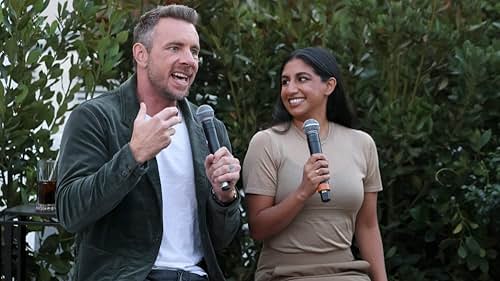
On Armchair Expert, Shepard discusses vulnerability, identity, personal psychology, and growth with guests from various backgrounds, creating a space that many listeners describe as authentic and introspective.
The podcast quickly became one of the most listened‑to shows of 2018, highlighted for its long‑form conversational style that allows vulnerability and depth in topics rarely explored in celebrity interviews.
For Shepard, the podcast has become more than entertainment: it’s a platform to normalize discussions around imperfection, emotional struggle, and human complexity — issues he knows personally.
He has also been transparent about continued struggles. In September 2020, Shepard publicly addressed a relapse after 16 years of sobriety during a heartfelt Armchair Expert episode titled “Day 7.”
He explained that the relapse was linked to medical painkillers he had used after injuries and that the experience was frightening, humbling, and ultimately a part of his ongoing journey.
Shepard’s wife, Kristen Bell, spoke openly about the relapse too, describing to media how they strengthened their recovery plan and continued therapy together, reinforcing their partnership’s resilience.

Bell said she admires Shepard’s commitment to healing and growth, emphasizing that everyone faces internal battles and that support, honesty, and understanding are essential in recovery.
One aspect of their family life that stands out is how they discuss addiction openly with their daughters, teaching them about honesty, vulnerability, and the realities of human imperfection.
Bell once explained that topics such as substance use and personal struggles aren’t off‑limits in their home, showing a level of transparency unusual in Hollywood families.
Beyond acting and podcasting, Shepard is passionate about racing and motorcycle culture, often participating in events and exploring mechanical hobbies that align with his personality and sense of adventure.
He also engages in charity work, donating time to programs such as the Hollenbeck Youth Center in Los Angeles, supporting at‑risk youth and community development activities.
What stands out most about Shepard’s story isn’t just his Hollywood success but the transparency with which he publicly shares his vulnerabilities, setbacks, and the realities of personal growth.
He hasn’t erased his past or reshaped it into something unrecognizable. Instead, he frames it as an ongoing process, using his story to connect with others who face similar struggles.
There’s a quiet weight to that level of honesty — a willingness to live openly with complexity and challenge rather than hide it away behind curated public imagery.
Because in the end, Shepard’s life isn’t defined by where it started, nor by the mistakes along the way, but by his ongoing decision to move forward, even when the past still lingers.
His career, family life, and candid advocacy for vulnerability, growth, and emotional honesty continue to inspire many who find strength in his story of overcoming adversity and embracing authenticity.

