
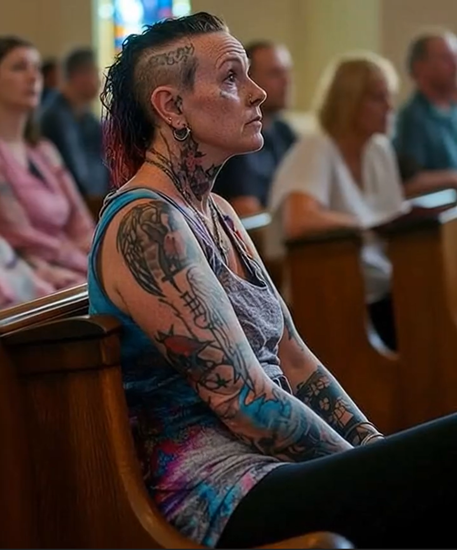
Last Sunday, I witnessed something at church that unsettled me deeply and left me questioning long-held assumptions about decorum and appropriateness within sacred spaces.
A woman, appearing to be in her forties, entered the church with her arms, neck, and visible parts of her body adorned with intricate tattoos, accompanied by multiple piercings on her ears, nose, and eyebrows.
Church has always represented to me a sanctuary of modesty, reflection, and reverence. Her appearance, bold and unconventional, clashed sharply with my expectations for a solemn worship environment.
While I understand that everyone expresses themselves differently, seeing someone so heavily altered made me feel that standards of decorum had been ignored, challenging my perception of what is acceptable in a place of worship.
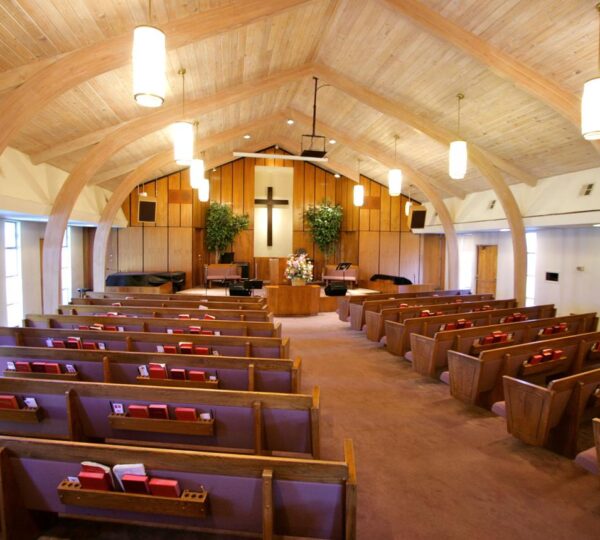
Curiosity and discomfort led me to reflect on whether my reaction was overly conservative, or whether it was reasonable to expect a certain visual respect for sacred rituals and spaces.
After the service ended, I noticed the woman outside the church. Hesitantly, I approached her, trying to maintain politeness despite my unease about her aesthetic choices.
I explained that, in my view, the combination of tattoos and piercings might not align with the traditional expectations of church attire and asked if she had considered presenting herself differently in such an environment.
Her response was immediate and unapologetic. She looked at me sharply and stated, “It’s none of your business how I choose to express myself.” Her confidence and directness left me stunned and questioning my assumptions.
For a moment, I felt conflicted. On one hand, I respected her honesty and autonomy. On the other, I was left grappling with discomfort about the presence of someone who defied my expectations of modesty within a sacred context.
I wondered aloud to myself: Am I being overly old-fashioned, holding onto a rigid definition of how people should present themselves in places of worship, or is it reasonable to expect a level of decorum in a community gathering that centers on faith?
Sharing this experience with others online, I sought opinions on whether my reaction was valid, and whether there is a line between personal expression and communal expectations in a church setting.
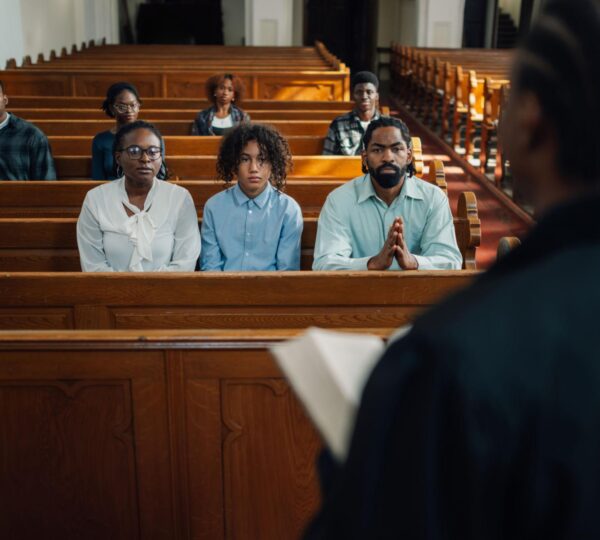
Responses varied widely, highlighting the complexity of the situation. Many readers argued that my judgmental attitude contradicted fundamental Christian teachings of acceptance, empathy, and compassion.
One commenter wrote, “How wonderful that she felt comfortable attending church at all. Religion is about tolerance, empathy, and love for others, not judging them for their appearance.”
Another emphasized the spiritual equality of all people, reminding me, “We are all God’s children, and only God can judge. Your discomfort does not determine her worthiness to be there.”
Some readers addressed the practical implications of inclusion, suggesting that the woman’s visible differences should not prevent her participation in the congregation’s activities or fellowship.
One person said, “Better she’s there tattooed and pierced than absent. Her style is her own, and it shouldn’t affect how the community accepts her.”
Others noted that the woman’s confidence and faith were more important than adherence to traditional appearances. They argued that judging her based on aesthetic choices could undermine the church’s welcoming and inclusive values.
A few commenters shared personal anecdotes of encountering similar situations, reinforcing the notion that outward appearances rarely define an individual’s spiritual commitment or sincerity.
They urged me to consider that many members of the congregation might also be unconventional in appearance, and that faith should be evaluated based on actions, morality, and belief rather than surface-level aesthetics.

The discussion also raised broader societal questions about how communities define “appropriate” behavior and appearance, and whether those definitions should evolve to reflect changing cultural norms.
Some people reflected on their own experiences, admitting initial discomfort but ultimately recognizing that acceptance of diversity strengthens social bonds and encourages a richer communal life.
Others highlighted the role of humility and empathy, explaining that assuming someone does not belong because they look different can create unnecessary divisions and reinforce outdated stereotypes.
For many, the church represents a space for spiritual growth and moral reflection, not a venue to enforce rigid rules of dress or appearance that may alienate newcomers or those outside traditional norms.
It became clear that the debate was not merely about tattoos or piercings, but about deeper issues of tolerance, inclusion, and understanding within religious communities.
Some contributors argued that personal reactions to appearance are natural but should not dictate the level of respect or acceptance extended to others, particularly in faith-based environments.
A recurring theme was the importance of recognizing inner faith, sincerity, and devotion, which can be expressed in countless ways beyond clothing, grooming, or body art.
Several readers encouraged reflection on the principles of unconditional love and acceptance taught by Christian doctrine, noting that spiritual worth is separate from external appearances.
They suggested that encounters with those who challenge aesthetic norms provide opportunities to examine personal biases and cultivate greater empathy.
In my case, this interaction forced me to consider whether my discomfort was rooted in genuine concern for sacred tradition or in unconscious bias against unconventional self-expression.

I began to understand that embracing diversity within faith communities does not diminish spirituality; rather, it can enrich understanding and foster authentic connections between congregants.
The woman’s reaction also underscored the importance of respecting autonomy and personal agency, reminding me that no one should be compelled to conform to another’s expectations to participate in worship.
Through this experience, I learned that faith communities thrive when they balance tradition with acceptance, creating spaces where varied expressions of identity can coexist without judgment.
Commenters often highlighted that discomfort with appearance should be addressed internally, through self-reflection, rather than externally, by attempting to control others’ choices or behaviors.
They encouraged me to approach future encounters with open-mindedness, focusing on shared beliefs and communal harmony rather than surface-level differences.
In addition, many noted that the presence of tattoos and piercings often reflects personal stories, cultural backgrounds, or experiences of resilience and self-expression, offering opportunities for deeper understanding rather than judgment.
Some emphasized that body art can symbolize important milestones, personal convictions, or spiritual journeys, aligning in unexpected ways with values of faith and devotion.
The incident also highlighted generational perspectives, as older congregants may hold more traditional views, while younger attendees often embrace diverse forms of self-expression as authentic and meaningful.
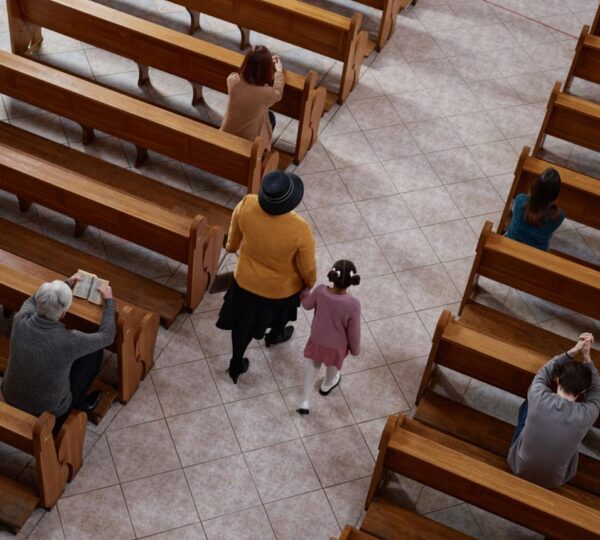
Several commenters suggested that congregations could benefit from dialogue about inclusivity, encouraging members to reflect on how personal preferences intersect with collective values.
They argued that fostering empathy, rather than enforcing visual conformity, strengthens the spiritual health of a community and creates a welcoming environment for all.
The debate around modesty, appearance, and faith ultimately centers on the tension between tradition and inclusivity, prompting reflection on what truly matters in communal worship.
Many concluded that spiritual participation should be accessible regardless of outward appearance, reinforcing the idea that faith is expressed through belief, devotion, and ethical behavior rather than clothing or body modifications.
This situation also demonstrated the role of perception in shaping judgment; personal biases influence how behaviors and appearances are interpreted, even when intentions are neutral or positive.
It became evident that cultivating self-awareness and empathy helps reduce unnecessary judgment and promotes acceptance of diverse expressions of identity within sacred spaces.
Several readers emphasized the importance of humility, suggesting that approaching such encounters with curiosity rather than criticism encourages dialogue, understanding, and personal growth.
Ultimately, the experience reminded me that faith is about connection—to God, to others, and to oneself—and that connection is not contingent on conforming to a particular look.
The woman’s presence in church challenged preconceived notions, prompting reflection on tolerance, judgment, and the values that underpin a genuine religious life.
By choosing to attend despite unconventional appearance, she asserted her right to belong, illustrating the universal principle that access to spiritual spaces should be inclusive and equitable.
It also highlighted how communities respond to difference, revealing both areas of progress and ongoing challenges in accepting diverse forms of self-expression.
In conclusion, this encounter at church served as a catalyst for deep reflection on personal biases, communal values, and the essence of faith itself, emphasizing that respect, tolerance, and understanding are fundamental to spiritual life.
While initial discomfort may arise from unfamiliar appearances, the principles of compassion, empathy, and inclusivity ensure that sacred spaces remain welcoming and meaningful for all.
Rather than focusing on conformity or visual norms, the emphasis should remain on spiritual engagement, shared values, and mutual respect, reinforcing the universal message of acceptance within faith communities.

