
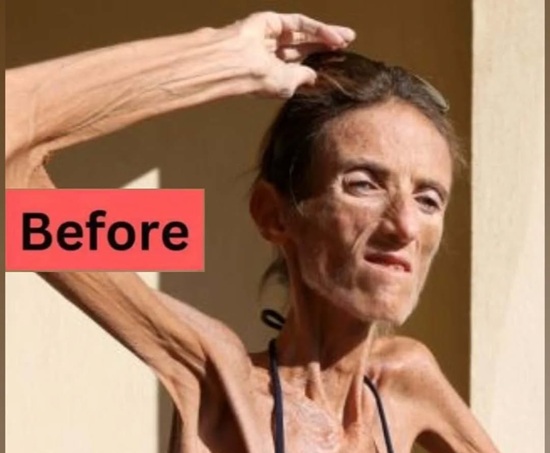
Let’s step past the filters, the curated selfies, and the impossible beauty standards for a moment. Society often values image over substance, equating thinness with success, worth, or desirability, while ignoring the hidden struggles behind appearances.
Valeria Levitin’s story exposes the brutal reality beneath these expectations. Once labeled “the world’s thinnest woman,” her journey is not about sensational headlines but about the deep human cost of chasing societal approval through extreme thinness.
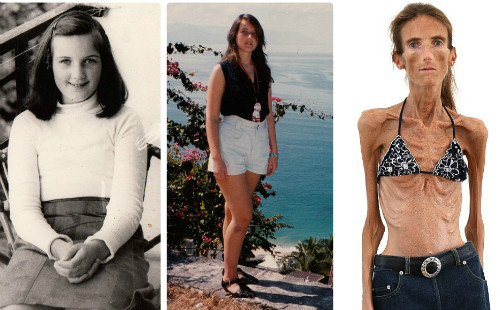
Her story begins long before public attention. Growing up in Russia, Valeria was surrounded by messages—some subtle, some direct—that equated being thin with being valued, teaching her that her worth depended on her body rather than her character.
Family dynamics reinforced this mindset. Parents, relatives, and peers emphasized appearance, often praising weight loss and critiquing natural body shapes. Like many young girls, she internalized these messages, believing self-worth could be earned through dieting and control over her body.
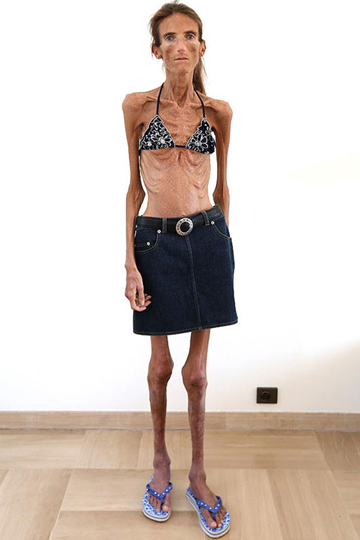
When Valeria moved to the United States as a teenager, the pressure intensified. A new culture with different expectations compounded earlier conditioning, and she began dieting at sixteen, believing that a smaller frame would earn acceptance, confidence, and love.
Her relationship with food quickly shifted from habit to obsession. Dieting was no longer about health but a relentless pursuit of a cultural ideal, one reinforced by peers, media images, and later, the modeling industry she entered in her twenties.
The modeling world treated thinness as currency, yet paradoxically, it demanded more. Agencies criticized her body despite its fragility. Valeria’s weight continued to drop, but she was still told she wasn’t thin enough, reinforcing dangerous behaviors and unhealthy standards.
By her early twenties, Valeria’s health had become critical. Bones weakened, heart function declined, and daily tasks such as walking or sitting caused pain. Despite extreme suffering, she felt trapped by fear, societal expectations, and personal obsession with thinness.
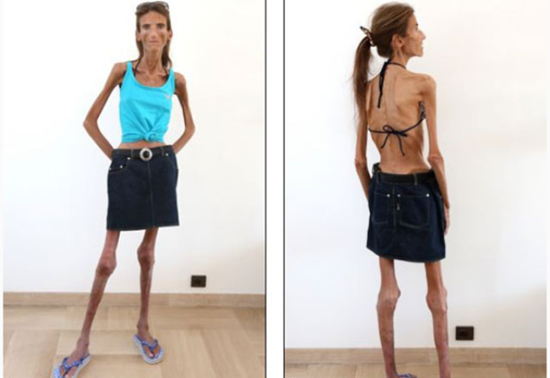
Her weight eventually dropped below 60 pounds, a life-threatening condition. Every bite of food became a battle of both mind and body, and she described feeling like a ghost, a shell of the vibrant person she once was.
Public fascination followed. Media outlets labeled her the “world’s thinnest woman,” sparking intense attention from strangers online. Messages poured in from young girls asking for dieting tips, praising her extreme figure, and idolizing an image that concealed immense suffering.
Valeria refused to perpetuate that illusion. “I’m not here to teach girls how to disappear,” she declared. That phrase became her mission, marking the start of a purposeful effort to use her story to prevent others from experiencing similar harm.
Turning pain into advocacy, Valeria chose honesty over hiding. She spoke publicly about her experience with anorexia, highlighting the toxic influence of societal image obsession and the real, often invisible cost of chasing impossible ideals.
She emphasized that her story is not about fame, but about survival and awareness. By sharing the raw truth of her journey, she hopes to prevent others from entering the same dangerous cycle of self-starvation and body fixation.
Despite her past struggles, Valeria holds hope for the future. Her dream of becoming a mother motivates her daily, reminding her that life is measured not in numbers or appearances, but in moments, love, and human connection.
Her story resonates strongly in today’s social media culture. Filters, photo editing apps, and flawless feeds amplify comparison and self-doubt, creating fertile ground for eating disorders, particularly among vulnerable young audiences.
Valeria’s candid sharing cuts through the illusion. She reminds us that every post may hide insecurity, fear, or suffering. The person behind the image may be fighting battles invisible to those who only see perfection.
Eating disorders rarely appear suddenly or dramatically. They often begin subtly, with quiet statements like “I’ll skip lunch,” or “I just want to lose five more pounds,” hiding in compliments, new diets, or silence that seems harmless to outsiders.
Early detection and support are vital. Friends, parents, and teachers should pay attention, gently ask questions, and offer nonjudgmental assistance. Intervening before behaviors become entrenched can save lives and prevent years of suffering and physical damage.
Valeria emphasizes that health, well-being, and self-worth matter far more than societal approval. “No job, no trend, no photo is worth your health,” she declares, challenging the prevailing notion that thinness equates to success or admiration.
Her advocacy is about shifting perspective. Beauty should not be measured by numbers or conforming to fleeting trends, nor should suffering be romanticized. Stories like hers are necessary not to shock, but to awaken awareness and compassion.
Valeria’s experience also illustrates that eating disorders impact both body and mind. Malnutrition, organ strain, and fragile bones accompany intense psychological distress, including feelings of isolation, anxiety, and emotional numbness that often go unnoticed by observers.
Support networks play a critical role in recovery. Valeria stresses that empathy, open communication, and professional guidance are essential for healing. Friends, family, and mentors can create environments that foster resilience and counteract harmful societal pressures.
She underscores the danger of idolizing extreme thinness. Messages from social media followers encouraged her past behavior, yet these “compliments” masked the destructive reality of her condition, showing how admiration can inadvertently normalize self-harm.
Through her public advocacy, Valeria challenges the culture of comparison. She shows that self-worth cannot and should not be derived from appearance, numbers on a scale, or online validation, highlighting the importance of prioritizing mental and physical health.
Valeria’s recovery demonstrates resilience. By focusing on personal goals, such as building a family and maintaining well-being, she reclaims autonomy over her body and life, proving that healing is possible even after prolonged, life-threatening struggles.
Her story highlights the pervasive influence of societal messaging. Media, advertising, and cultural norms continue to propagate unrealistic ideals, often glorifying thinness and punishing natural body diversity, particularly affecting young women and impressionable audiences.
Education and awareness are essential. Understanding that eating disorders are medical conditions, not lifestyle choices, reduces stigma and encourages early intervention, support, and treatment, reinforcing the message that suffering is not a measure of value or dedication.
Valeria’s message resonates across generations. By emphasizing purpose over perfection, she reframes beauty and achievement as being rooted in health, kindness, and meaningful connection rather than appearance or social media recognition.
The story also illustrates the intersection of mental health and public scrutiny. Online exposure can exacerbate vulnerability, creating pressure to maintain an illusion, yet Valeria uses her platform to counteract this with authenticity and candid reflection.
Her advocacy encourages proactive action. Recognizing subtle warning signs in oneself or loved ones, such as obsessive dieting or distorted body image, can prevent escalation, underscoring the role of awareness, vigilance, and compassion in safeguarding health.
Valeria’s journey demonstrates the power of transformation. From life-threatening illness to public education, she exemplifies that surviving trauma and reclaiming agency can create opportunities to influence positive change and inspire others struggling with similar issues.
The emphasis on self-care is central. Healing involves nurturing both body and mind, establishing healthy habits, seeking professional support, and cultivating relationships that reinforce emotional security, self-respect, and personal fulfillment beyond societal expectations.
Social media literacy is critical. Recognizing curated images, edited posts, and unrealistic ideals helps individuals develop resilience, critical thinking, and a healthier relationship with self-image, reducing the likelihood of harmful comparison or disordered eating behaviors.
Valeria reminds the public that each person’s journey is unique. There is no single path to recovery, and no formula for worth. Individual experiences, vulnerabilities, and strengths must be respected and understood in context.
Her story has a broader societal impact. By exposing the dangers of extreme body obsession and image-driven pressure, she contributes to ongoing conversations about mental health, media responsibility, and the need for compassionate representation of diverse bodies.
Ultimately, strength is not measured in pounds. Valeria’s resilience, advocacy, and dedication to saving lives illustrate that human worth derives from courage, empathy, and the ability to transform suffering into purposeful action.
Valeria Levitin once weighed less than 60 pounds, but today her story embodies hope, healing, and practical guidance. Her voice offers education and comfort to those affected, proving that recovery and meaningful life are possible.
Her message to anyone struggling is simple but profound: your worth is not defined by weight, dress size, or outward appearance. You deserve help, love, respect, and the freedom to live fully without shame or fear.
Valeria’s life emphasizes that survival and self-love can coexist. She demonstrates that navigating extreme challenges does not preclude achieving goals, forming meaningful relationships, and contributing positively to the world, creating a blueprint for resilience and empowerment.
Through advocacy, Valeria transforms personal suffering into social impact. By speaking publicly and honestly, she fosters understanding, reduces stigma, and inspires individuals and communities to address body image pressures, mental health, and eating disorders proactively.
Her story challenges the normalization of suffering. It calls for a cultural shift from celebrating unrealistic thinness to valuing health, authenticity, and emotional well-being, advocating for supportive environments in families, schools, workplaces, and online spaces.
Valeria’s journey is a reminder that early intervention saves lives. Observing changes in behavior, speaking with empathy, and providing support without judgment can prevent long-term damage, emphasizing community responsibility in mental and physical health.
She illustrates that purpose is a powerful motivator. Beyond survival, focusing on meaningful goals, relationships, and aspirations provides direction and hope, demonstrating that life after extreme hardship can be not only possible but fulfilling.
In a world dominated by image and comparison, Valeria’s story cuts through the noise. Her experience underscores the need for honesty, compassion, and self-respect, highlighting that real beauty and strength come from within rather than from numbers or public admiration.
