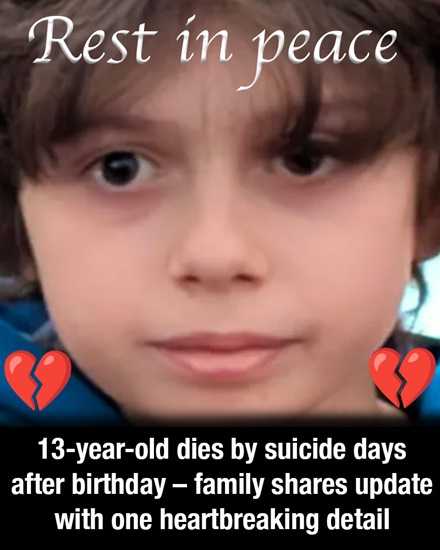
The loss of 13-year-old Josiah Michael Dwinell has left a family and a wider community facing profound grief, unanswered questions, and a deep sense that earlier intervention might have changed the outcome.
Josiah had recently marked his 13th birthday on March 4, a milestone that should have represented growth and new beginnings, yet within days, his life ended in a tragedy that has deeply affected those around him.
For his loved ones, the timeline is not just heartbreaking but also difficult to process, especially given the concerns they say were raised repeatedly about his well-being in the months leading up to his passing.
According to family members, Josiah had been experiencing bullying at school and during bus rides, a pattern they believe contributed to emotional distress that gradually became more visible over time.
His aunt, Shaena Stebbins, described a young boy who was struggling in ways that were clear within the home environment, even if those struggles were not always fully recognized beyond it.

Family members shared that they had expressed concerns about his mental health on multiple occasions, hoping that early awareness might lead to meaningful support and intervention.
Josiah’s life had already been shaped by significant personal loss, as his biological mother passed away more than five years earlier, leaving a lasting emotional impact during his formative years.
Following that loss, he lived with his grandmother, whom he was deeply close to, and who became a central figure in his daily life and emotional support system.
Relatives describe his grandmother as a consistent and caring presence, someone who remained attentive to his needs and sought to help him through increasingly difficult emotional experiences.
In the months before his death, there were reportedly hospital visits, conversations about his emotional state, and ongoing attempts to seek professional guidance and support.
However, according to his family, some of these concerns were not always met with the level of urgency or understanding they felt was necessary given the circumstances.
They believe that certain behaviors may have been interpreted as attention-seeking rather than as indicators of deeper emotional distress requiring careful evaluation and support.
This distinction can be critical, particularly in young individuals, where outward behavior may serve as a signal of internal struggles that are not easily expressed in words.
Understanding those signals requires patience, attentiveness, and a willingness to take concerns seriously, even when they may not appear urgent at first glance.
For Josiah, his family believes the ongoing bullying he experienced became overwhelming, creating emotional pressure that he found increasingly difficult to manage.
They shared that after one particular bus ride, he expressed that he could no longer cope with the situation, a statement that now carries significant weight in hindsight.
Moments like these often raise broader questions about how warning signs are identified and addressed, particularly within systems designed to support and protect young people.
In the days following his passing, loved ones have spoken not only about the struggles he faced but also about the person he was beyond those challenges.
They describe him as a kind and valued member of the family, someone who brought light, warmth, and joy into the lives of those who knew him.
Their reflections emphasize that his identity cannot be defined solely by the difficulties he experienced, but also by the positive impact he had on others.
As the family navigates their grief, they have also been organizing support to help manage the financial aspects associated with medical care and funeral arrangements.

Grief in situations like this often extends beyond the immediate family, affecting classmates, educators, neighbors, and the broader community connected to the individual.
Such tragedies frequently prompt renewed attention to the issue of bullying, particularly within school environments where young people spend a significant portion of their time.
Bullying can take many forms, including verbal, social, and physical behaviors, and its impact can vary depending on the individual and the context in which it occurs.
Addressing bullying effectively requires coordinated efforts from families, schools, and communities, as well as clear policies and consistent follow-through.
There is also an important need to consider how mental health concerns in children and adolescents are recognized and responded to in different settings.
Young people may express distress in ways that are subtle or misunderstood, making it essential for adults to remain attentive and responsive to changes in behavior or mood.
When concerns are raised repeatedly, they provide an opportunity for early intervention, which can play a significant role in preventing escalation.
At the same time, it is important to acknowledge that situations like this are complex and rarely have a single identifiable cause.

Multiple factors often intersect, including personal history, social environment, emotional health, and available support systems, making each case unique.
Understanding these complexities is not about assigning blame in one direction but about identifying areas where additional support or awareness may be beneficial.
In reflecting on Josiah’s story, there is a broader conversation about how communities respond when young individuals are struggling.
Creating environments where children feel safe, heard, and supported is essential in promoting well-being and resilience.
This includes encouraging open communication, fostering empathy among peers, and ensuring that concerns are taken seriously by responsible adults.
Schools play a critical role in this process, as they are often the first setting where behavioral changes or social challenges become visible.
Providing resources, training, and clear procedures can help educators respond effectively when concerns arise.
Families also play an essential role, offering emotional support and advocating for their children when challenges emerge.
In many cases, collaboration between families and schools can lead to more comprehensive and effective solutions.
Community awareness further strengthens these efforts by promoting understanding and reducing stigma around topics such as bullying and mental health.

Open conversations can help individuals feel less isolated and more willing to seek support when needed.
In the aftermath of loss, there is often a collective desire to find meaning and to prevent similar tragedies in the future.
This can lead to increased advocacy, education, and policy discussions aimed at improving support systems for young people.
While these efforts cannot change the past, they can contribute to a more responsive and compassionate environment moving forward.
For Josiah’s family, the focus remains on honoring his memory and recognizing the full scope of who he was as a person.
Their reflections highlight the importance of remembering not only the challenges he faced but also the joy and connection he brought into their lives.
Stories like this also serve as a reminder of the importance of listening carefully when concerns are expressed.
Even when situations seem uncertain, taking the time to understand and respond can make a meaningful difference.
Providing support does not always require complex solutions; sometimes it begins with simply being present and attentive.
For those reading this, there is a clear message about the value of awareness and responsiveness.
Recognizing signs of distress, offering support, and seeking appropriate help are all steps that can contribute to positive outcomes.
It is also important to know that resources are available for individuals who may be experiencing emotional distress or crisis.
In the United States, support is accessible through the 988 Suicide & Crisis Lifeline, which provides confidential assistance by call or text at any time.
Additional support is available through Crisis Text Line by texting MHA to 741741, connecting individuals with trained volunteers who can offer guidance and support.
In urgent situations, contacting local emergency services ensures that immediate assistance can be provided when safety is at risk.
These resources exist to provide help, reassurance, and connection during difficult moments.
Ultimately, the loss of a young life is a profound reminder of the importance of care, attention, and timely support.
It highlights the need for continued efforts to create environments where individuals feel safe to express their struggles and seek help.
Through awareness, empathy, and collective responsibility, communities can work toward reducing the risk of similar tragedies.
Josiah’s story, while deeply painful, underscores the importance of recognizing and responding to the needs of young people with compassion and understanding.
In remembering him, there is also an opportunity to reinforce the value of listening, supporting, and acting when it matters most.
Because sometimes, the most meaningful difference comes from noticing what might otherwise be overlooked and choosing to respond with care.
