
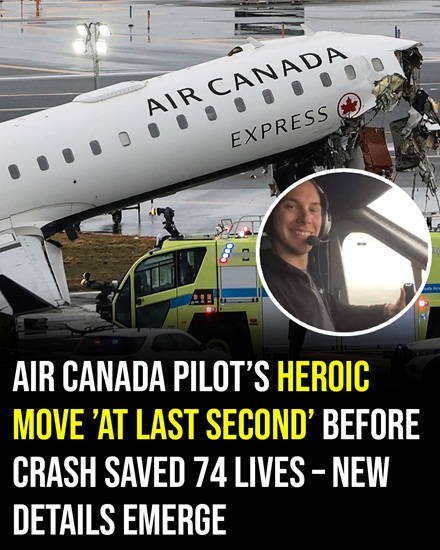
What began as a routine arrival at LaGuardia Airport on a Sunday night quickly turned into a devastating runway collision that shocked passengers, aviation professionals, and travelers across the United States in a matter of seconds.
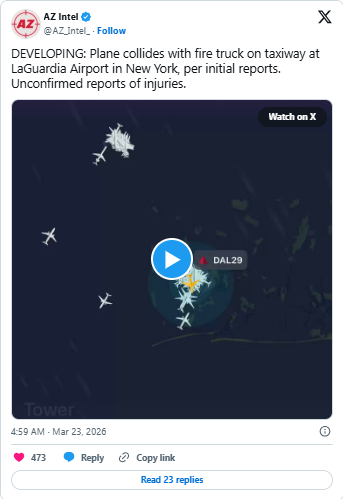
An Air Canada Express aircraft, arriving from Montréal–Trudeau International Airport, had just completed its descent and touched down on Runway 4 when the flight violently collided with a fire truck operating on the airfield during active taxi operations.
Officials confirmed that both the pilot and co‑pilot aboard the aircraft were killed in the collision, loss of life that immediately brought sorrow to families and colleagues while raising urgent questions about runway safety and communication.
At least two airport rescue and firefighting (ARFF) officers riding in the fire truck were injured and transported to local hospitals for medical treatment, with authorities describing a chaotic scene as emergency crews worked to stabilize the injured.
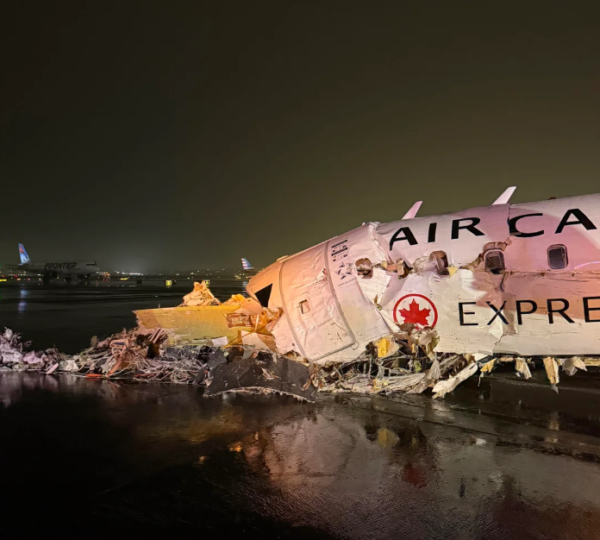
Passengers on the aircraft were shocked when the normal sensations of landing abruptly shifted to violence: a sharp jolt, a loud impact, and the terrifying feeling of moving sideways as uncertainty swept through the cabin.
One passenger account shared online by a user identified as “bradysego12” described those final moments after touchdown, writing that the aircraft had only been slowing down when the jolt and terrifying bang suddenly occurred.
“We had just touched down and maybe about 30 seconds later we all felt a jolt forward, then a loud bang, and what felt like sliding sideways down the runway,” the passenger wrote in a widely read online account.
At first, many onboard did not grasp the severity of the situation, mistaking the force of impact for a prolonged brake or turbulence, only realizing moments later that something catastrophic had occurred on the tarmac.
Other passengers, including Jack Cabot, spoke directly with media outlets such as CBC News, recounting the instant of collision as “overwhelming panic” when it became clear that the aircraft had struck a large object.
“One moment we were slowing down, feeling the normal resistance of brakes,” Cabot said, “and then it was just this sudden, overwhelming, panic because we’d hit something and there was nobody in control anymore.”
In the midst of fear and confusion, one startling detail has emerged from passenger testimony: a last‑second maneuver from the cockpit that some believe may have reduced the force of impact and prevented even greater loss of life.
“But someone did say the pilot tried to reverse thrust at the last second,” the online passenger wrote, adding that the decision may have saved lives, given the severity of the collision and how quickly events unfolded.
“Honestly, they likely saved our lives. I wish I could tell their families how thankful I am. They are heroes,” the passenger added, echoing a sentiment shared by many on board who survived to speak about the crash.
Aviation experts note that reverse thrust — a tactic pilots use to redirect engine power forward to slow momentum — can reduce stopping distance and impact forces, though its effectiveness depends on timing, altitude, runway length, and other critical factors.
Despite the heroic efforts, officials confirmed that both pilots aboard the Air Canada Express flight died as a result of injuries sustained in the collision, shocking the broader aviation community and prompting tributes from colleagues and loved ones.
One of the pilots has since been publicly identified as a 30‑year‑old aviator from Quebec who was deeply passionate about flying, pursuing training and language skills from a young age in order to fulfill his dream of becoming a commercial pilot.
“He flew his first plane when he was 16 years old,” his great‑aunt Jeannette Gagnier said in an emotional interview with Toronto Star, describing a life devoted to aviation and a lifelong commitment to the skies.
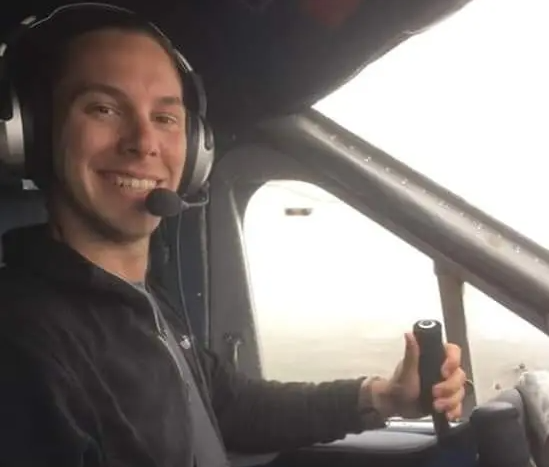
His family described him as dedicated and persistent, someone who continued taking courses and flying whenever he could, a youthful passion that endured throughout his adult life and career in aviation.
In the immediate aftermath of the collision, air traffic control audio recordings captured the frantic moments just before the impact, with controllers urgently attempting to halt a vehicle on the runway and prevent disaster.
“Truck 1, stop,” a controller can be heard saying over the radio, followed by confusion, static, and the chilling silence that often follows the sound of a catastrophic impact on the airfield.
Moments later, ground crews are heard confirming that an incident had occurred, their voices filled with disbelief and shock as they attempted to assess damage and coordinate emergency response amidst confusion.
“Alright, there’s an incident on the field,” one controller said, while another responded, “Yeah, we saw it, man,” signaling that the scale of the event was immediately apparent to those monitoring the airfield communications.
Later in the audio, one controller expressed intense remorse, saying, “I messed up,” a statement met with reassurance from a colleague who replied, “No man, you did the best you could,” reflecting the emotional weight carried by air traffic personnel.
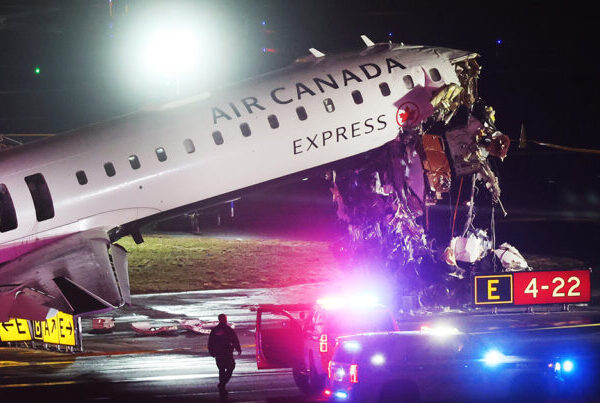
The collision brought LaGuardia Airport to a complete standstill for hours, shutting down flight operations and leaving passengers stranded in terminals as crews worked to clear the wreckage and secure the runway for investigation.
Authorities report that the aircraft, carrying more than 70 people onboard including passengers and crew, struck the fire truck at approximately 24 miles per hour, a force significant enough to cause fatal injuries and major structural damage.
Dozens of passengers were transported to local hospitals for treatment of injuries sustained in the crash, though many were later released, and some described lingering shock and trauma as they processed what had occurred.
Outside the terminals, travelers described a scene of frustration and fear as cancellations piled up and little information was available, with one passenger saying, “It’s scary. You never know if it could have been one of us.”
Another witness, 23‑year‑old Leo Medina, who was aboard another aircraft on the tarmac at the time, described the moment of impact as though “the plane got cut in half,” emphasizing how sudden the collision felt from nearby locations.
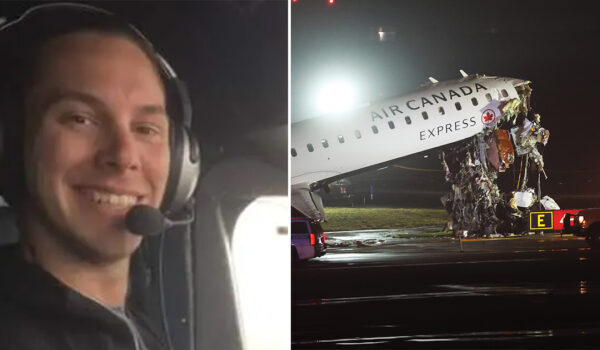
In the days since the crash, renewed attention has focused on runway safety and previous incidents at LaGuardia Airport that raised concerns about taxiing procedures and communication between ground vehicles and aircraft.
Just a few months earlier, in October, two regional jets operated by Delta Air Lines collided while taxiing at LaGuardia, leaving one person hospitalized and prompting scrutiny of airport ground operations.
And more recently at Newark Liberty International Airport, a near‑miss incident was reported when two aircraft nearly landed on intersecting runways simultaneously, a close call that drew renewed emphasis on controller coordination.
Pilots have repeatedly warned that miscommunication, heavy traffic, and mounting pressure on air traffic controllers — particularly during adverse weather conditions — can increase risk, especially at highly congested airports like LaGuardia.
Last summer, a pilot submitted a detailed incident report to NASA Aviation Safety Reporting System describing a close call in which unclear guidance from air traffic control nearly resulted in disaster on a stormy day at LaGuardia.
“Please do something,” the pilot wrote, describing how the rapid pace of operations and dense traffic levels strained controller capacity and heightened danger for aircraft maneuvering on active runways under challenging conditions.
In the same report, the pilot warned that increasing operational pressure was pushing LaGuardia toward unsafe conditions, suggesting that even routine operations could become precarious without additional safety measures in place.
“The pace of operations is building in LGA,” the pilot wrote, adding that controllers were “pushing the line,” and comparing the situation to the period before a 2025 mid‑air collision near Washington, DC, US that killed more than 60 people when two aircraft collided over the Potomac River.
As federal investigators continue to examine flight data, ground radar communication, and runway surface interactions, officials have pledged transparency and cooperation to determine causal factors and recommend safety enhancements.
LaGuardia Airport leadership has also committed to reviewing ground operations procedures, with an emphasis on improving coordination between air traffic control, ground vehicles, and arriving aircraft to prevent future tragedies.
The National Transportation Safety Board (NTSB) and Federal Aviation Administration (FAA) are jointly investigating the deadly collision, analyzing black box data, radar transcripts, and maintenance histories as part of a comprehensive inquiry.
Families of the victims, passengers, and crew have been offered counseling and support services by airline and airport authorities, recognizing the emotional toll that such a traumatic incident imposes on survivors.
In the wake of the tragedy, airline industry leaders have reiterated the importance of runway safety, situational awareness, and technological upgrades that can help prevent incursions and collisions during taxiing or landing operations.
Professional pilot associations have echoed calls for enhanced communication protocols, improved vehicle tracking systems, and expanded controller training aimed at reducing human error in high‑pressure environments.
As LaGuardia Airport resumes normal operations, travelers and aviation professionals alike are urging continued vigilance and structural improvements to ensure that air travel — one of the safest modes of transportation — remains so for all who fly.
Investigators caution that final conclusions will take time, but early cooperation between federal agencies, airport officials, and airline representatives reflects a shared commitment to understanding and addressing all factors involved in the collision.
At the same time, tributes to the fallen pilots have emerged from around the globe, with colleagues and passengers alike honoring their dedication, professionalism, and bravery in a moment of unimaginable crisis.

