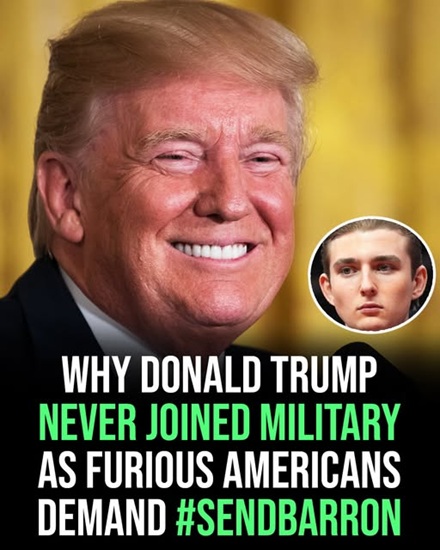
Donald Trump recently drew renewed public attention after sharing a photograph from his teenage years, offering a glimpse into an earlier chapter of his life that continues to invite reflection and discussion.
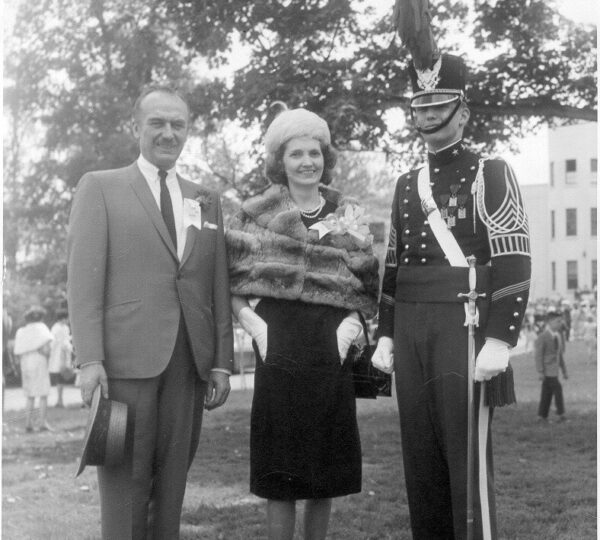
The image shows Trump dressed in uniform alongside his parents, Fred Trump and Mary Anne MacLeod Trump, during his time at New York Military Academy.
Located in Cornwall-on-Hudson, the academy is known for its structured environment, emphasizing discipline, leadership, and academic development, qualities often associated with traditional military-style education in the United States.
Trump attended the academy from the age of 13 until he graduated at 18, a period that many observers believe helped shape aspects of his personality, including competitiveness and a strong sense of hierarchy.
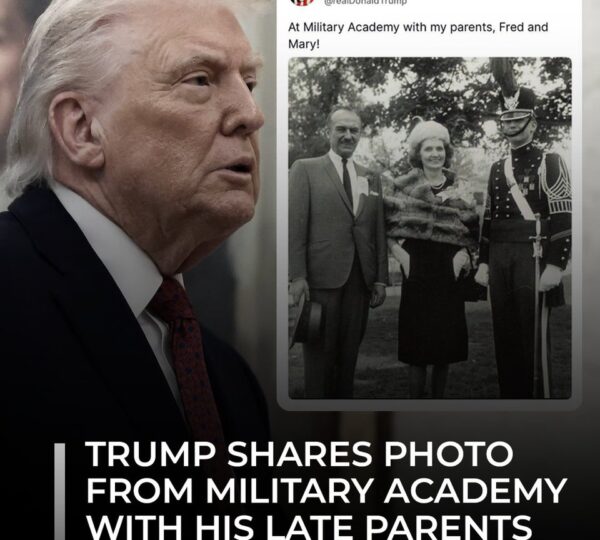
In sharing the photograph, Trump captioned it simply, recalling a moment with his parents, presenting the image as a personal memory rooted in family, youth, and formative life experiences.
On its surface, the post reflects a common human tendency to revisit earlier moments, particularly those connected to identity, upbringing, and the influence of family during adolescence.
However, the context in which the image was shared contributed to a broader public reaction, as timing often influences how even the most personal content is perceived and interpreted.
The photograph appeared during a period marked by heightened global tensions, including ongoing instability in parts of the Middle East and reports involving U.S. military activity abroad.
In such an environment, discussions related to military themes, service, and leadership often carry additional weight, shaping how audiences respond to seemingly unrelated content.
As a result, the image quickly became a focal point for online discussion, with reactions reflecting a wide range of perspectives shaped by political views, historical awareness, and personal beliefs.
Some viewers interpreted the photograph as a reflection of discipline and structured upbringing, associating the military academy experience with leadership qualities and personal development.
Others, however, connected the image to longstanding public discussions about Trump’s past, particularly his history during the Vietnam War, which remains a sensitive topic in American history.
Born in 1946, Trump reached draft age during the Vietnam War, a time when many young American men were subject to conscription under the Selective Service System.
During that period, Trump received five deferments, including four related to his education at Fordham University and later Wharton School of the University of Pennsylvania.
The fifth deferment was a medical exemption, reportedly due to bone spurs in his heels, a condition that was cited as the reason he was deemed unfit for military service at the time.
It is important to note that both educational deferments and medical exemptions were relatively common during that era, and many individuals used similar legal avenues to delay or avoid military service.
Nevertheless, such decisions have remained part of public discourse, particularly when viewed alongside the experiences of those who served in combat during the conflict.
Trump has stated in past interviews that he opposed the Vietnam War and that his deferment was based on legitimate medical grounds rather than a lack of willingness to serve.
Critics, on the other hand, have questioned the circumstances surrounding the diagnosis, suggesting that broader issues of access, privilege, and influence may have played a role.
These differing interpretations highlight the complexity of historical judgment, especially when evaluating actions taken within the legal and social framework of a specific time period.
Following the release of the photograph, online reactions reflected these long-standing divisions, with some users expressing support and others offering criticism or skepticism.
Social media platforms often amplify such reactions, creating environments where opinions can spread quickly and, at times, become more polarized than the original subject might warrant.
In many cases, discussions moved beyond the photograph itself, focusing instead on broader themes such as fairness, responsibility, and the role of individual choice during times of national conflict.
The conversation also extended to Trump’s family, including his son, Barron Trump, who has largely remained outside of political life.
Some online commentators noted that Barron is within the age range required to register with the Selective Service System, which mandates registration for men between 18 and 25.
While the United States does not currently have an active military draft, the requirement to register remains in place as a precautionary measure under federal law.
Speculation about potential future conscription tends to increase during periods of global uncertainty, though such discussions are often hypothetical rather than reflective of immediate policy changes.
In this instance, references to Barron Trump introduced an additional layer to the conversation, raising questions about the boundaries between public interest and private family life.
It is not uncommon for relatives of public figures to become subjects of public discussion, even when they do not hold official roles or participate directly in political activities.
This dynamic can shift the focus of debate away from substantive issues and toward more personal or speculative topics that may not contribute meaningfully to public understanding.
At its core, the reaction to the photograph reflects broader themes that extend beyond any single individual, touching on how societies remember and interpret historical events.
Military service, particularly during conflicts such as the Vietnam War, continues to carry deep emotional and cultural significance for many Americans.
For some, it represents duty, sacrifice, and a defining period in national history, while for others it raises questions about policy decisions and the human cost of war.
Trump’s history, including his deferments, exists within this larger context, making it a subject that continues to generate discussion and differing viewpoints.
Importantly, his deferments were granted in accordance with the laws and regulations in place at the time, a fact that shapes how they are understood from a historical perspective.
At the same time, legal validity does not necessarily resolve broader ethical or social questions, which often remain open to interpretation and debate.
The renewed attention sparked by the photograph illustrates how past events can resurface and take on new meaning when viewed through the lens of present circumstances.
It also highlights the role of media and digital platforms in shaping public discourse, as images and statements can quickly reach large audiences and generate widespread reaction.
In such environments, nuance can sometimes be lost, as complex issues are reduced to simplified narratives or framed in ways that emphasize division rather than understanding.
A more balanced approach involves considering both the historical context and the individual circumstances surrounding events, recognizing that multiple perspectives may coexist.
This does not require agreement, but rather an acknowledgment that interpretation is often influenced by personal experience, values, and access to information.
The photograph itself, while simple in composition, serves as a catalyst for these broader discussions, demonstrating how visual media can prompt reflection and debate.
It also underscores the importance of approaching such topics with care, avoiding assumptions or conclusions that are not supported by verified information.
In evaluating historical figures, it is useful to consider the full scope of their experiences, rather than focusing exclusively on a single aspect or moment in time.
This approach allows for a more comprehensive understanding, one that accounts for both actions and the context in which they occurred.
Similarly, it is important to distinguish between public roles and private lives, particularly when discussions involve individuals who have not chosen to participate in public discourse.
Maintaining this distinction helps preserve a level of fairness and respect, even within critical or analytical conversations.
Ultimately, the response to Trump’s photograph reveals as much about contemporary society as it does about the past, reflecting ongoing conversations about leadership, accountability, and historical memory.
It demonstrates how quickly narratives can form and evolve, especially in a digital age where information is constantly shared, interpreted, and debated.
At the same time, it highlights the enduring relevance of historical events like the Vietnam War, which continue to influence public perception decades after they occurred.
The discussion also serves as a reminder that understanding history requires more than immediate reactions; it calls for thoughtful consideration and a willingness to engage with complexity.
In this way, a single image can become a starting point for deeper reflection, encouraging individuals to examine not only the subject itself but also the broader context in which it exists.
While opinions may differ, the value lies in maintaining a balanced perspective, one that seeks clarity rather than conflict and understanding rather than oversimplification.
By approaching such topics with care and attention to detail, it becomes possible to engage in more meaningful and informed discussions.
In the end, what remains most important is not only what is remembered, but how it is interpreted, and whether that interpretation is guided by fairness, accuracy, and thoughtful consideration.
