
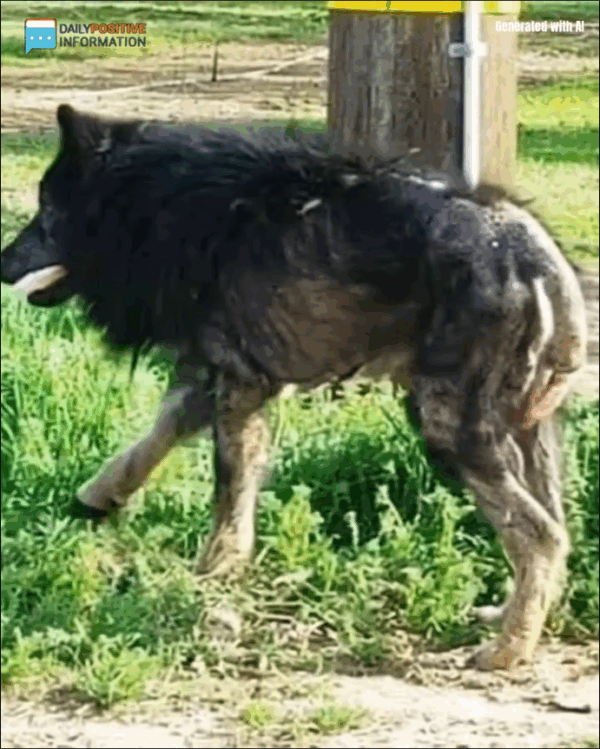
For months, a fragile and mysterious dog wandered along a roadside in Madera Ranchos, California, drawing uneasy glances from passing drivers. His appearance was so unusual that locals began referring to him as a “werewolf.”
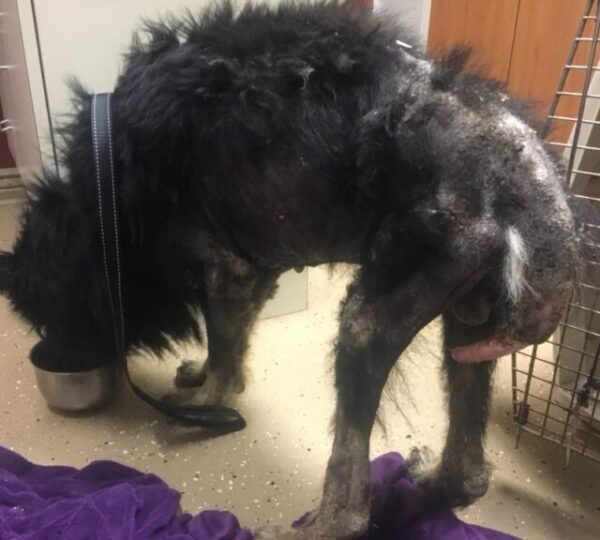
His body was thin and weakened, his fur patchy and uneven, revealing irritated skin beneath. Large sections of hair were missing, giving him a skeletal, almost ghost-like appearance that frightened those who saw him.
The dog’s condition appeared severe. He suffered from visible mange, a skin disease that caused constant itching and hair loss. His tail seemed broken, hanging awkwardly, adding to his already alarming look.
People in the area noticed him frequently but kept their distance. His fragile frame and unusual appearance created uncertainty, and many were unsure whether he might be dangerous or too sick to approach safely.
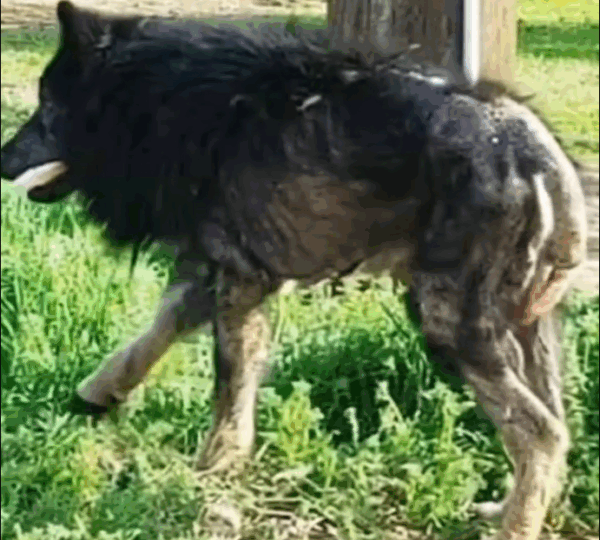
Despite being seen regularly, no one intervened. The dog survived by scavenging and staying close to the roadside, likely hoping for food or help, yet receiving neither for an extended period.
His story might have remained unnoticed if not for a concerned local resident who decided to share his condition on Facebook, hoping someone with experience might step in to help.
That post reached animal rescuer Megan Bowe, who immediately felt compelled to act. She had seen many cases before, but something about this dog’s condition deeply affected her.
“When I saw him, I was ready to cry,” Megan later explained, recalling the emotional impact of seeing such a young animal in such a devastating state of neglect and suffering.
Without hesitation, Megan went to find him. She approached carefully, aware that injured and neglected animals can be fearful, defensive, or too weak to respond normally to human contact.
When she finally reached him, the reality was even more heartbreaking than the photos had suggested. The dog was severely underweight, exhausted, and clearly in need of urgent medical attention.
Despite his condition, he did not show aggression. Instead, he appeared tired and cautious, as if he had simply been waiting for someone to notice him and offer help.
Megan was able to safely secure him and transport him to a veterinary clinic. The moment marked the beginning of a new chapter for the dog, who would soon receive a proper diagnosis.
At the clinic, veterinarians conducted a thorough examination and quickly identified multiple serious health issues. The dog was suffering from advanced mange, which explained his severe hair loss and skin irritation.
Further tests revealed that he had a shattered pelvis, likely caused by trauma such as a vehicle accident or another serious injury that had gone untreated for an extended period.
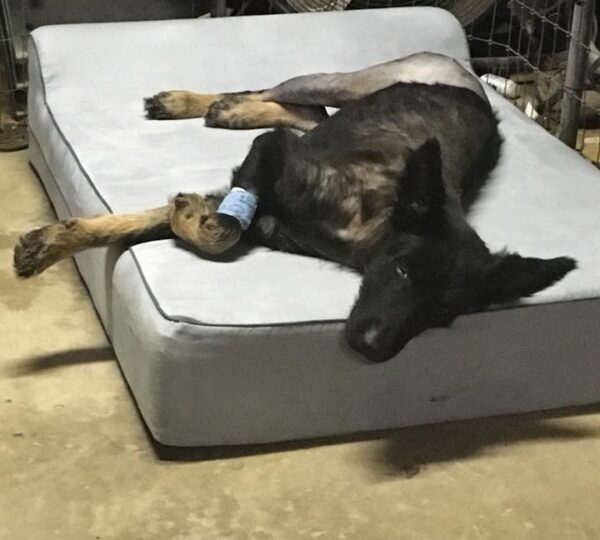
In addition to these conditions, he was diagnosed with severe malnutrition. His body had been deprived of essential nutrients, leaving him weak, underdeveloped, and vulnerable to further health complications.
The veterinary team confirmed that he was approximately one year old, still very young, which made his condition even more tragic given how much suffering he had already endured.
Megan decided to name him King, a symbolic choice meant to reflect the dignity and strength she believed he still possessed despite everything he had gone through.
King’s recovery journey began immediately. The first priority was stabilizing his condition through proper nutrition, hydration, and treatment for his mange to reduce discomfort and prevent further skin damage.
Because of his weakened immune system, he needed to be kept in isolation initially. This helped protect him from infections while allowing his body to slowly rebuild strength under controlled conditions.
Feeding had to be carefully managed. After prolonged malnutrition, introducing food too quickly can be dangerous, so his diet was gradually increased under veterinary supervision.
As days turned into weeks, small signs of improvement began to appear. King started gaining weight slowly, and his energy levels improved as his body responded to consistent care and nourishment.
Treatment for mange required patience. Medications and medicated baths helped reduce the infection, and over time, his irritated skin began to heal, allowing new fur to grow.
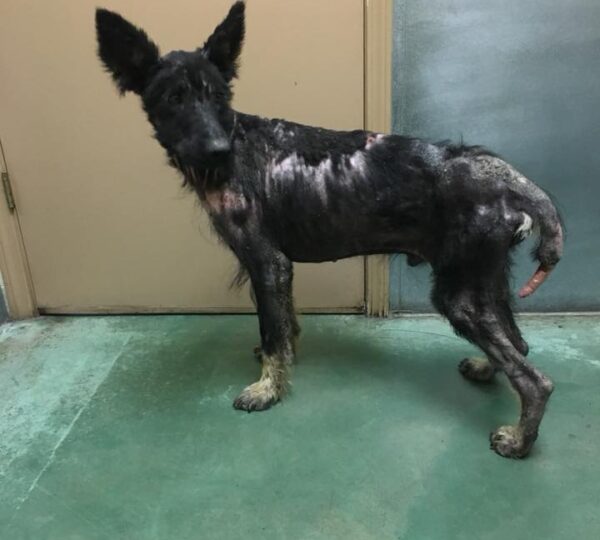
The broken pelvis presented a more complex challenge. Surgery would eventually be necessary, but King needed to be strong enough first to safely undergo such a procedure.
Throughout this period, Megan remained closely involved in his care, providing not only medical support but also emotional comfort, helping him rebuild trust in humans.
Despite everything he had experienced, King showed a gentle and affectionate personality. He responded positively to attention, often leaning into Megan for reassurance and comfort.
“He’s a super sweet dog,” Megan shared, emphasizing how his loving nature remained intact despite months of neglect and hardship.
As his condition stabilized, veterinarians determined that he was ready for surgery to repair his pelvis. The procedure was critical to restoring his mobility and long-term quality of life.
The surgery was successful, marking a major milestone in King’s recovery. Afterward, he required rest and rehabilitation to ensure proper healing and regain strength in his hind legs.
Recovery was gradual but steady. With time, King began to move more comfortably, slowly rebuilding his ability to walk, stand, and eventually play without significant pain.
Meanwhile, his fur continued to grow back. What was once patchy and thin became thicker and healthier, transforming his appearance into that of a recognizable, beautiful dog.
As his physical health improved, his personality became even more evident. King displayed curiosity, affection, and a playful spirit that had been hidden beneath his suffering.
He began enjoying simple pleasures that many dogs take for granted, such as short walks, gentle play, and spending time close to the people caring for him.
Car rides became one of his favorite activities. Sitting calmly and looking out the window, he seemed to embrace experiences he may have never had before his rescue.
Megan also introduced him to treats like dog-friendly ice cream, which he quickly grew to love, adding moments of joy to his recovery journey.
These everyday experiences highlighted how far King had come—from a neglected and fearful stray to a dog capable of enjoying life and forming strong bonds with humans.
His transformation was not only physical but emotional. The fear and uncertainty that once defined his behavior were replaced with trust, confidence, and affection.
King’s story also underscored the importance of community awareness. Without the initial Facebook post, his condition might have gone unnoticed, and he may not have received the help he needed.
It demonstrated how a single act of concern can lead to life-changing outcomes, especially when combined with the dedication of experienced rescuers and veterinary professionals.
Megan’s intervention showed the impact of compassion and persistence. Her willingness to step in when others hesitated ultimately saved King’s life.
As his recovery progressed, King reached a point where he could begin preparing for adoption, opening the door to a permanent and loving home.
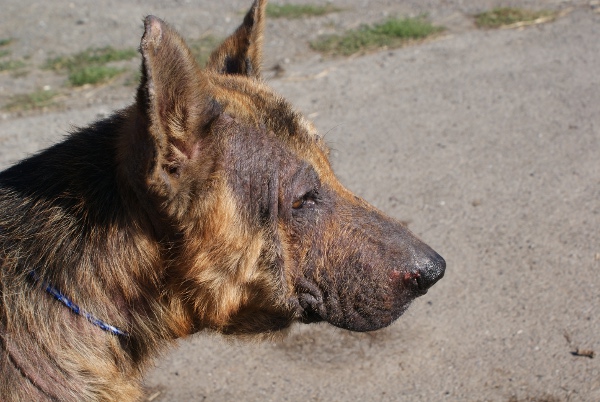
The contrast between his past and present was remarkable. Once feared and avoided, he had become a friendly and affectionate dog ready to become part of a family.
Potential adopters would see not a “werewolf,” but a resilient and loving companion who had overcome extraordinary challenges to reach this point.
His journey serves as a powerful reminder that appearances can be misleading, and that animals in distress often need understanding rather than fear.
King’s story also highlights the resilience of animals. Even after prolonged suffering, he was able to recover physically and emotionally with the right care and support.
The role of veterinary care was crucial in his recovery, addressing both visible and hidden injuries that could have otherwise shortened his life significantly.
Equally important was the emotional support he received. Building trust after neglect takes time, but consistent kindness helped him feel safe and secure again.
Megan’s dedication extended beyond medical treatment. She provided the patience and compassion necessary to help King rediscover a sense of normalcy.
As he continued to heal, King became a symbol of hope, demonstrating that even the most severe cases of neglect can have positive outcomes.
His transformation inspired many who followed his story, encouraging others to take action when they encounter animals in need.
It also emphasized the importance of not turning away from difficult situations. While fear is natural, compassion can lead to meaningful change.
King’s progress was documented over time, showing each stage of his recovery and allowing others to witness the impact of proper care and attention.
From his first uncertain steps to his confident movements, each milestone represented a victory over the challenges he once faced.
Today, King stands as a completely different dog—healthy, strong, and full of life, with a future that once seemed impossible now within reach.
He enjoys daily activities, forms bonds easily, and continues to show affection to those around him, embodying the resilience that carried him through his darkest days.
Soon, he will be ready to join a permanent home, where he can continue to thrive and experience the stability and love every animal deserves.
His story is ultimately about second chances. It shows how one person’s decision to help can transform not only a life but also the perspectives of those who hear it.
King’s journey from roadside survival to recovery is a testament to the power of compassion, patience, and the belief that every life is worth saving.
What once seemed like a frightening and hopeless situation became a story of healing and hope, proving that even the most vulnerable animals can find happiness again.
All it took was one person to stop, care, and act—and in doing so, give King the second chance that changed everything.

