
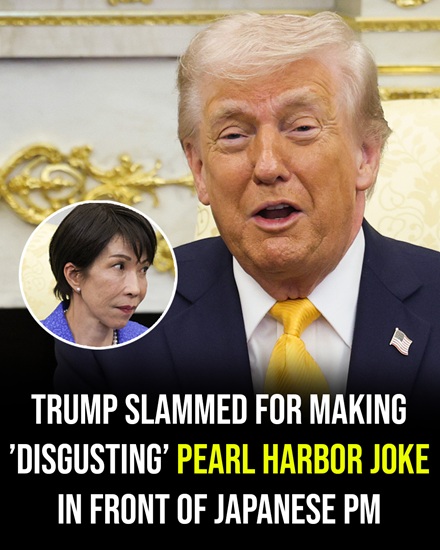
President Donald Trump stunned diplomats, journalists, and observers on Thursday when he made an awkward reference to the 1941 Pearl Harbor attack during an Oval Office meeting with Japan’s prime minister.
The comment occurred as Trump faced questions about recent U.S. military actions against Iran, and it instantly became a diplomatic talking point nationwide.
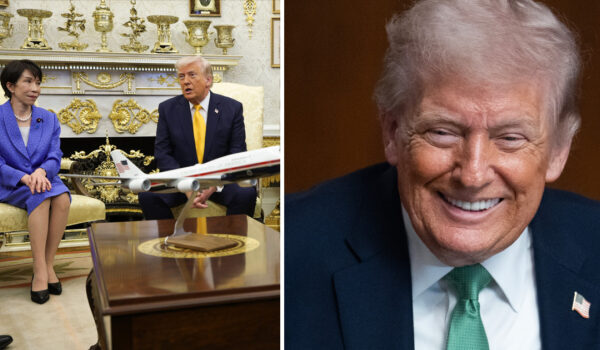
The meeting took place at the White House on March 19, 2026, as Donald Trump hosted Japanese Prime Minister Sanae Takaichi for discussions on bilateral cooperation, security, and coordination related to the ongoing conflict with Iran.
The primary agenda of the meeting was the situation in the Middle East, particularly the United States’ military operations against Iranian targets, which began in late February under what U.S. officials described as an effort to counter threats posed by the Iranian regime.
The exchange took a sharp turn when a Japanese journalist asked the U.S. president why key allies, including Japan, had not been informed in advance about the strikes. Trump responded by emphasizing strategic surprise, a justification that quickly led to a controversial historical comparison.
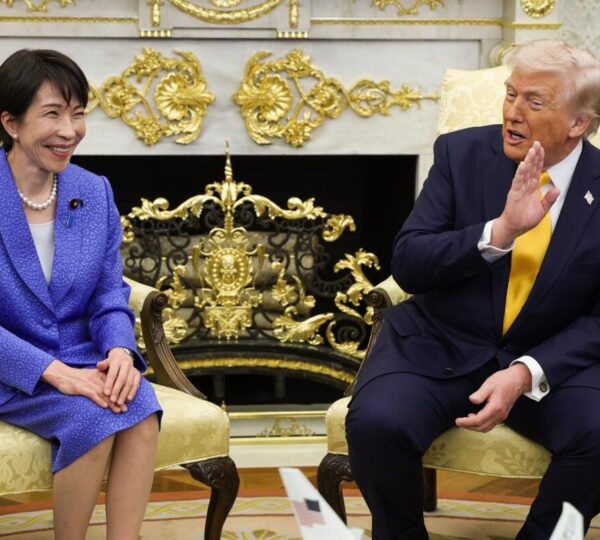
Trump said the United States “didn’t tell anybody about it because we wanted surprise,” a point meant to illustrate the value of operational secrecy, but the delivery shifted dramatically when he added, “Who knows better about surprise than Japan? Okay? Why didn’t you tell me about Pearl Harbor?”
The Pearl Harbor attack occurred on December 7, 1941, when Japanese forces launched a surprise military strike on the U.S. naval base in Hawaii, killing more than 2,400 American service members, injuring around 1,200 others, and sinking or damaging numerous battleships and aircraft.
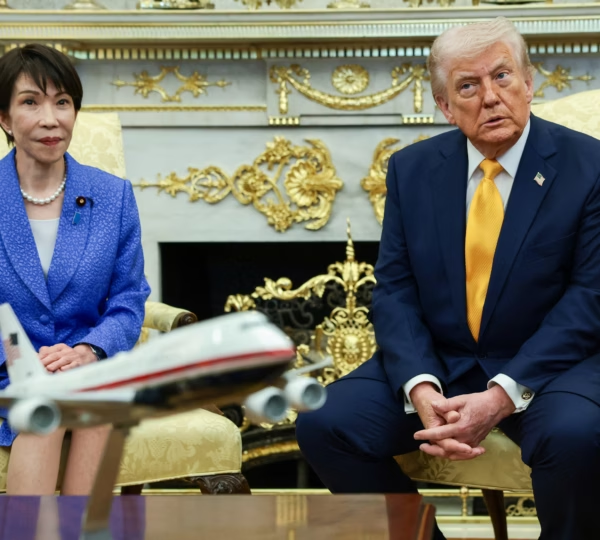
Trump’s remark immediately created a visibly uncomfortable atmosphere in the Oval Office. Video and photographs from the meeting show Prime Minister Takaichi’s expression turning tense as reporters looked on, unsure how to react to the juxtaposition of humor and a sensitive historical event.
Moments of uneasy laughter rippled through the room, but the levity quickly faded as attendees recognized the gravity of invoking one of the deadliest attacks on U.S. soil in front of Japan’s head of government.
Takaichi did not immediately respond to the remark during the session. Observers noted that she maintained a measured posture and diplomatic professionalism, avoiding a direct reaction to the historical reference while continuing to participate in the broader discussion.
Afterward, Trump shifted back to explaining the U.S. military strategy, reiterating that striking Iran with an element of surprise had been integral to achieving tactical objectives. He suggested that prior notification to allies could have undermined the effectiveness of the blows.
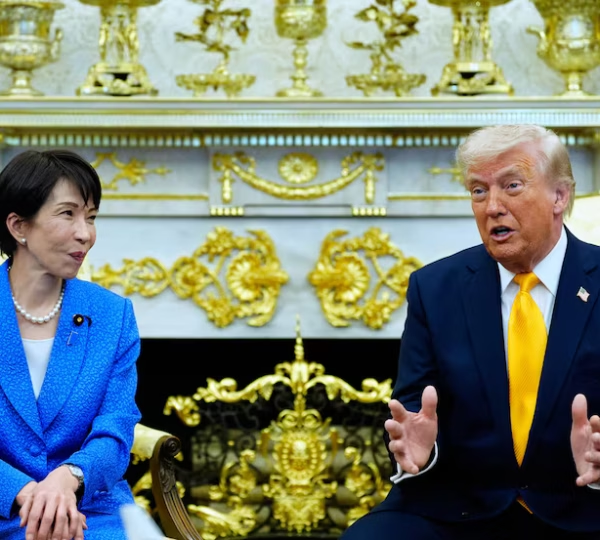
Trump’s comments came as the United States and its partner Israel continue military actions geared toward degrading Iran’s missile defenses, air capabilities, and other strategic targets as part of what U.S. officials refer to as an effort to limit Iranian influence and reduce security risks.
Although the United States has a formal alliance with Japan rooted in decades of cooperation since the end of World War II, historical sensitivities related to the Pearl Harbor attack remain significant for older generations and historians on both sides of the Pacific.
Modern U.S.–Japan relations have focused heavily on shared security interests, economic ties, and regional stability in the face of rising geopolitical competition in the Indo‑Pacific, especially regarding China’s strategic ambitions.
Prime Minister Takaichi became Japan’s first female prime minister after her election victory, reflecting internal political shifts in Tokyo as the nation navigates complex diplomatic and defense challenges at home and abroad.
Japan has increasingly sought deeper cooperation with U.S. defense strategies, including joint readiness exercises and logistics coordination in areas such as the South China Sea, East China Sea, and Korean Peninsula.
Despite these strategic bonds, public opinion in Japan toward military conflict in the Middle East remains cautious, with many Japanese citizens reluctant to see their country drawn deeper into distant conflicts.
Trump’s invocation of Pearl Harbor drew immediate reactions globally, with commentators on both sides of the Pacific weighing in on the appropriateness of using historical wartime trauma as a rhetorical device in contemporary diplomacy.
Some U.S. analysts described the comment as a misstep, particularly given the ongoing efforts by American leaders over decades to build strong post‑war ties with Japan through mutual remembrance and reconciliation.
Former U.S. presidents and senior diplomats have historically treated references to World War II with solemnity; official visits by American leaders to Pearl Harbor and other memorials have emphasized respect and remembrance.
During Donald Trump’s previous terms in office, interactions with Japan often highlighted shared interests in trade, technology, and defense cooperation, even as disagreements surfaced over issues such as tariffs and industrial policy.
The president’s remark about Pearl Harbor drew scrutiny not only for its historical sensitivity but also for the timing, coming amid an intensifying conflict in the Middle East that has captivated international attention and raised diplomatic stakes.
Critics argued that Trump’s framing risked trivializing a painful chapter in history at a moment when unity among allies could be critical to managing broader global tensions and achieving diplomatic resolutions.
Supporters of Trump, including some conservative commentators, defended the president’s style, suggesting his candidness about military strategy was intended to underscore the need for decisive action and unpredictability in response to threats.
Within the United States, Trump’s comment has fueled debate over presidential rhetoric, diplomatic protocol, and the balance between frankness and sensitivity in international engagements.
Japan, as a key U.S. ally, plays a central role in regional security in East Asia, hosting American military personnel and participating in joint training as part of longstanding defense agreements between Tokyo and Washington.
The White House meeting also covered broader strategic issues, with both leaders emphasizing cooperation on economic sanctions, intelligence sharing, and coordinated responses to shared security concerns in Asia and beyond.
Despite the awkward moment, Takaichi praised aspects of the bilateral relationship during the visit, at times acknowledging areas of common ground, demonstrating the resilience of diplomatic ties even in challenging moments.
Public reaction in Japan reflected a range of views, with some expressing discomfort at the comment’s reference to historical tragedy, while others focused on the practical implications of U.S.–Japan cooperation amid escalating global tensions.
For many observers, the Pearl Harbor reference served as a reminder of the complex history shared by the two nations, which transitioned from wartime adversaries to allied partners over the course of many decades.
Experts on U.S.–Japan relations emphasize that confronting historical memory with respect is central to diplomatic engagement, particularly with leaders who represent nations with intertwined pasts and futures.
The broader context of the Iran conflict, which began with major strikes ordered by the United States and Israel, has placed newly elected leaders like Takaichi in delicate positions as they balance domestic priorities with international alliances.
Those strikes, part of what U.S. authorities labeled an effort to reduce Iranian military threats, have drawn both criticism and support from various quarters, with global attention focused on economic impact and regional stability.
Trump’s handling of wartime references and alliance management will remain subjects of analysis as leaders continue to navigate the evolving geopolitical landscape, where clarity, sensitivity, and cooperation are critical to sustaining strategic partnerships.
Historians note that moments of historical reference in diplomatic settings require nuance, particularly when involving events with profound loss and trauma, underscoring the importance of context in international communication.
In subsequent remarks, Trump reiterated his commitment to U.S. alliances, asserting that cooperation with Japan and other partners remained vital to addressing shared security challenges and promoting peace through strength.
Leaders from both nations are expected to resume talks on trade, defense, technology, and regional security later this year, signaling ongoing collaboration despite any discomfort caused by Thursday’s exchange.
As the Middle East conflict continues to shape global geopolitics, diplomatic relationships like the U.S.–Japan partnership will likely remain pivotal in shaping responses to economic pressures, security concerns, and peacebuilding efforts worldwide.
For now, Thursday’s meeting stands out not for policy breakthroughs alone, but for a moment that highlighted the delicate balance between humor, history, and diplomatic decorum in international leadership.

