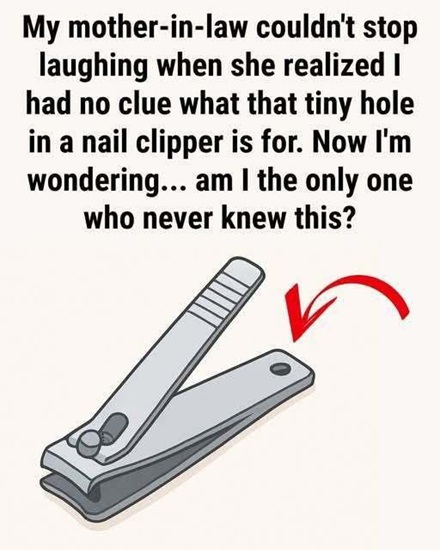
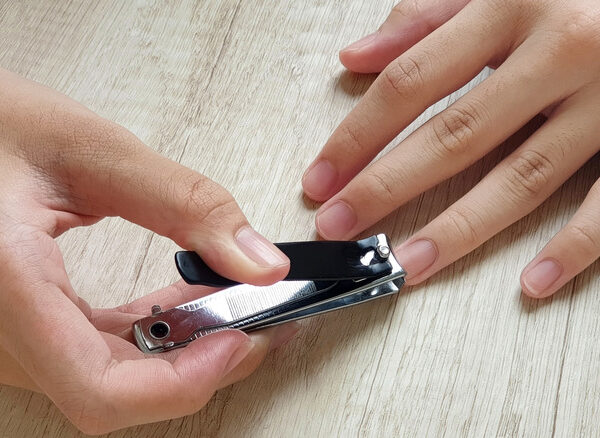
You’ve probably seen it dozens of times without a second thought: the small, circular hole in the lever of your nail clipper. At first glance, it might seem purely decorative or meaningless.
However, this tiny hole is part of an ingenious design that allows nail clippers to function efficiently. The design dates back to the early 20th century, when personal grooming tools began to be mass-produced for households worldwide.
Nail clippers consist primarily of two components: the body, which holds the sharp cutting blades, and the lever, which you press to provide the force needed for cutting fingernails or toenails safely.
The lever works through a simple mechanical principle known as the lever mechanism, which multiplies the force applied by your fingers. This allows you to cut through tough nails with minimal effort.
The hole in the lever is positioned to fit over a small central pin or rivet on the body of the clipper. When you press the lever, it pivots around this point.
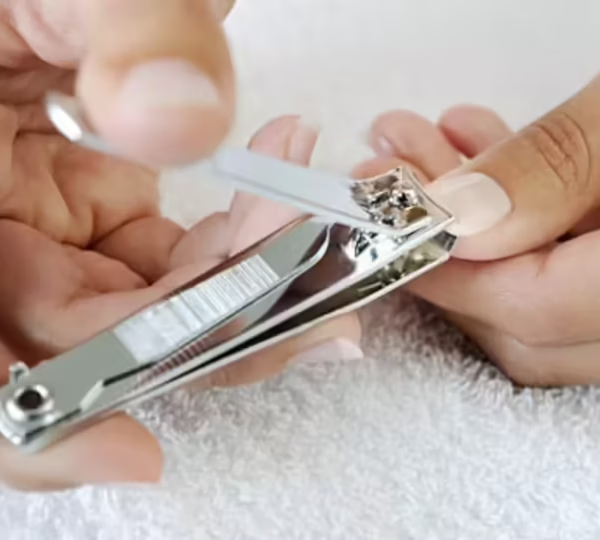
Without the hole, the lever would not have a fixed pivot point and could slip off, making the tool ineffective or unsafe. Its presence ensures stability, precision, and safety during use.
When pressure is applied to the lever, the rotational motion around the pivot point converts your downward force into the shearing action at the blades’ edge, slicing through the nail cleanly.
This mechanical advantage is why even relatively small nail clippers can handle thick toenails, which would otherwise require significant finger strength if using scissors or other tools.
The hole also allows the lever to be easily assembled and disassembled for maintenance, cleaning, or sharpening of the cutting blades. This makes clippers durable and long-lasting.
Manufacturers often design the hole to be slightly larger than the pin diameter to ensure smooth rotation, preventing friction that could cause the lever to stick during repeated use.
Over the years, nail clippers have evolved in shape and size, but the essential mechanics — including the small round hole in the lever — have remained largely unchanged due to their efficiency.
Some clippers include additional features, such as built-in nail files, textured grips, or ergonomic handles, but the pivot hole continues to play a critical role in every design.
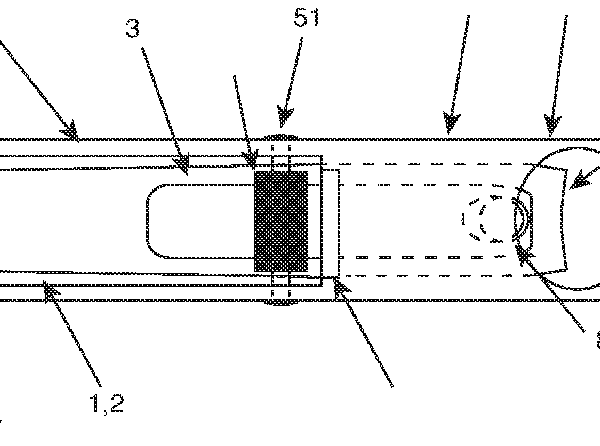
Interestingly, the nail clipper’s invention can be traced to the late 19th and early 20th centuries, with patents filed in the United States and Europe, reflecting the growing emphasis on personal hygiene.
These innovations standardized nail grooming, which had previously relied on scissors, knives, or manual filing — all of which required more effort and offered less precision.
The tiny hole, though often overlooked, embodies centuries of design refinement, balancing human biomechanics with mechanical engineering to create a simple, reliable tool.
Some nail clippers also feature a removable lever connected to a small keyring hole, demonstrating how even this minor structural feature can serve multiple purposes beyond pivoting.
In some specialized designs, the hole allows the lever to be flipped or rotated, offering alternate angles of leverage for cutting nails at awkward positions or hard-to-reach areas.
This level of mechanical versatility explains why clippers remain a staple in households, hospitals, and grooming kits worldwide, combining safety, efficiency, and portability.
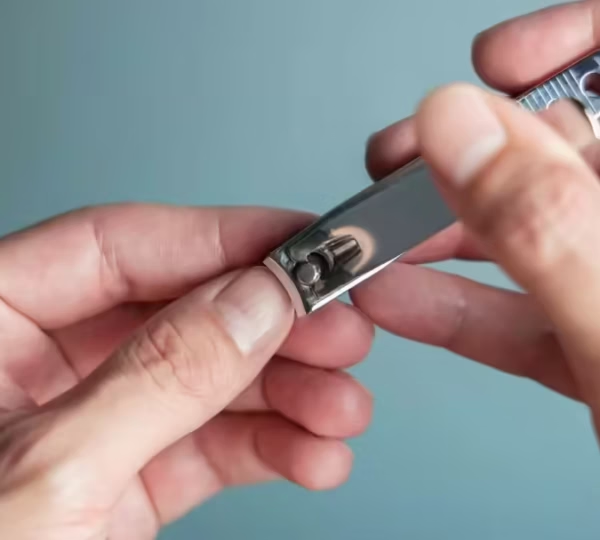
From a physics perspective, the hole is central to the lever system’s torque generation. Torque is the rotational force applied around a pivot, which multiplies the input from your thumb or finger.
A properly sized hole ensures that the lever remains aligned with the pin, maintaining the correct angle for optimal force transfer and reducing the risk of nail splintering.
In addition to enhancing leverage, the hole also contributes indirectly to user safety by preventing the lever from slipping sideways, which could otherwise cause accidental cuts.
Nail clipper designs vary slightly between brands and models, but the lever hole is a consistent feature, highlighting its essential role in effective nail grooming.
Some higher-end clippers use corrosion-resistant metals and precision-machined pins to ensure the hole in the lever maintains perfect alignment throughout years of repeated use.
This attention to detail ensures that even when used on thick or dry nails, the clipper performs smoothly without requiring excessive force or hand strain.
The hole also facilitates mass production, allowing machines to accurately position the lever during assembly, ensuring consistency across thousands of units without manual adjustment.
Historically, similar lever systems with pivot holes have been applied in tools like pliers, scissors, and wire cutters, demonstrating how fundamental mechanics are reused across everyday implements.
The nail clipper’s simplicity, combined with the precision of the lever hole, illustrates an important principle: even small design features can dramatically improve usability, safety, and efficiency.
Some designs incorporate decorative patterns around the lever hole, which do not interfere with function but enhance the visual appeal, proving that engineering and aesthetics can coexist.
A poorly manufactured hole can result in wobbling or uneven cuts, emphasizing why quality control during production is critical for maintaining the clipper’s reliability.
The lever hole also allows for optional attachments, such as keychain rings or protective covers, which can be added without compromising the primary mechanical function.
From a user standpoint, the presence of the hole is invisible during operation, yet it underpins every smooth press, every clean cut, and every effortless use of the tool.
Moreover, the hole contributes to the clipper’s portability, enabling compact, foldable designs where the lever rests flat against the body when not in use.
This foldable design is essential for travel, emergency kits, or personal hygiene kits in hospitals, where safety, hygiene, and efficiency are critical.
Engineers designing clippers carefully calculate the hole’s diameter, the lever thickness, and the pin’s material to optimize the balance between ease of use and durability.
Even minor deviations in the hole’s alignment or size can reduce the mechanical advantage, making cutting nails more difficult and potentially uncomfortable for users.
The presence of the hole also facilitates recycling, as levers can be disassembled from the body for metal recovery or replacement, contributing to sustainable manufacturing practices.
Interestingly, nail clippers with the pivot hole are nearly universal worldwide, from the simplest budget models to luxurious personal grooming sets, illustrating the universality of good design.
Some clippers even feature dual blades or enhanced curvature for toenails, but the hole in the lever remains a non-negotiable part of the mechanical system, regardless of complexity.
Medical-grade clippers, used in hospitals or for patients with limited hand strength, rely on the pivot hole to maintain low required force while achieving precise, safe cuts.
In summary, the small round hole in a nail clipper’s lever is a perfect example of elegant engineering. It serves as a pivot point, ensures efficient force transfer, increases safety, and enables compact, durable design.
From historical development to modern applications, the tiny hole proves that even the smallest detail in a well-designed tool has a massive impact on usability, longevity, and user experience.
Next time you clip your nails, take a moment to appreciate this tiny, circular design feature, which quietly multiplies your strength and ensures every press is safe, precise, and effortless.
Despite its size, the lever hole represents centuries of mechanical understanding, thoughtful design, and continuous refinement in one of the simplest tools most people use daily.
It’s a reminder that good design often works invisibly, relying on subtle features like a small circular hole to transform basic mechanics into a seamless human experience.
Ultimately, the nail clipper’s lever hole is a triumph of functional simplicity, proving that engineering elegance doesn’t require complexity, only thoughtful consideration of physics, ergonomics, and practical user needs.
