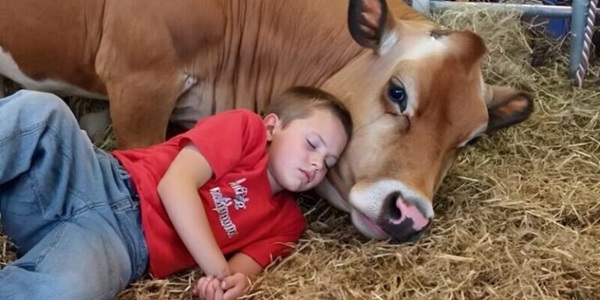
My younger brother, Tim, has refused to sleep in his bed ever since last autumn. He keeps insisting that Daisy—the old family cow—knows the truth. It sounds strange, almost like something out of a ghost story, but to him, it is absolutely real.
Before last fall, Tim was the liveliest kid in the house. His energy seemed endless. He ran through rooms, laughing loudly, climbing stairs with reckless joy, and could turn quiet evenings into moments of chaotic fun that left everyone smiling.
But everything changed during our visit to the old farm last year. The once vibrant boy became quiet, withdrawn, speaking mostly in whispers. Something had happened there, something he couldn’t—or wouldn’t—explain to anyone in the family.
Now, every night, Tim chooses to sleep in the barn. He curls up beside Daisy, the gentle old cow, as if seeking comfort and protection. Mom thinks it’s strange but charming, while Dad remains skeptical, confident he’ll outgrow it.
I’m not so sure. One night, I quietly approached the barn and overheard him speaking softly into Daisy’s ear. His voice trembled slightly, but his words were steady and deliberate: “I kept it from them. You saw it, but stayed silent. Thank you.”
Daisy didn’t move. She just blinked slowly, in a way that seemed almost human. It was as if she understood every word. I froze, clutching an emergency belt cutter I had brought just in case. The moment felt surreal and chilling.
Later, when I asked Tim about what he was doing, he broke down—not out of fear, but relief. It was as though a massive weight had been lifted from him. For the first time, I sensed the depth of his burden.
Grasping my hand tightly, he warned me never to open the old toolbox or look at the photograph hidden inside it. At the time, I didn’t understand why. But the urgency in his eyes told me this was serious, far beyond ordinary curiosity.
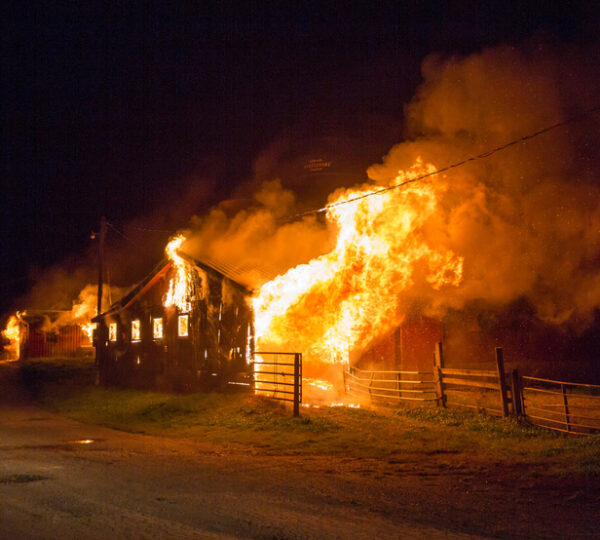
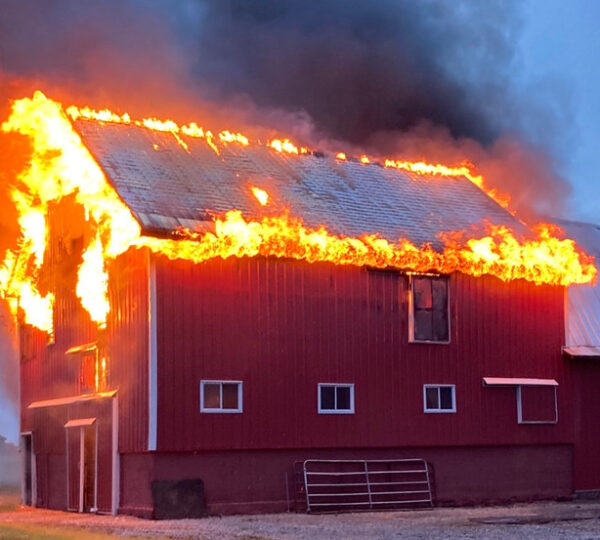
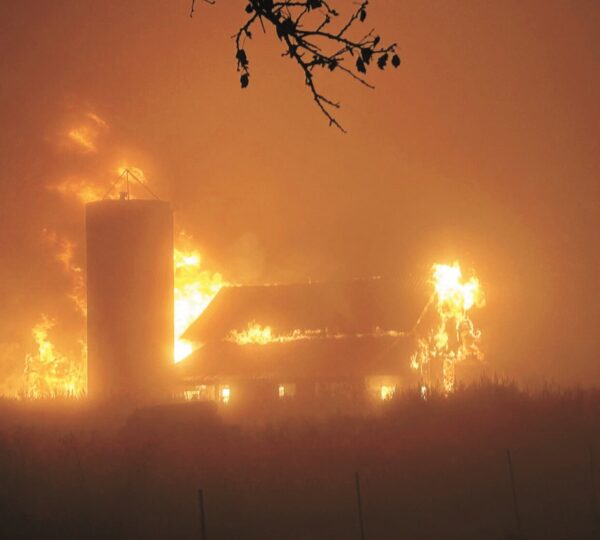
The next morning, I saw Dad pull the same toolbox from the trunk of the truck. Inside was a dusty, old photograph. I gasped. The image showed a barn covered in vines, standing intact. But this barn had burned to the ground two years ago.
Dad noticed my confusion and lowered his gaze. “You don’t recognize this place, do you?” he asked quietly, almost apologetically, as though revealing a family secret would somehow explain what had happened to Tim.
“No,” I whispered, my voice hoarse. “I’m trying to make sense of it. How is this even possible?”
Dad hesitated, then said softly, “Your brother wasn’t supposed to see this.” The weight in his voice made me uneasy. Something had occurred at that farm, something none of us were meant to know.
I pressed him. “What did he see?”
Dad didn’t answer. Instead, he flipped the photograph over. In the shadowy corner of the barn, a tall, dark figure stood, not entirely human, its outline strange, otherworldly, and terrifying. I felt a cold shiver run down my spine.
When I looked up, Tim was standing at the top of the stairs, barely visible in the dim morning light. His eyes were wide with fear and something else—reverence, perhaps, or awe. “Don’t open it,” he begged, voice raspy and urgent.
“Tim, what did you see?” I whispered, keeping my voice low.
He shook his head slowly. “I can’t say.”
“Why not?”
He fixed his gaze somewhere beyond me, towards Daisy, perhaps. “Daisy knows the truth,” he whispered, shuddering. Normally the family jokester, Tim now seemed almost unrecognizable, his innocence shadowed by whatever he had witnessed.
That night, I lay awake haunted by the barn fire, the photograph, and the shadowy figure. Why did Dad bring us back to that place after all these years? What exactly were we meant to see, and why had Tim been changed forever?
The next morning, I went to the edge of the property. Where the barn had stood, there was only ashes, charred timber, and twisted remnants. The air felt heavy, almost electric. It carried a faint whisper, one that made my skin crawl.
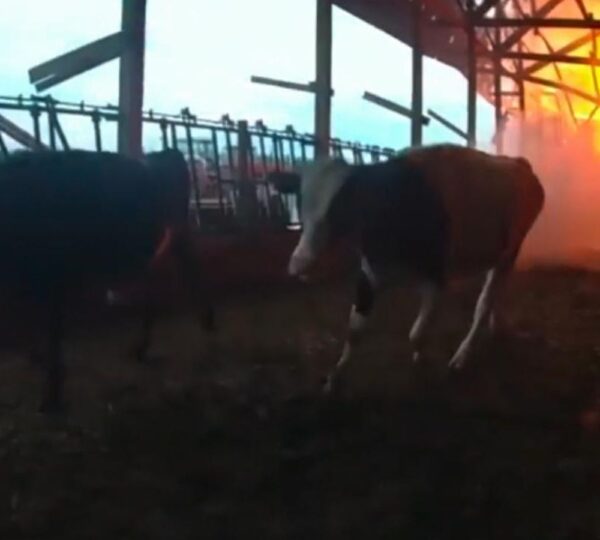
When I turned around, Daisy was there, standing still where the barn used to be. Her presence seemed purposeful. Her eyes carried weight, a secret I could not understand. For the first time, I realized Tim’s trust in her was deeper than I had imagined.
That night, I knocked gently on the barn door. It was open. I could hear Tim whispering, and the sound was rhythmic, almost like a chant. I stepped inside and saw him curled up next to Daisy, who had remained calm and watchful.
“What happened, Tim?” I asked quietly, fearing the answer.
He stared blankly ahead. “I won’t tell them,” he muttered, as though even the attempt to speak the truth might unleash something beyond comprehension.
I held his hand, desperate for answers. “Please, tell me. I need to understand.”
For the first time, I saw a crack in his resolve. “I didn’t want to. I didn’t want to hurt anyone,” he whispered. His voice trembled with regret, yet carried a weight of relief for having shared at least part of his truth with me.
“What do you mean?” I pressed further.
“When I saw it… I couldn’t stop. Even though I knew I shouldn’t.”
“See what?”
“The shadow. The one in the photograph. It’s real,” he whispered. His words made the air around me feel colder, heavier, as if the barn itself were holding its breath.
I felt my blood run cold. “What was in the toolbox?”
“Something in the barn. The fire wasn’t an accident,” he replied, almost in a voice meant only for Daisy. The implications were terrifying, and I realized this went far beyond our normal understanding of the world.
The next day, I carefully opened the toolbox. Inside were remnants of the past: a faded photograph, a wooden sign etched with an eerie, unfamiliar symbol, and fragments of old, brittle fabric. Each object seemed laden with history, secrets, and perhaps malevolent energy.
I had no idea what it all meant. But one thing became clear—Tim’s fear was real, tangible, and Daisy’s watchful presence was not a coincidence. The cow, the barn, the toolbox—they were all interconnected in a story that had remained hidden.
Since that night, Tim has changed. He still speaks in whispers, but his fear has shifted into quiet contemplation. Confusion now dominates his demeanor, and he moves with a caution and attentiveness foreign to the playful boy he once was.
The toolbox was never mentioned again in conversation. Its contents remained hidden, a silent warning or perhaps a key to understanding what had truly transpired at the barn before the fire.
Sometimes, silence is the only answer that can be trusted. Tim seemed to understand this, and Daisy—old, patient, and silent—appeared to enforce it with a presence that was both comforting and unnerving.
I often watch Tim in the barn, curled up beside her, whispering in tones I cannot hear. It is not fear that drives him, but understanding that some things are too heavy, too complex, and too dangerous to explain.
At night, the wind carries faint sounds through the empty farm. The whispers seem to echo the secrets of the past. I stand quietly, trying to make sense of the unknown, aware that some truths are meant only for those who can bear them.
The burned barn serves as a reminder of loss, mystery, and the fragility of memory. Its ashes mark the site of a truth none of us fully grasp, yet its presence lingers, woven into the fabric of our family story.
Daisy moves slowly, methodically, across the property. Her calm demeanor contrasts sharply with the eerie weight of what Tim has experienced. I watch her eyes, searching for understanding, yet find only patience and quiet knowledge.
I realize then that whatever happened at the farm, it has shaped Tim permanently. The barn fire, the shadow, and the objects in the toolbox were catalysts for a transformation I may never fully comprehend.
I feel the same weight pressing on me—the need to respect silence, the need to protect the secrets Tim clings to, and the knowledge that some things are meant to remain hidden.
Night after night, I listen to the wind, the whispering leaves, and the low, steady breathing of Tim beside Daisy. It is a rhythm of life, fear, and strange understanding that I cannot explain.
Sometimes, I reach out and gently touch Tim’s shoulder. He doesn’t flinch. Instead, he grips my hand and holds on, acknowledging my presence without revealing the full truth.
I have learned that the barn, the photograph, and the toolbox are more than objects—they are symbols, markers of a moment that cannot be undone, a story that cannot be fully told.
I do not try to interpret the symbols or understand the shadows. I watch and wait, learning that patience and silence are sometimes the only tools capable of preserving safety and sanity.
Over time, Daisy has become a guardian in her own right. She is patient, calm, and unyielding, a witness to events beyond human comprehension, and a silent confidante for Tim’s burden.
Our family moves carefully around the barn. Conversations avoid the topics of the fire and the shadow. The toolbox is locked away, the photograph hidden, as if acknowledging that some doors should never be opened.
Despite the fear and mystery, there is an unspoken understanding that the past, though haunting, has created a connection between Tim and Daisy—a bond rooted in witness, trust, and unspoken truths.
I often sit on the edge of the property, looking at the place where the barn once stood. Its ashes remind me of impermanence, secrecy, and the strange intertwining of fear and revelation in our lives.
Tim has grown quieter, more thoughtful. His mischief is replaced by reflection. His whispers are not only communication but a ritual, a way of processing a past too heavy for ordinary speech.
I no longer attempt to pry. Some truths are not mine to understand. I accept that Daisy knows, Tim knows, and some things are meant to remain in silence, locked in memory and shadow.
The toolbox, the photograph, the barn, the shadow—they are part of a story larger than our comprehension. It is a story that requires patience, respect, and an understanding that some things are too dangerous to reveal.
I feel a strange sense of awe and dread whenever I pass the barn’s remains. Though it is only ashes, it holds a presence, a memory, and a warning that permeates the air.
Tim sleeps beside Daisy, and I sometimes join him silently. Together, we acknowledge the unspoken truth. We do not need words. The past has a language all its own, carried in whispers, shadows, and the watchful gaze of an old cow.
Since last autumn, our lives have been subtly reshaped. Laughter is quieter. Play is measured. Curiosity is tempered with caution. We live with a constant awareness that some mysteries demand silence.
And sometimes, that silence is the only answer we can trust, the only way to preserve both the living and the unseen truths that linger around us.
