What began as a bright, peaceful morning for visitors and locals quickly turned into one of the worst infrastructure tragedies in recent memory, when a well‑known suspension bridge unexpectedly gave way, collapsing into the turbulent waters below.
The disaster occurred shortly after sunrise, on what had been expected to be a calm day for sightseeing and travel, as families and tourists gathered on the bridge to take in sweeping views of the river valley.
Authorities confirmed that at least 30 people lost their lives in the collapse, while dozens more suffered serious injuries. Emergency crews also reported that a number of individuals were still unaccounted for as search efforts continued.
Witnesses described a sudden, terrifying sequence of sounds in the moments before the structure failed: loud cracking noises, the shuddering of metal, and the abrupt snapping of cables under tension that no one expected to break.
In an instant, the bridge deck buckled and dropped, sending panicked pedestrians and vehicles plunging toward the river below, while others scrambled desperately to grab onto railings or cling to remnants of the failing walkway.
Many of those on the bridge that morning were families with children, senior citizens, and international tourists. Their excitement and anticipation turned to chaos and fear in seconds, leaving witnesses shaken and overwhelmed.
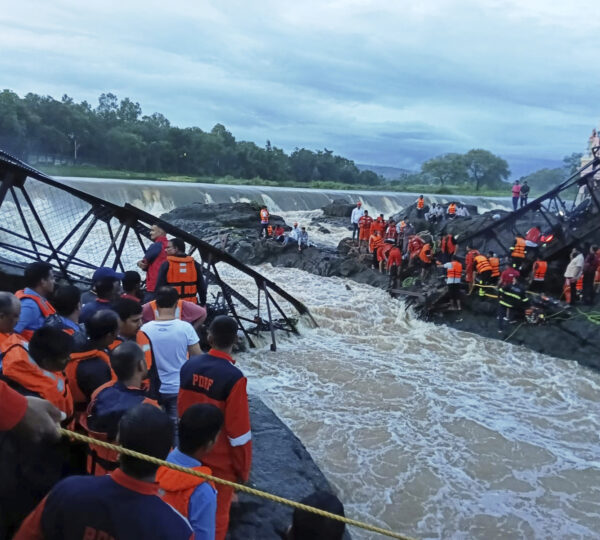
Emergency responders were dispatched immediately after the collapse was reported, arriving in large numbers with helicopters, ambulances, fire crews, and swift‑water rescue teams to aid in the frantic effort to save survivors.
Helicopters hovered above the debris, lowering rescuers by rope and airlifting the most severely injured to nearby hospitals, where medical staff had declared mass‑casualty emergencies in order to prepare for the influx of patients.
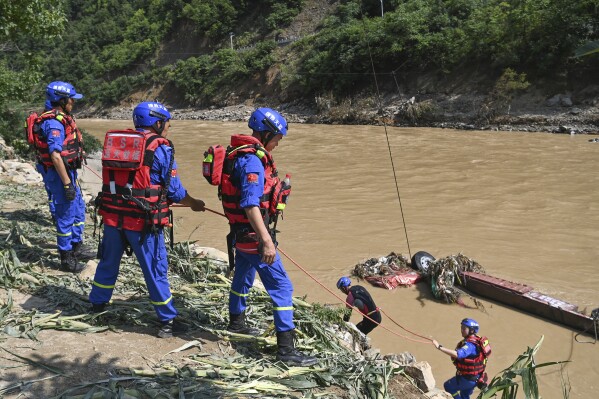
River rescue units combed the swift currents below the wreckage, searching for people who may have fallen into the water. Some swimmers were pulled to safety by boat crews, while others were found clinging to wreckage in shock and hypothermia.
Hospitals throughout the region diverted normal operations, activating emergency response protocols and setting up triage areas to treat those with life‑threatening injuries, broken bones, and traumatic shock.
Local leaders and government officials convened at the scene within hours, expressing condolences to the families of victims and pledging that every available resource would be committed to rescue and recovery efforts.
The suspension bridge had long been a beloved landmark for both residents and visitors, known for its elegant design, historic significance, and breathtaking panoramic views of the river, hills, and nearby forests.
Its collapse not only shattered lives, but also left a symbolic wound in the heart of the community. The bridge had represented regional pride, connectivity, and a gathering place for festivals, walks, and community events.
As news of the disaster spread, local businesses, schools, and organizations began holding vigils and memorials, lighting candles and lowering flags to half‑mast in honor of those whose lives were lost or forever changed.
Many residents flanked the riverbanks, laying flowers and photographs near temporary memorials while offering comfort to one another in the face of collective grief and disbelief at what had transpired.
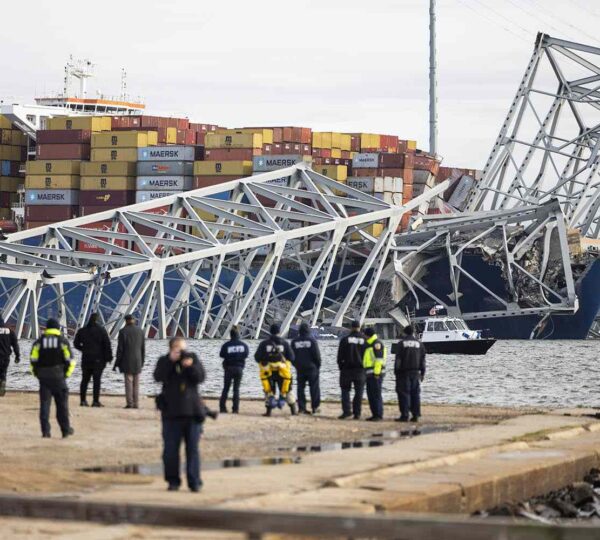
Investigators from state and federal transportation authorities arrived to begin an exhaustive inquiry into the cause of the collapse, gathering evidence, interviewing witnesses, and examining every component of the bridge’s design and maintenance history.
Officials emphasized that this investigation would leave no detail unexamined, including inspection records, engineering reports, load calculations, environmental effects, and inspection histories dating back decades.
Early assessments focused on several areas of potential concern, such as corrosion or fatigue in load‑bearing cables, wear and tear on critical support structures, and whether inspection schedules had been followed rigorously.
Engineers also began analyzing weather data from the days and weeks leading up to the collapse to determine whether heavy rain, strong winds, or other environmental stresses might have compromised structural integrity.
Officials from the regional department of transportation confirmed that the bridge had passed its most recent safety inspections, though investigators noted that additional in‑depth analysis might be required to understand why standard procedures did not prevent failure.
Because of the scale and suddenness of the collapse, authorities issued temporary closures for other suspension bridges and major infrastructure in the region, pending rapid safety reviews to ensure public welfare.
State and federal engineers worked around the clock to assess these structures, examining cables, anchorage points, deck conditions, and load capacities to identify potential risks before reopening them to traffic.
The collapse also immediately impacted tourism and the local economy, as travelers canceled plans and operators of tour services, hotels, and restaurants reported sharp declines in visitors overnight.
Local chambers of commerce and economic development offices worked to reassure communities that recovery plans were being developed, including support for displaced workers and long‑term revitalization efforts.
Tourism bureaus emphasized that the region remained a safe and welcoming destination, while acknowledging the emotional impact the disaster would have on both visitors and residents in the coming months.
Community leaders also highlighted the resilience and compassion shown by first responders, volunteers, and everyday citizens who rushed to help strangers in need, offering food, shelter, and emotional support to survivors.
The outpouring of solidarity extended beyond the immediate area, with messages of sympathy and donations arriving from across the nation and around the world in response to the tragedy.
Families directly affected by the collapse established support networks and fundraising efforts to assist with funeral costs, medical bills, and long‑term care for those left with lasting injuries or trauma.
Counselors and mental health professionals were deployed to work with survivors, witnesses, and families, offering grief support, trauma counseling, and community healing programs aimed at helping people cope.
Officials stressed that communication and transparency would remain central to the investigation, promising regular updates, public hearings, and technical briefings to build trust and provide answers to concerned citizens.
As the days passed, engineers continued to sift through debris, using underwater cameras, drones, and structural modeling to reconstruct the final moments before the bridge’s collapse and identify contributing factors.
Autopsies and forensic examinations were conducted with respect for the deceased and their families, while specialists worked to separate accidental causes from preventable design or maintenance failures.
In public statements, transportation officials acknowledged that major infrastructure such as bridges require constant vigilance, robust inspection cycles, and investment in modernization to ensure the safety of all who rely on them.
Experts reiterated that the tragedy underscores the importance of proper maintenance, frequent evaluations, and the willingness to retire or replace aging components long before they show signs of distress.
Engineers spoke at press conferences about the need for resilient design standards that account for evolving environmental stresses, higher traffic volumes, and long‑term material durability under heavy use.
The tragedy also sparked dialogue among lawmakers and policymakers about infrastructure funding, with many urging increased investment in upgrades, monitoring technology, and preventative repairs across the transportation system.
In the weeks following the collapse, families and friends gathered for memorial services to honor the lives lost, remembering loved ones as parents, children, siblings, and friends whose futures were cut tragically short.
Survivors shared their stories of courage, heartbreak, and survival, recounting acts of kindness from strangers, the bravery of rescuers, and moments of hope amid the devastation.
Hospitals reported ongoing recovery efforts for the injured, some of whom faced months of rehabilitation, surgeries, and physical therapy, while others worked to emotionally process what they had endured.
Local schools and universities organized discussions and outreach programs to educate young people about engineering safety, emergency response, and community resilience in the face of disaster.
Public officials unveiled plans to build a new, safer bridge that would honor the memories of those lost while restoring a vital crossing for residents and visitors alike, emphasizing community input and modern engineering.
Design teams invited local voices to participate in planning sessions, acknowledging that rebuilding would be as much about healing the community’s spirit as it would be about restoring physical infrastructure.
Architects and engineers proposed memorial spaces, parks, and observation areas near the river, blending remembrance with public access as a way to keep the legacy of the tragedy in collective memory.
Support services remained active, as nonprofit organizations partnered with local agencies to provide long‑term aid, from housing assistance to job placement for those impacted by the collapse.
Businesses affected by the downturn formed cooperatives to share resources, coordinate marketing efforts, and attract visitors back to the region once recovery plans were more fully developed.
Meanwhile, transportation authorities continued regular updates on the investigative timeline, projecting that a final technical report would be released once all data had been analyzed and reviewed by independent experts.
The findings were expected to include recommendations not only for bridge design and maintenance, but also for regulatory reforms aimed at preventing similar tragedies nationwide.
Families of the victims were invited to participate in advisory capacities, ensuring that the voices of those most affected helped shape future safety measures and accountability standards.
Local clergy and community organizations held ongoing remembrance events, weaving spiritual healing and collective support into the long‑term recovery process that would stretch into years ahead.
Memorial scholarships were established in the names of those who perished, honoring their passions and providing opportunities for future generations in fields such as engineering, public service, and environmental protection.
National leaders expressed continued sympathy and support, traveling to the affected area to meet with families, honor first responders, and underscore the importance of investing in safe infrastructure.
Signs of recovery began to emerge as reconstruction work started, debris was cleared, and plans for the new bridge took shape, symbolizing both the economic and emotional renewal of the region.
Community art projects and storytelling initiatives helped people share memories and build connections grounded in empathy, healing, and collective resilience after unspeakable loss.
While questions remained about the precise technical causes of the collapse, the investigation served as a stark reminder of the fragility of human‑made structures and the imperative of proactive care.
Even as families continued to mourn, leaders and citizens alike reaffirmed their commitment to building a safer, stronger future that honors those lost and protects generations yet to come.
In the end, the collapse became more than a tragedy — it became a turning point in how society views and values its infrastructure, reminding all that safety, vigilance, and community support are indispensable.
