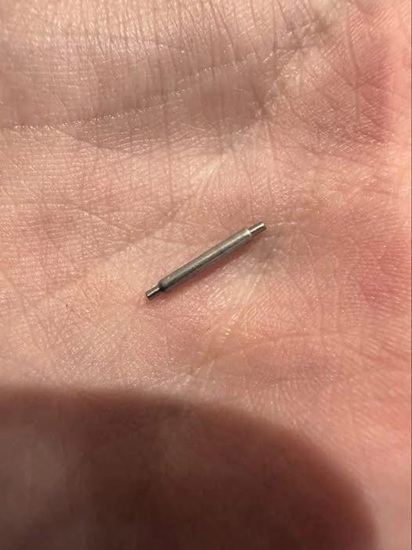
Every so often, we encounter a small object that immediately captures our curiosity. It’s usually unassuming—a tiny piece of metal with no labels, no moving parts, no apparent function.
Yet somehow, it compels you to investigate further. At first glance, it may appear entirely ordinary, almost invisible among larger objects around the house, workshop, or office.
Its unremarkable appearance hides the complexity and thought that went into designing it. There is often more to it than meets the eye. Many of these mysterious objects exist because engineers and designers have spent years perfecting them.
A single pin, clip, or bracket may be part of an intricate system, performing a vital role in ensuring safety, stability, or functionality.
The simplicity of its form can be deceptive. While it looks plain, the manufacturing tolerances behind it are precise. Some of these metal pieces are crafted to micrometer accuracy, ensuring they fit perfectly within a larger assembly.
Materials are carefully selected as well. Depending on its intended function, a small metal object may be made from stainless steel, aluminum, brass, titanium, or even specialized alloys designed to resist heat, wear, or corrosion.
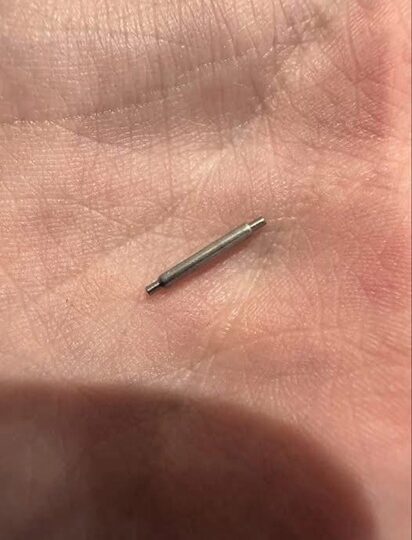
Even objects that appear identical to the naked eye may have subtle differences. For example, a small pin might have a specific hardness rating or surface coating that allows it to withstand repeated stress without deforming.
Some objects are connectors or fasteners, designed to hold larger components together. A single misplaced pin could compromise an entire machine, demonstrating the hidden importance of even the smallest elements.
Others serve as guides or alignment tools, ensuring that complex mechanical parts fit together correctly. These pieces are often found in precision instruments, cameras, watches, or robotics, where exact positioning is essential.
In the electronics world, tiny metal components can carry current, provide grounding, or act as a heat sink. Their size is dictated not by convenience but by the need to fit within miniature devices without compromising performance.
It is easy to underestimate the importance of such components. Yet in aerospace, automotive, and medical engineering, a single small metal part can determine whether a system works flawlessly or fails catastrophically.
Even in everyday objects, invisible craftsmanship is at work. For instance, a seemingly unimportant clip inside a smartphone may secure the battery safely, prevent electrical shorts, or ensure consistent connectivity with other components.
Some metal pieces are designed for tasks so specialized that only trained technicians or engineers can recognize their purpose. Without context, guessing their function becomes almost impossible, emphasizing the hidden knowledge embedded in everyday technology.
Hobbyists and collectors often delight in discovering these pieces. They spark curiosity and imagination, leading to detailed exploration of how machines and devices work. Each small metal object is a gateway to understanding engineering principles.
Tiny brackets may stabilize heavy loads, preventing vibration or wear. Small locking plates can safeguard mechanisms from accidental movement. Precision pins may act as pivots, aligning components for proper rotation or linear motion.
The design of each component is the product of countless hours of trial, error, and refinement. Engineers consider weight, material properties, stress distribution, and environmental conditions when creating even the tiniest element.
What makes these objects especially intriguing is their invisibility in daily life. We rely on them constantly without ever noticing, and their absence or failure is often the only time their significance becomes apparent.
Small metal objects also exemplify the intersection of form and function. Even the simplest-looking pin or clip is shaped to maximize performance while minimizing cost, weight, and manufacturing complexity.
The tiniest components can be the most ingenious. For example, a micro-spring inside a locking mechanism may be just a few millimeters long but is essential for ensuring safety, reliability, and smooth operation over decades.
Many of these parts are mass-produced with incredible precision. Modern CNC machines, stamping presses, and laser-cutting tools allow engineers to create millions of identical pieces, each conforming exactly to design specifications.
The creation process itself is an art. Engineers must account for material fatigue, thermal expansion, and mechanical wear, ensuring that the part performs as intended in a wide range of conditions.
Even minute imperfections can have drastic consequences. A tiny burr, scratch, or uneven edge may prevent the part from fitting, interfere with a mechanism, or compromise the structural integrity of an assembly.
This is why quality control in manufacturing is critical. Every tiny metal object is inspected visually, mechanically, or using automated measurement systems to confirm that it meets precise tolerances before being assembled.
Some small metal pieces are modular. They allow for replacement or maintenance of larger systems without requiring disassembly of the entire machine. This highlights both engineering foresight and practicality.
Hidden within household appliances, vehicles, and industrial machinery, these components perform essential roles silently and efficiently. Their absence often goes unnoticed until a malfunction occurs, underscoring their significance.
Even in the realm of robotics, small metal objects serve as pivots, linkages, and connectors. These components translate motor motion into precise mechanical action, allowing robots to perform complex tasks with remarkable accuracy.
In aviation and aerospace, tiny metal pins, bolts, and brackets are subject to rigorous testing. They must withstand vibration, temperature extremes, and high-stress environments while keeping crews and passengers safe.
Medical devices also rely on the smallest of components. Surgical instruments, diagnostic machines, and prosthetics all use minuscule metal parts engineered to exacting standards, ensuring reliability and safety for patients.
The fascination with small metal objects is partly psychological. Humans naturally seek explanations for unknown items, driving curiosity and intellectual engagement. A mystery object can transform ordinary observation into exploration.
Collectors of antique tools and machinery often encounter obscure metal parts with unknown purposes. Researching them can lead to discoveries about historical manufacturing techniques and the evolution of technology.
Some parts are designed for temporary use, such as assembly jigs or shipping supports, yet their design still requires precision and reliability to prevent damage during transport or setup.
The elegance of engineering is reflected in the efficiency of these components. Each tiny metal piece is a compromise between material usage, durability, and performance, optimized for its intended role.
Even the process of selecting the right alloy demonstrates deep scientific knowledge. Factors like tensile strength, corrosion resistance, thermal conductivity, and machinability all influence material choice for the smallest pieces.
Functionally, some components transmit forces, while others stabilize structures or ensure precise alignment. Many small metal objects combine multiple functions in a single, deceptively simple form.
The history of engineering is filled with innovations hidden in plain sight. Bolts, pins, springs, and clips, though overlooked, often represent decades of cumulative knowledge and incremental improvements.
Engineers often test prototypes using simulations and physical trials. Even the tiniest part may undergo stress tests, fatigue analysis, and failure prediction modeling to ensure longevity under real-world conditions.
The playful curiosity sparked by small metal objects is universal. People of all ages enjoy hypothesizing about their function, often leading to creative problem-solving and deeper appreciation of engineering ingenuity.
In manufacturing, such parts may be numbered or coded for traceability, allowing technicians to identify production batches, material sources, or specific tolerances, even if the object itself appears anonymous.
Even the tiniest fastener can be critical. Aerospace engineers, for example, will never underestimate a small pin because a failure could compromise the performance of an entire aircraft system.
Small metal objects illustrate the principle of “strength in simplicity.” Even though they are minuscule, they contribute disproportionately to the reliability, safety, and efficiency of complex systems.
Their stories often go untold, yet they reflect human creativity, ingenuity, and problem-solving skills honed over centuries of technological advancement.
Part of the fun is that guessing their purpose can lead to discussions across communities of hobbyists, engineers, and collectors, generating shared learning experiences and deepening appreciation for design.
A tiny piece of metal may be part of a household appliance, a vintage typewriter, a drone, or a specialized laboratory tool. Without context, it could be mistaken for scrap, yet its design was intentional and necessary.
Even the most overlooked clip, spring, or plate has a reason for its existence. Its function may be mundane, extraordinary, or specialized, but each part represents thoughtful engineering at work.
Some mysterious pieces have historical significance. Antique machines contain components that reveal the ingenuity of past engineers, materials used, and manufacturing techniques no longer common today.
The smallest metal objects also teach lessons about observation. By examining their dimensions, weight, shape, and finish, we can deduce function, intended forces, or the type of machinery they belong to.
Educators often use mysterious metal objects in classrooms to teach physics, engineering, and mechanics, showing that even tiny components embody fundamental principles of leverage, force, and motion.
Collectors and makers often keep detailed catalogs or photo databases of obscure metal parts, attempting to document function, provenance, and possible applications for current or future reference.
While some parts are standardized, many are custom-made, intended for a very specific role. Their form may appear arbitrary but is optimized for performance, strength, or assembly constraints.
Sometimes, tiny metal objects are used as teaching tools. Engineering students may study them to understand load distribution, material fatigue, or the subtle interaction of parts in a mechanical system.
Even when the purpose of a metal piece remains unknown, it inspires awe. The notion that a seemingly insignificant object contributes to a larger system reminds us how engineering ingenuity permeates our everyday lives.
In conclusion, small metal objects exemplify hidden brilliance, precision, and design. They remind us that even the tiniest components are essential, often overlooked, yet integral to the function and success of complex systems.
The next time you encounter a tiny piece of metal with no apparent purpose, pause. Observe, wonder, and consider the engineering and craftsmanship that went into creating it. The story of these objects is everywhere, waiting to be discovered.
