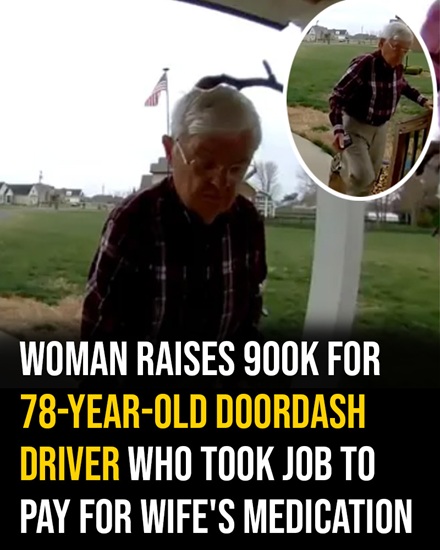
A brief moment of compassion has grown into an extraordinary story of generosity for a 78‑year‑old food delivery driver whose situation moved millions of people online and sparked massive financial support from strangers.
The story began in Manchester, Tennessee, when Brittany Smith noticed something unusual in her recent delivery history. Her daughter’s father, who uses delivery services frequently due to a disability, had ordered Starbucks for their child again — the third time that week.
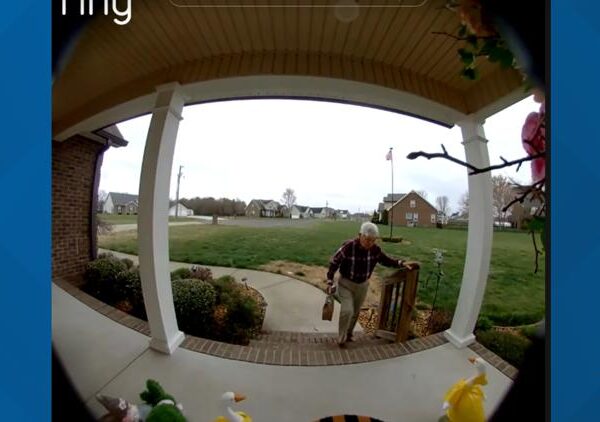
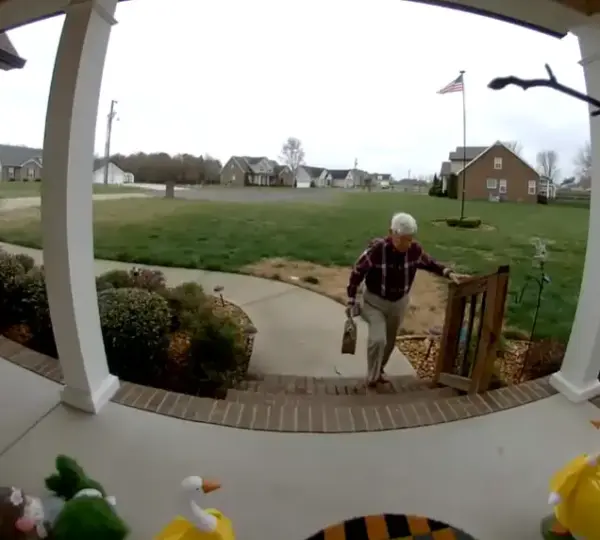
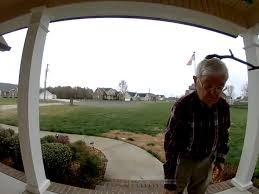
At first, Brittany admitted she felt annoyed by yet another drink order. But everything changed when she reviewed footage from her Ring doorbell camera and saw the delivery driver struggling up the steps to her porch, clearly exerting great effort.
Instead of focusing on the Starbucks order, she was struck by how slowly the elderly man climbed the stairs, leaning on the railing and taking careful steps as he carried the bag. His physical effort told a different story.
Brittany later explained her daughter’s father is quadriplegic, making it difficult for him to go out in public. He often uses delivery apps to bring necessities to the house — a detail that made the elderly driver’s effort even more poignant.
Seeing the older delivery driver struggling made Brittany suddenly aware of how physically demanding the job could be, especially for someone nearly 80 years old who might not have the strength or stamina of a younger worker.
Wanting to do something kind, she tried to increase his tip through the delivery app, hoping to show appreciation for his effort. Unfortunately, the order had already been completed, and the app would not allow her to add more money afterward.
Not ready to let the moment pass, Brittany uploaded a short 20‑second clip from her doorbell camera to social media. The video focused on the driver’s careful ascent up the stairs and quickly began spreading across platforms.
Within hours, the clip gained traction and began receiving thousands of views, comments, and shares. People from all over began reacting to the post, moved by the man’s effort and the glimpse into his everyday reality.
One Facebook user commented that she recognized the driver right away. She noted that he frequently delivered orders to her workplace and even shared his first name — Richard — which helped Brittany identify him.
Armed with this information, Brittany began asking around locally and searching for more clues. She noticed the man’s delivery vehicle parked in a driveway one afternoon and finally located his home.
She decided to knock on the door and personally hand Richard a $200 cash tip, hoping to offer a small but meaningful token of appreciation for his hard work and dedication in serving her family.
When Richard opened the door, he hesitated before accepting the money, concerned for Brittany’s comfort in giving it to him. His modesty and humility were immediately clear in that first personal interaction between them.
During their conversation, Richard explained why he had taken on delivery work at his age — a detail that soon multiplied the impact of the story as it spread online.
He said his wife had recently lost her job, leaving them struggling to afford her prescription medications and meet essential living expenses. After paying bills and costs for healthcare, very little money remained each month.
To help cover these costs, Richard began working as a delivery driver, taking on as many food and drink orders as possible. Despite his age and physical limitations, he kept accepting jobs to provide for his family.
When Brittany returned home later that day, she found that the video had also gone viral on TikTok, where thousands of people were reacting, sharing, and commenting with empathy and concern for Richard’s situation.
People from across the country began reaching out, asking how they could help Richard. Many expressed a desire to donate or support him directly after seeing him work so diligently despite his age and hardship.
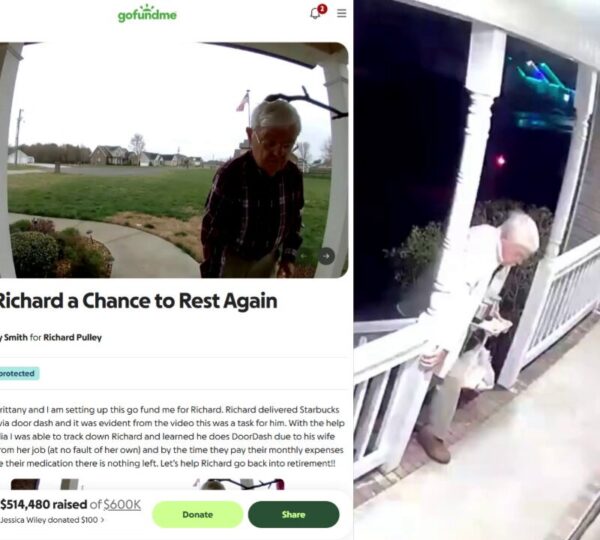
Moved by the overwhelming response, Brittany created a GoFundMe fundraiser titled “Give Richard a Chance to Rest Again” explaining his story and the reasons behind his decision to keep working at nearly 80.
In the fundraiser description, she explained that Richard had started delivering food simply to cover his wife’s medical needs and everyday living expenses that basic income could not support on its own.
The response from the online community was immediate and astonishing. Donations began pouring in within hours, with people sending funds from across all fifty states and even internationally — a testament to the power of compassion on the internet.
Within just a few days, the fundraiser reached an astonishing $930,000, with the total continuing to climb as donations flooded in from generous strangers who wanted to help Richard and his wife. Many supporters left heartfelt messages of encouragement.
Some contributors wrote that Richard’s story reminded them of caring for their own elderly parents or grandparents, while others pledged donations in honor of loved ones who had worked hard throughout their lives.
As donations continued rising, Brittany shared updates with supporters, explaining that Richard was overwhelmed by the outpouring of generosity and often watched the donation tally rise late into the night.
“He told me he hasn’t slept in two days because he keeps watching the donations come in,” Brittany said, describing the emotional impact the support had on Richard and his family.
Meeting him in person was deeply meaningful for Brittany as well. She described Richard as “even more wonderful in person,” reinforcing the humanity behind the viral video and showing there was much more to his story than a brief clip could capture.
The viral moment and subsequent support brought Richard national attention, shining a spotlight on the struggles of many older Americans who continue working out of necessity rather than choice.
Some commenters noted that the viral reaction said as much about community empathy as it did about society’s broader challenges, including healthcare affordability, retirement insecurity, and the value of caring for elders.
The story of Richard and his wife became a reminder that even small acts of kindness — like noticing a moment on camera — can have profound and far‑reaching consequences for the people involved.
For Richard, what began as a typical workday and an ordinary coffee delivery ended up transforming his financial prospects overnight, allowing him and his wife to breathe easier amid medical and living expenses.
Brittany said that many people had also reached out offering not only financial support but also heartfelt prayers, uplifting messages, and stories of how the video had touched them personally.
Supporters from all walks of life shared stories of older relatives who continued working to make ends meet, creating a collective sense of empathy and a national conversation about dignity, aging, and economic security.
Medical bills, prescription costs, and everyday expenses are challenges faced by many retirees in the United States, and Richard’s story highlighted how precarious financial stability can be for those on fixed incomes.
In response to the fundraiser’s success, Brittany also encouraged supporters to consider other ways to help seniors and vulnerable workers, including volunteering, advocating for better safety nets, or simply offering kindness in small interactions.
The generosity did more than just ease financial stress — it gave Richard and his wife reassurance that they were valued and supported by people they had never met, a feeling he told Brittany he had never experienced before.
Since the fundraiser’s launch, many local organizations reached out offering resources and support, including assistance with healthcare services, transportation, and community programs for seniors in need.
Richard expressed gratitude not only for the money but for the sense of community the response had fostered. He said he now felt seen and respected, rather than overlooked by a fast‑moving world that often forgets elderly workers.
Brittany’s video also prompted others to share similar stories about delivery drivers or service workers who showed extraordinary effort or kindness in the face of difficult circumstances.
Social media users began highlighting essential workers of all kinds — from mail carriers to grocery clerks — emphasizing that many put in hard labor without recognition or adequate compensation.
The attention on Richard’s work encouraged local employers and customers to rethink tipping standards and how they value the physical labor of delivery drivers, especially those working past typical retirement age.
In interviews after the fundraiser’s success, Richard spoke about his life before delivery work, describing a long marriage, shared memories with his wife, and simple joys that had grown bittersweet as financial pressure increased.
He said he never expected to become a viral sensation and found the attention both surprising and humbling, especially knowing how many strangers cared enough to contribute to his family’s wellbeing.
Richard’s situation also sparked a broader public conversation about retirement planning, the limitations of social security income, and how medical costs can rapidly erode financial stability for aging Americans.
Experts who commented on the story noted that many retirees, especially those with medical needs, struggle to cover prescriptions, co‑pays, and rising insurance costs even with supplemental income from Social Security.
Many readers responded to the fundraiser by expressing a desire to see wider policy changes that address prescription affordability, healthcare access, and support systems for seniors who find themselves in financially vulnerable positions.
The story also highlighted the positive potential of social platforms when used to raise awareness and support for individuals rather than just entertainment or controversy.
For Brittany, what began as a desire to honor a hardworking delivery driver grew into a movement of kindness that reshaped Richard’s life and inspired people across the world to offer compassion and support to those in need.
Richard and his wife have since expressed plans to use some of the funds for restful living, essential medical care, and building a small safety net that will allow them to reduce reliance on physically demanding work.
Many donors also left messages encouraging Richard and his wife to take time for themselves, reminding them that they earned the right to rest and enjoy the later years of their lives after decades of hard work.
As the donations continued to climb, local community members offered hugs, meals, and invitations to social events, welcoming Richard and his wife into a broader network of support that extended well beyond financial assistance.
Even after the viral video fades from the trending lists, the impact on Richard’s life will continue for years, demonstrating how empathy and small acts of awareness can lead to life‑changing support.
The story shows how a simple coffee delivery — and the attentive eye of a stranger — can unveil hidden hardship and inspire millions to act with generosity and heart.
Brittany said she hopes Richard’s story encourages others to look beyond surface impressions and notice the lived realities of everyday people doing the best they can.
At its core, the story reminds us that compassion is contagious, that small acts can ripple outward, and that recognizing the dignity of all workers — young or old — builds a more caring society.
In an era often dominated by headlines of division, Richard’s experience became a unifying narrative that reaffirmed people’s capacity for generosity, empathy, and collective support.
Ultimately, Richard’s journey from struggling delivery driver to viral symbol of resilience highlights the transformative power of kindness — proving that even brief moments of care can spark something far greater than anyone expected.
