
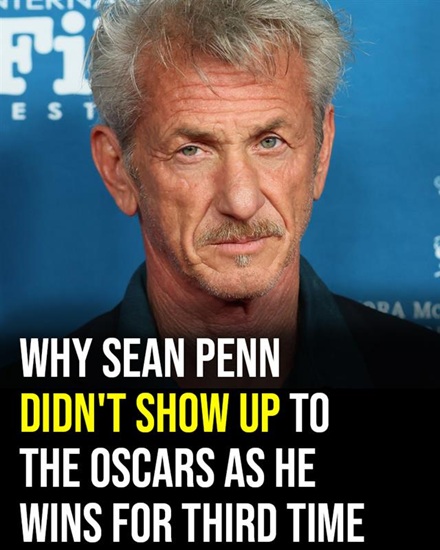
Sean Penn, the celebrated actor and activist, earned his third Academy Award this year, but notably, he was absent from the ceremony itself.
His win highlights a career that has consistently combined artistic excellence with outspoken advocacy. At 65, Penn secured the Best Supporting Actor Oscar for his role as Colonel Steven J. Lockjaw in Paul Thomas Anderson’s critically acclaimed film One Battle After Another.
The film portrays intense military conflicts with a focus on personal drama. Penn’s performance in One Battle After Another received widespread praise from critics. Reviewers highlighted his ability to convey both authority and vulnerability, demonstrating the depth of his acting range that has defined his career for decades.
This marks Penn’s third Oscar win. He previously received the Best Actor award for Mystic River in 2003 and Milk in 2008, reflecting his capacity to inhabit complex, emotionally charged characters with authenticity and gravitas.
In addition to these wins, Penn has garnered numerous Academy Award nominations. His consistent presence in the awards circuit reflects a career that blends both commercial and critically acclaimed projects, emphasizing his versatility as an actor.
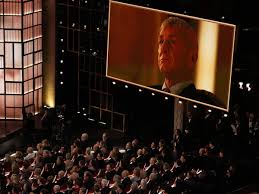
Despite the milestone, Penn chose not to attend the Academy Awards ceremony. His absence sparked discussion among fans, critics, and industry insiders, raising questions about his views on awards shows in general.
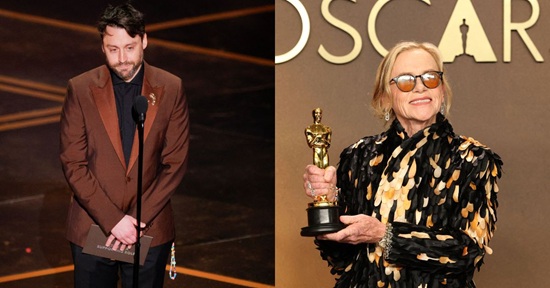
Kieran Culkin, who presented the award in Penn’s absence, explained, “Sean Penn couldn’t be here this evening—or didn’t want to,” according to VT. This statement suggests that Penn’s decision was a matter of personal principle rather than scheduling conflicts.
Penn has a long history of questioning the value and relevance of awards ceremonies. He has criticized the Academy for being overly cautious and limiting creative expression, reflecting his broader skepticism about institutionalized recognition.
At one point, he remarked, “The Academy have exercised really extraordinary cowardice… limiting the imagination and different cultural expressions,” highlighting his belief that awards should not dictate artistic merit or cultural significance.
In another interview, Penn said, “I don’t get very excited about what we’ll call the Academy Awards,” signaling a consistent detachment from the pomp and ritual often associated with the Oscars.
He has often framed awards ceremonies primarily as televised entertainment rather than accurate measures of talent. “Ceremonies like the Oscars should best be seen as television shows first and less as barometers of artistic merit,” he stated.

Penn’s approach to awards underscores his prioritization of political and social advocacy over personal accolades. He frequently uses moments of public attention to highlight causes rather than celebrate personal success.
For instance, Penn once threatened to melt down his Oscar statues if Ukrainian President Volodymyr Zelenskyy was not provided a platform during the broadcast, demonstrating his commitment to global issues and human rights advocacy.
He ultimately presented one of his Oscar statues to Zelenskyy, symbolizing his willingness to leverage his achievements to support political and humanitarian causes rather than personal vanity or recognition.
This behavior aligns with Penn’s broader public persona. Beyond acting, he is known for activism on issues such as disaster relief, humanitarian work, and political engagement, making him one of Hollywood’s most socially conscious figures.
Penn has been involved with numerous global causes. He visited New Orleans after Hurricane Katrina to provide relief and documented the devastation, later speaking publicly about the need for government accountability and community rebuilding.
His activism extends internationally as well. Penn has worked in Haiti following natural disasters, lending both financial and hands-on support, and frequently brings media attention to crises that might otherwise be overlooked.
Despite these endeavors, Penn has maintained a successful film career. His ability to balance activism with acting has made him a unique presence in Hollywood, respected by peers and audiences alike.

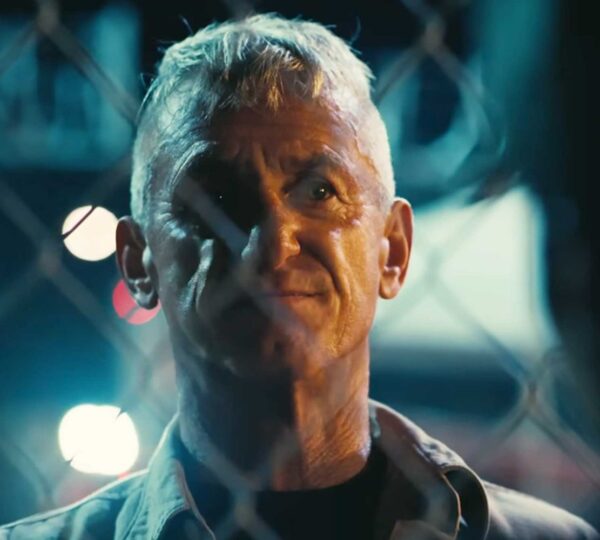
In One Battle After Another, Penn’s role required intense physical preparation, including military training and deep research into real-world conflict scenarios. This dedication reflects his commitment to authenticity in performance.
Critics noted that Penn’s portrayal of Colonel Steven J. Lockjaw combined disciplined authority with nuanced vulnerability, earning him praise for bringing a human dimension to a character defined by leadership and strategic responsibility.
His absence from the Oscars underscores his principle-driven approach. Unlike many actors who prioritize public recognition, Penn has repeatedly shown that he values the causes he supports more than industry accolades.
Over the years, Penn has expressed skepticism about how much awards reveal about true artistic quality. He believes that televised ceremonies can overshadow genuine creativity and reward popularity over substance.
This perspective resonates with a broader critique of Hollywood culture, where spectacle often takes precedence over the craft of acting and storytelling. Penn’s stance challenges audiences to reconsider the role of awards in artistic evaluation.
While some critics argue that attending the Oscars is a professional obligation, Penn has consistently placed ethics and personal conviction above tradition, demonstrating a career guided by principles rather than appearances.
His refusal to attend is also a statement about the commercialization of the awards. Penn has criticized the spectacle of red carpets, sponsorships, and television ratings, highlighting the tension between art and entertainment in Hollywood.
Fans and industry observers have debated whether Penn’s absence diminishes the significance of his win. Many argue that the award itself validates his work, independent of his presence on stage, reaffirming the separation between personal recognition and public validation.
Penn’s career trajectory reinforces this distinction. From early roles in Fast Times at Ridgemont High to intense dramatic performances, his dedication to craft has always been central, while awards have remained secondary to the work itself.
In addition to his film work, Penn has directed and produced projects, demonstrating a comprehensive understanding of filmmaking. His activism often intersects with his professional life, creating films that carry both artistic and social weight.
He has also been outspoken about issues of global justice, human rights, and political accountability, frequently using his celebrity status to amplify marginalized voices and draw attention to critical social concerns.
Penn’s activism includes support for democratic movements and humanitarian crises worldwide. He has leveraged media coverage, public appearances, and personal resources to advocate for individuals and communities affected by political instability or natural disasters.
His decision to prioritize advocacy over attending the Oscars aligns with a career philosophy that prizes moral responsibility and social engagement, challenging conventional norms of celebrity behavior.
Academy Awards, while prestigious, are also entertainment spectacles. Penn’s critique highlights the tension between industry recognition and authentic artistic contribution, emphasizing substance over ceremony.
By not attending, Penn reinforces the idea that awards can acknowledge talent without necessitating personal celebration, emphasizing that recognition does not equate to self-interest or conformity to Hollywood expectations.
Penn’s activism and professional achievements have earned him respect across the film industry. Colleagues acknowledge his dedication to craft, ethical stances, and willingness to challenge institutional norms, marking him as a figure of integrity.
His historical perspective on awards and Hollywood culture offers insight into how artists navigate fame, personal values, and industry pressures, demonstrating a nuanced approach to career longevity and social responsibility.
Through films like Mystic River, Milk, and One Battle After Another, Penn has showcased the power of performance to influence culture, provoke thought, and reflect social realities, cementing his status as a transformative actor.
His decision to abstain from the Academy Awards highlights a commitment to principle over pageantry, reflecting a belief that true accomplishment lies in impact, influence, and integrity rather than trophies or televised ceremonies.
Penn’s career serves as a model for artists seeking to balance professional success with ethical engagement, illustrating that one can achieve excellence while remaining true to personal convictions and societal concerns.
The choice to focus on advocacy over accolades reinforces Penn’s reputation as an actor whose life and work intersect meaningfully with humanitarian and political priorities, creating a legacy that extends beyond cinema.
Through public statements and actions, Penn has challenged conventional notions of success, illustrating that visibility, influence, and social engagement can outweigh formal recognition in shaping a career of enduring significance.
Despite not attending, Penn’s Oscar win is celebrated widely, with industry peers acknowledging the merit of his performance and the consistency of his craft, demonstrating that absence does not diminish achievement or artistic respect.
Penn’s stance invites audiences to reflect on the role of awards in evaluating talent. His critiques suggest that while accolades are meaningful, they should not overshadow the intrinsic value of artistic expression or social contribution.
He has consistently advocated for using one’s platform responsibly, encouraging artists to prioritize engagement with global issues, humanitarian work, and public discourse over personal recognition or commercial success.
Penn’s activism and accolades co-exist, illustrating a career that balances achievement with conscience. His Oscar wins validate professional skill, while his absence demonstrates an enduring commitment to principle, ethical engagement, and meaningful action.
Through decades of acting, directing, and humanitarian work, Penn has cultivated a multifaceted career, blending cinematic excellence with public service, setting him apart as one of the most respected figures in contemporary Hollywood.

