
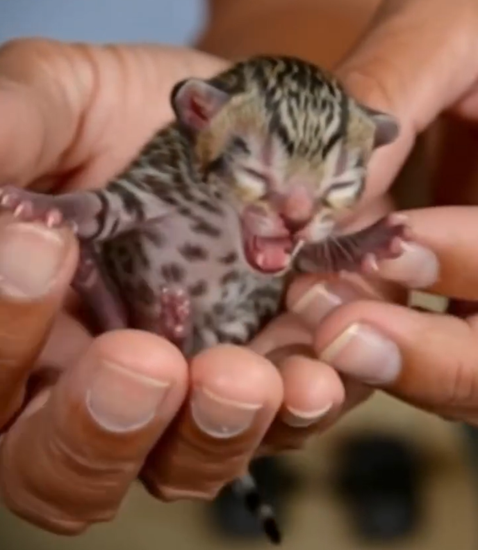
On a quiet evening in Thailand, a local family discovered a tiny kitten wandering alone on the streets. The scene seemed ordinary at first, but as they looked closer, they realized this animal was unlike any domestic cat they had ever encountered.
The kitten was small, fragile, and appeared to be only a few hours old. Its fur had unusual markings, and its behavior suggested it was not a typical domestic kitten.
The family immediately sensed that professional assistance might be necessary. Concerned for the kitten’s welfare, the family contacted The Wildlife Friends Foundation Thailand (WFFT), an organization dedicated to rescuing and rehabilitating wild and endangered animals in the region. The foundation promptly sent representatives to evaluate the situation.
Upon arrival, WFFT experts carefully examined the tiny feline. After initial observations and further research, they concluded that the kitten was not a domestic animal but a fishing cat, scientifically known as Prionailurus viverrinus, a species native to South and Southeast Asia.
Fishing cats are considered medium-sized wild cats, with adult males sometimes weighing twice as much as a typical domestic cat. They are recognized for their strong affinity for water and their skill in catching fish and other aquatic prey.
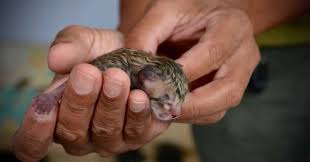
The species’ name, “fishing cat,” reflects its hunting habits. Unlike most wild cats, fishing cats frequently hunt in rivers, streams, mangroves, and wetlands, demonstrating remarkable swimming ability and patience in catching prey.
According to the International Union for Conservation of Nature (IUCN), fishing cats have been listed as Vulnerable since 2016. Their populations are declining due to habitat destruction, wetland drainage, and human conflict, including poaching and retaliatory killings.
In Thailand, mortality among fishing cats is particularly high. WFFT reports indicate that up to 84% of fishing cat deaths in the country result from poaching, habitat loss, and human-wildlife conflict, highlighting the precarious state of this species.
The discovery of the kitten, therefore, was significant. Not only was this an individual at risk, but its survival represents hope for the species, especially considering the limited number of fishing cats remaining in Thailand’s wetlands.
WFFT experts determined that the kitten was only a few hours old when found. They were perplexed by the absence of its mother, who under natural circumstances would usually care for her newborn during these first critical hours.
The family quickly grew fond of the rare kitten. Understanding the kitten’s vulnerability, they requested to temporarily care for it under guidance from WFFT. The organization advised on proper feeding, hygiene, and habitat simulation to support the kitten’s survival.

The family named the tiny feline Simba, inspired by its strong and adventurous personality even at such an early age. Despite its wild lineage, Simba quickly adapted to human interaction and exhibited trust toward the family members.
Initially, the family maintained constant vigilance, anticipating that the mother might return. However, despite their expectations, the mother never appeared, leaving Simba entirely dependent on human care for survival.
Under guidance from WFFT, the family hand-fed Simba using appropriate kitten formula to mimic maternal milk. Feeding schedules were strict, requiring attention every few hours to ensure the kitten’s growth and development during these crucial early weeks.
Simba adapted well to his feeding routine, demonstrating remarkable vitality and curiosity. Observers noted his natural hunting instincts emerging even in a domestic environment, including fascination with water and attempts to catch small moving objects.
WFFT noted that early intervention was critical. Without immediate human support, many neonate fishing cats face mortality risks far higher than domestic kittens due to their specific dietary needs and reliance on maternal care for thermoregulation.
The family created a safe, controlled environment for Simba, simulating conditions similar to wetlands. Shallow water trays and safe exploration areas encouraged natural behaviors, helping the kitten develop skills essential for later rehabilitation if reintroduction were possible.
In addition to physical care, socialization was carefully managed. While Simba grew attached to humans, the family followed WFFT guidance to encourage instinctual behaviors necessary for a wild cat’s development and survival.

The WFFT also highlighted conservation concerns. Fishing cat populations have declined drastically across South and Southeast Asia due to wetland loss, urban expansion, and persecution. Protecting individual kittens like Simba contributes to broader species preservation efforts.
Fishing cats inhabit rivers, swamps, and mangroves. Their diets consist primarily of fish, frogs, crustaceans, and occasionally small mammals. Unlike most cats, they are skilled swimmers, often entering water to actively hunt, making them unique among small felids.
In the wild, maternal care is essential during the kitten’s first weeks. The absence of a mother significantly increases risks, making WFFT intervention vital for survival. This early care ensures proper nutrition, warmth, and protection.
Simba’s rescue also demonstrates human-wildlife interaction potential. With careful oversight, endangered wildlife can be supported in urban or semi-urban contexts without immediate harm, fostering education and awareness about species conservation.
The family continued monitoring Simba’s growth daily. Weight, activity, and behavior were carefully recorded. Observers noted his natural curiosity, playful hunting techniques, and interest in water, confirming his genetic instincts were intact despite early human intervention.
Over time, Simba began developing strong swimming skills in shallow water areas provided by the family. These exercises allowed him to practice techniques crucial for survival in wetlands, reflecting WFFT’s focus on behavioral rehabilitation for wild felids.
While Simba is thriving under human care, WFFT stresses that long-term survival depends on maintaining natural behaviors. Programs often include gradual reintroduction to semi-wild environments when possible, preparing kittens for potential return to protected habitats.
Simba’s rescue also highlights the broader challenges facing wildlife in Thailand. Wetlands, mangroves, and river ecosystems are under constant pressure from development, pollution, and human activity, which directly affects species like fishing cats.
Educational outreach is part of WFFT’s mission. By sharing stories like Simba’s, the organization raises awareness about endangered species, the importance of habitat conservation, and the dangers of poaching and illegal wildlife trade.
The story of Simba has also captured global attention. Videos and photos shared by WFFT emphasize both the kitten’s cuteness and the serious conservation message surrounding his survival and the survival of the species as a whole.
Simba’s daily care includes temperature-controlled sleeping areas, hydration monitoring, and enrichment exercises that stimulate natural hunting behaviors, ensuring his growth and health while maintaining his wild instincts.
Despite human intervention, WFFT emphasizes that fishing cats remain inherently wild. Even when hand-raised, they exhibit natural instincts, including stealth, water affinity, and predatory skills critical for independent survival in protected habitats.
In the wild, fishing cats face multiple threats, including habitat fragmentation, human encroachment, and accidental entanglement in traps or nets. Conservation programs aim to mitigate these risks through habitat protection and public education.
The organization reports that stories like Simba’s serve as an important reminder that endangered species conservation requires both community engagement and scientific expertise to ensure long-term success.
Simba’s presence in the household has also helped educate the family and local community about wildlife conservation. Children and neighbors learn about ecological importance, species behavior, and human responsibility in protecting endangered animals.
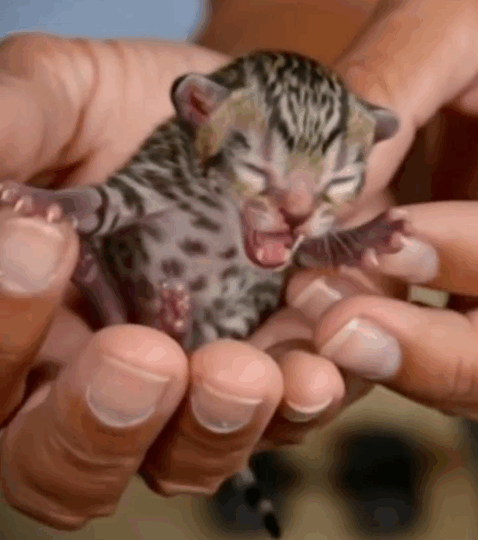
WFFT has documented Simba’s behavior meticulously, noting early socialization, interaction with humans, and maintenance of species-specific hunting instincts, all crucial for understanding how rescued kittens can thrive without losing natural skills.
As Simba continues to grow, his health remains carefully monitored. Veterinary care, vaccinations, and nutritional adjustments are regularly administered to prevent disease and ensure optimal development.
The family reports that Simba displays a calm yet playful personality. His curiosity about his surroundings, interactions with humans, and enjoyment of shallow water all reflect traits that would be essential for a fishing cat in the wild.
Poaching and retaliatory killings remain the main threats to fishing cat populations. In Thailand alone, studies suggest that over 80% of deaths result from human activity, making conservation efforts critical for species survival.
Stories like Simba’s illustrate the impact individual rescue efforts can have on endangered species. While one kitten may not change global population numbers, it represents hope for ongoing conservation work and awareness campaigns.
Beyond species survival, Simba’s story demonstrates the complex interaction between humans and wildlife. Responsible intervention can save lives while preserving natural behaviors necessary for ecological balance.
Rescue organizations like WFFT operate with limited resources, relying on public donations, community involvement, and trained staff to respond to wildlife emergencies effectively and ethically.
Educational programs often accompany rescues, teaching communities about the role of wetlands, predator-prey dynamics, and the ecological significance of species like the fishing cat.
Simba’s early months of life will determine long-term health, growth, and behavioral development. Consistent care, environmental enrichment, and protection from stressors are essential during this critical period.
The kitten’s progress is also carefully shared through WFFT social media channels, where supporters can follow updates, contribute to conservation efforts, and learn about the threats facing wild cats in Southeast Asia.
While Simba may eventually be relocated to a sanctuary or protected wetland, his current care is essential for survival. Experts emphasize that premature release without preparation could endanger both the individual and local wildlife populations.
The story of Simba also inspires other wildlife rescue efforts, highlighting the importance of vigilance, community reporting, and rapid intervention when endangered animals are found in urban or semi-urban areas.
Even in cases where species face severe population decline, the successful rescue and rehabilitation of young animals can provide valuable insights into behavioral development, dietary needs, and survival strategies for endangered species.
Conservationists hope that stories like Simba’s will encourage broader public support for wetland preservation, anti-poaching laws, and sustainable development practices that protect habitats essential to species like fishing cats.
By learning from individual rescues, organizations can refine protocols for hand-rearing, behavioral enrichment, and reintroduction, improving outcomes for wild animals rescued from dangerous or unnatural situations.
The tale of Simba ultimately blends both the heartwarming and the urgent. It showcases human compassion while drawing attention to the pressing need for wildlife conservation, especially for critically endangered species.
Through careful monitoring, ongoing enrichment, and veterinary supervision, Simba continues to thrive. His playful behavior and emerging instincts indicate that he may one day be prepared for life in a protected natural environment.
Each feeding, playful interaction, and swimming session contributes to Simba’s survival skills, demonstrating how thoughtful human intervention can support species conservation while respecting the animal’s natural instincts.
Simba’s story serves as a reminder that humans have both the responsibility and the ability to make a meaningful difference in the lives of endangered animals. Early intervention saves individual lives and contributes to broader ecological stability.
The Wildlife Friends Foundation Thailand continues to monitor rescued animals closely, providing guidance, habitat simulation, and medical care to ensure their long-term survival. Their work underscores the importance of structured conservation programs in rapidly changing environments.
In the coming months, Simba will continue to receive expert care, socialization opportunities, and enrichment activities designed to maintain natural behaviors. Long-term planning may involve relocation to a sanctuary or wetland where he can safely interact with other fishing cats.
Simba’s survival story also highlights the interconnectedness of ecosystems. Protecting wetlands and rivers not only preserves fishing cats but also supports birds, amphibians, and countless other species dependent on aquatic habitats.
The success of individual rescues like Simba’s underscores the potential of conservation programs to combine community involvement, expert care, and scientific knowledge to preserve endangered species in rapidly urbanizing landscapes.
Ultimately, Simba is a symbol of hope. His rescue demonstrates that humans can positively intervene in wildlife emergencies while respecting natural instincts, promoting awareness, and supporting the survival of endangered species worldwide.

