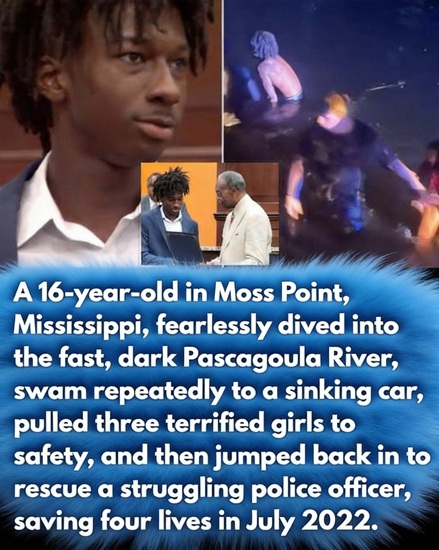
The quiet night along the Pascagoula River in Mississippi was shattered by sudden screams echoing across the dark water. A car carrying three teenage girls had accidentally veered off the road, plunging into the river.
The headlights of the vehicle flickered briefly before vanishing beneath the surface. The river’s current, swift and unpredictable, began pulling the car downstream, creating a chaotic scene illuminated only by occasional flashes from nearby streetlights.
Inside the sinking vehicle, the three girls were trapped. The interior quickly filled with water, limiting their movement. Panic set in as they tried to find a way out while the current pushed the car further from shore.
Their cries for help were urgent and piercing. The night air carried their fear across the riverbank, where bystanders initially froze, unsure how to respond to the sudden, life-threatening emergency unfolding before them.

Among those nearby was 16-year-old Corion Evans. Hearing the desperate screams, he did not hesitate. Without waiting for emergency personnel or protective equipment, he sprinted toward the water, determined to act immediately.
The river was dark, with its surface reflecting only faint moonlight. Evans knew there was no time to waste. The car was quickly disappearing beneath the surface, and the girls’ voices were growing fainter with each passing second.
Jumping into the cold, turbulent water, Evans immediately felt the strength of the current against his body. The combination of fear, adrenaline, and determination propelled him forward, toward the struggling teenagers trapped underwater.
The water was chaotic, carrying debris from the riverbank and remnants from the submerged vehicle. A strong smell of gasoline lingered, making each breath difficult as Evans fought to navigate the dangerous environment toward the girls.
Visibility was near zero. Evans had to rely on sound and instinct, swimming against the pull of the current while locating the girls’ positions. Panic threatened to overwhelm them, making steady guidance essential for their survival.
One by one, Evans found the girls. Each rescue required immense physical effort. He steadied them when they slipped beneath the surface, pulling them toward him and maintaining their focus on reaching the riverbank safely.

The girls’ fear was palpable. They clung to Evans as he guided them through the water, offering verbal reassurance and calm instructions, reminding them to breathe and keep moving toward safety despite exhaustion and shock.
As the first girl reached the shore, Evans immediately returned for the second. The sequence was perilous, with the current constantly shifting and debris threatening to pull both rescuer and victim under at any moment.
By the time the third girl was located, exhaustion had begun to set in for Evans. Yet he persevered, demonstrating remarkable endurance, courage, and commitment to ensuring that all three teenagers would reach safety unharmed.
While Evans was performing the rescues, a police officer who had responded to the emergency attempted to help but was also swept into the river. The officer struggled against the powerful current, emphasizing the danger of the situation.
Despite his own fatigue, Evans returned to assist the officer. Working together, they navigated the turbulent water, carefully guiding the law enforcement responder to safety alongside the previously rescued girls, ensuring that all were accounted for.
The entire rescue unfolded rapidly, yet every second was critical. A moment of hesitation could have resulted in tragedy, underscoring the bravery required to enter such treacherous conditions without protective equipment or guaranteed success.
By the end of the night, Evans had helped save four lives. His actions demonstrated that courage and selflessness are not confined to adults or trained professionals; they can emerge in anyone, even a teenager in a crisis.
The local community praised Evans for his heroism. Neighbors and witnesses recounted the terrifying sequence, emphasizing how quickly events had escalated and how vital his immediate action was in preventing loss of life.
Emergency responders later highlighted the dangerous conditions. The Pascagoula River’s current can be unpredictable, with hidden debris and varying depths. Even trained personnel consider night rescues in this area to be high risk.
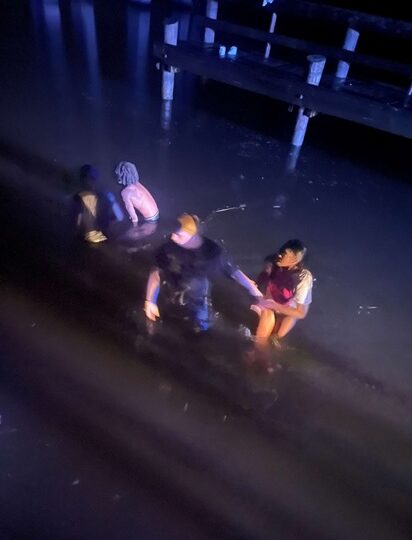
Medical professionals assessed the girls upon reaching the shore. While shocked and cold, they had no serious injuries, a testament to Evans’ skillful guidance and calm presence under extreme pressure during the life-threatening ordeal.
The police officer, though exhausted, also received medical evaluation. Evans’ assistance ensured the responder avoided potential injury, demonstrating the ripple effect of bravery when one individual chooses to act decisively in a crisis.
Evans’ heroism underscores the importance of situational awareness. Recognizing danger, assessing one’s ability to act, and proceeding with calculated courage are essential traits that contributed to the successful rescue of multiple individuals that night.
Experts note that river rescues at night are particularly hazardous. The combination of low visibility, strong currents, debris, and the absence of flotation devices drastically increases risk, making Evans’ actions both extraordinary and life-saving.
Witnesses described the scene as chaotic and terrifying. Screams echoed across the riverbank, water splashed violently against rocks and trees, and the sinking car added urgency, creating a situation few could face without fear overwhelming them.
The psychological fortitude displayed by Evans was remarkable. Maintaining focus while under duress, providing reassurance to frightened victims, and navigating dangerous waters requires both instinctive courage and trained-like problem-solving in the moment.
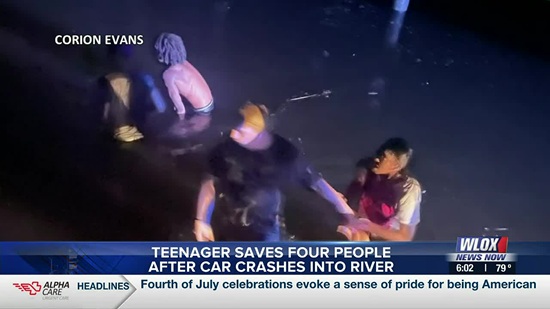
Local authorities later commended Evans publicly. Statements highlighted that his selfless response had prevented what could have been a tragic outcome, emphasizing that heroism can come from community members who act without hesitation.
The story of that night has since inspired others. Social media and news outlets highlighted Evans’ bravery, showcasing how one individual’s quick thinking and action can save multiple lives in extreme circumstances.
Emergency personnel used the incident as a case study, illustrating the unpredictable nature of water accidents, especially in rivers like the Pascagoula, and the importance of bystander intervention when professional help is not immediately available.
The rescued teenagers expressed immense gratitude toward Evans. Their accounts emphasized that without his courage, the outcome could have been far different, highlighting the life-altering impact of his decisive action in the water.
Parents and guardians also reflected on the dangers posed by rivers, vehicles, and nighttime conditions. The incident serves as a reminder of how quickly ordinary activities can become perilous and how preparedness and awareness are crucial.
Evans’ story demonstrates that bravery often involves personal risk. By entering the river without life-saving equipment, he exposed himself to severe danger, emphasizing that true heroism can require extraordinary courage and quick decision-making.
The physical demands of the rescue cannot be overstated. Swimming against a swift current while supporting multiple individuals, all while navigating debris and low visibility, required tremendous strength, endurance, and mental resilience.
This incident also highlights the value of community readiness. By being present, attentive, and willing to act, ordinary individuals like Evans can have extraordinary effects, bridging the gap before professional responders arrive.
Following the rescue, local news outlets covered Evans extensively, highlighting his composure, quick thinking, and selflessness. The story inspired not only admiration but also discussions on how communities can promote safety near water bodies.
Evans’ actions illustrate a broader principle: courage is not defined by age or experience but by willingness to act when others might hesitate, particularly in life-threatening situations where time is of the essence.
Psychologists note that bystanders who intervene successfully often rely on a combination of instinct, empathy, and risk assessment. Evans’ ability to maintain calm and focus likely contributed to the successful outcome for all individuals involved.
The night along the Pascagoula River, which began with panic and fear, concluded with relief, gratitude, and admiration for Evans’ heroism. Four lives were preserved because a teenager acted decisively in the face of imminent danger.
In the days following the rescue, Evans received local recognition, highlighting the importance of celebrating courage and reinforcing positive community role models who demonstrate altruism and selflessness.
The river, dangerous and unpredictable, serves as a reminder of nature’s power. This incident underscores the importance of caution, awareness, and preparedness when near water, particularly at night or in unfamiliar conditions.
Evans’ story continues to inspire others, showing that ordinary individuals can achieve extraordinary outcomes through bravery, empathy, and willingness to act when circumstances demand immediate intervention.
