
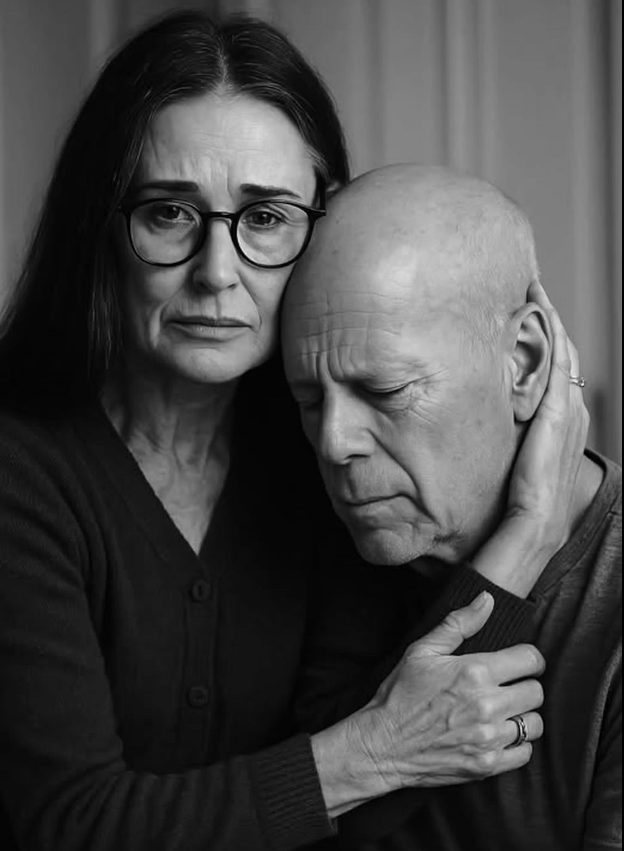
During the 2024 Hamptons International Film Festival on October 13, Demi Moore was honored with the Career Achievement in Acting Award, a prestigious recognition celebrating her decades-long contribution to Hollywood. The ceremony was both celebratory and emotionally poignant.
Moore, 61, took the stage not only to accept her award but also to provide an update on her ex-husband Bruce Willis’ health. Her remarks revealed both compassion and resilience, reflecting a personal side often unseen by the public.
Bruce Willis, now 69, continues to live with frontotemporal dementia (FTD), a progressive neurodegenerative condition affecting the brain’s frontal and temporal lobes. Moore described his current condition as “stable,” offering reassurance amid public concern.
Willis’ FTD diagnosis followed an earlier diagnosis of aphasia, a disorder impacting speech and language. The progression of these conditions has been gradual, yet they have profoundly influenced both Willis’ daily life and family dynamics.

Frontotemporal dementia is characterized by changes in personality, behavior, and language, often causing challenges for both patients and caregivers. Moore’s candid discussion underscored the need for empathy and understanding in facing such a diagnosis.
In her speech, Moore emphasized the importance of acceptance. “The disease is what the disease is, and you have to deeply accept that,” she said, conveying a perspective shaped by both love and lived experience.
She reflected on the emotional realities of being close to someone with a degenerative illness, noting that while the situation is difficult, finding moments of presence and connection remains vital for family well-being.
Moore shared a personal anecdote about visiting Willis alongside her granddaughter Louetta, daughter of Rumer Willis. This visit reminded her of the importance of appreciating even the smallest, fleeting moments shared together.
“Being able to share with whatever we have, for however long we have it,” Moore said, expressing the profound emotional insight gained from these experiences and the fragility of life with illness.
Demi Moore and Bruce Willis divorced in 2000 after several years of marriage but have maintained a strong, supportive relationship centered on co-parenting their three daughters: Rumer, Scout, and Tallulah.
Despite the end of their marriage, Moore has remained actively involved in Willis’ life, frequently supporting him and his family as they navigate the ongoing challenges of his condition. This enduring bond reflects deep mutual respect.

Moore’s speech highlighted both her personal strength and emotional intelligence. She illustrated how love and family commitment can persist beyond the bounds of a marital relationship, fostering enduring connection and shared support.
Rumer, Scout, and Tallulah Willis have also been publicly supportive, sharing moments with their father and helping maintain family stability. The daughters’ engagement illustrates the strong familial network surrounding Willis during his health journey.
Throughout her career, Moore has been known for resilience and dedication, traits that clearly inform her approach to family challenges. Her ability to remain present and nurturing despite personal and public pressures is widely admired.
At the festival, while reflecting on her professional journey, Moore expressed gratitude for the numerous opportunities that allowed her to grow as an actress. She described her career as spanning “lifetimes” of experiences, lessons, and personal growth.
“Thank God I kept getting opportunities to get better,” she remarked, highlighting both humility and acknowledgment of the perseverance required to sustain a decades-long acting career in Hollywood’s competitive environment.
The Hamptons International Film Festival, a notable annual event celebrating cinematic achievement, provided a fitting backdrop for Moore’s reflections, blending professional recognition with deeply personal commentary on life, family, and resilience.

By speaking publicly about Willis’ condition, Moore drew attention to the broader realities faced by families dealing with neurodegenerative illnesses, raising awareness of FTD and encouraging compassion in the wider community.
Frontotemporal dementia can present unpredictable behavioral and cognitive symptoms. Moore’s acknowledgment of the challenges and acceptance required demonstrates both emotional maturity and advocacy for understanding such medical conditions.
Moore’s comments underscored the balance between acknowledging difficulties and finding beauty in shared experiences, reinforcing the idea that presence, connection, and empathy remain paramount when supporting loved ones.
Sharing personal moments with her granddaughter Louetta also highlighted intergenerational connections, showing how family ties across multiple generations can provide comfort, meaning, and support during complex medical circumstances.
The public update also reflects Moore’s ongoing commitment to transparency about important family matters, offering fans insight into the private resilience and ongoing care surrounding Willis’ condition.
Moore’s remarks remind audiences that neurodegenerative illnesses affect more than the individual diagnosed; the family unit experiences emotional, logistical, and psychological challenges that require attention and compassion.

Her speech demonstrated the interplay between personal and professional life, illustrating how maintaining career dedication alongside familial responsibilities requires mindfulness, presence, and a capacity for empathy and resilience.
Moore’s emphasis on treasuring each moment with Willis reflects the broader life lesson that even challenging circumstances can contain opportunities for gratitude, connection, and love.
As a public figure, Moore’s willingness to discuss intimate family matters encourages a more open dialogue about illnesses like FTD, potentially reducing stigma and fostering understanding among the general population.
The award ceremony itself celebrated Moore’s achievements, from iconic roles in films like “Ghost” and “G.I. Jane” to her contributions as a producer and public figure, showcasing a multifaceted career shaped by dedication and talent.
By combining professional recognition with personal reflections, Moore’s speech resonated deeply with attendees, blending admiration for her artistry with empathy for her ongoing personal challenges.
Moore’s ability to maintain composure while discussing Willis’ health highlights emotional resilience, demonstrating that acknowledgment of hardship can coexist with public grace and celebration of personal accomplishments.
The Hamptons audience responded warmly, reflecting both appreciation for Moore’s career and respect for her honesty regarding family matters, indicating that audiences value authenticity alongside artistic achievement.
Moore’s narrative emphasizes that love and support often extend beyond traditional marital structures, illustrating the importance of enduring family bonds even after divorce or separation.

Her approach exemplifies the role of caregiving within families, highlighting patience, empathy, and presence as critical qualities for supporting loved ones with degenerative conditions.
By recounting personal visits and interactions with Willis, Moore humanized the experience of living with FTD, demonstrating how small gestures, visits, and shared moments can carry profound emotional significance.
Her reflection on acceptance demonstrates psychological insight, showing that coming to terms with illness requires both acknowledgment of reality and intentional focus on the present.
Moore’s dedication to supporting Willis underscores a broader message about commitment, responsibility, and the enduring nature of familial love, even in complex or non-traditional family structures.
The speech also implicitly addressed the emotional resilience required to balance public life with private challenges, offering an example of grace under pressure and thoughtful communication.
Moore’s remarks offer inspiration for others facing similar circumstances, illustrating how acceptance, mindfulness, and gratitude can transform the experience of caregiving and patient support.
Her acknowledgment of shared joy, even in small moments, underscores the therapeutic and emotional value of presence, compassion, and attention in navigating life with a loved one affected by illness.
The update also provided reassurance to fans concerned about Willis’ condition, demonstrating that while the disease presents challenges, ongoing care, stability, and family engagement continue to support his well-being.
Moore’s public acknowledgment reinforces the importance of conversation around neurodegenerative diseases, contributing to greater public understanding and awareness of conditions like FTD and aphasia.
By integrating reflections on family, career, and personal growth, Moore’s speech presented a holistic view of resilience, combining professional pride with emotional maturity and compassionate engagement with life’s challenges.
Moore’s dedication to her daughters, Rumer, Scout, and Tallulah, further emphasizes the ongoing legacy of familial love, illustrating how children and extended family play a vital role in maintaining connection and support.
Throughout the event, Moore’s authenticity and warmth were evident, blending public recognition of her career with intimate reflections on personal challenges, creating a speech that was both moving and deeply human.
Her comments about Willis remind the public that medical conditions like FTD affect the whole family unit and require empathy, patience, and proactive engagement from all loved ones.
By speaking candidly, Moore also honors Bruce Willis’ life and legacy, acknowledging both his professional contributions and the courage with which he faces his health challenges.
Moore’s speech ultimately highlighted themes of acceptance, presence, gratitude, and resilience, offering a model for navigating personal hardships while maintaining dignity and grace in public life.
Her words resonated widely because they balanced celebration with reflection, emphasizing that even amidst difficulty, joy, connection, and meaning remain accessible through attentive engagement and emotional presence.
The combination of personal anecdote, professional reflection, and public awareness created a narrative that was both informative and inspirational, emphasizing life lessons applicable to a broad audience.
Moore’s reflections on the importance of treasuring fleeting moments underscore a universal truth: presence and mindfulness can transform even the most challenging circumstances into meaningful experiences.
Through her heartfelt address, Moore offered insight into how families navigate neurodegenerative illness while maintaining connection, love, and emotional resilience, creating a message of hope and compassion for all listeners.

