
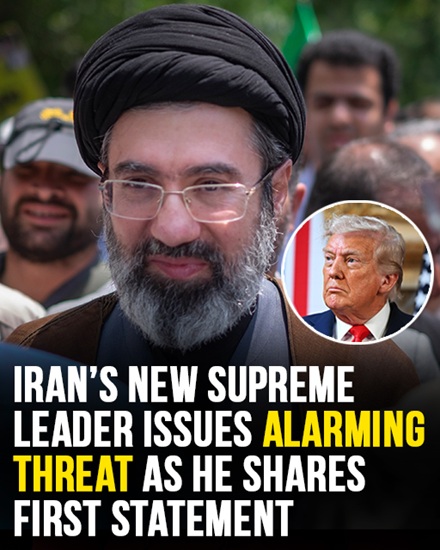
In a dramatic moment amid escalating regional conflict, Iran’s new supreme leader, Mojtaba Khamenei, has delivered what is believed to be his first public statement since taking over leadership after his father’s death.
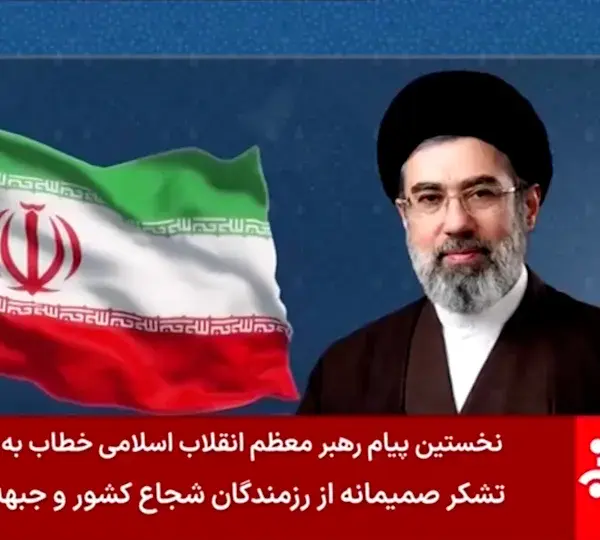
The message was broadcast on Iranian state television on Thursday, March 12, read aloud by a news anchor while a still image of the new leader appeared on screen.
No footage or live appearance of Khamenei was shown during the broadcast. The absence of video or audio sparked global speculation about his physical condition.
Mojtaba Khamenei was elected supreme leader by Iran’s Assembly of Experts on March 8, 2026, following the death of his father Ayatollah Ali Khamenei in an Israeli‑U.S. airstrike.
His father, who had served as supreme leader since 1989, died in late February when a joint military operation struck his residence in Tehran, triggering a broad regional crisis.
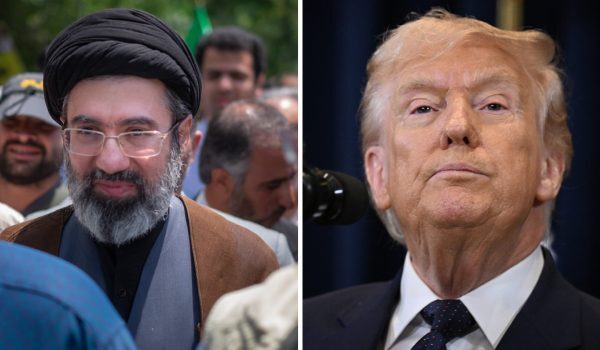
Since his appointment, Khamenei has not made any public appearances, deepening uncertainty about his condition, whereabouts, and leadership style as Iran remains fully engulfed in war.
In the televised statement itself, Khamenei addressed the ongoing conflict and promised that Iran would seek revenge for those killed, presenting a stark warning to enemies of the nation.
“I assure everyone that we will not refrain from avenging the blood of your martyrs,” his statement said, referencing Iranians killed in the war with U.S.‑Israeli forces.
He emphasized that retaliation would not be limited only to the killing of the “great leader of the revolution” — meaning his father — but would include all members of the nation who were martyred.
Khamenei’s words underscored an uncompromising stance toward Israel, the United States, and allied nations involved in strikes that have killed thousands and intensified the Middle East conflict.
He also expressed gratitude to Iranian forces, praising their efforts to repel what he called “unjust attacks” and to protect the nation from domination or internal division.
“Our sincere thanks go to our brave fighters… who have blocked the enemy’s path with powerful blows,” he said, highlighting the government’s narrative of strength and resilience.
This message came as Iran continues efforts to block key maritime routes, including the Strait of Hormuz, a vital artery for global energy shipments that has been disrupted by mining and military activity.
Khamenei warned that Tehran would seek compensation from its enemies, stating that if financial restitution was refused, Iran might seize or destroy assets “to the extent we deem appropriate.”
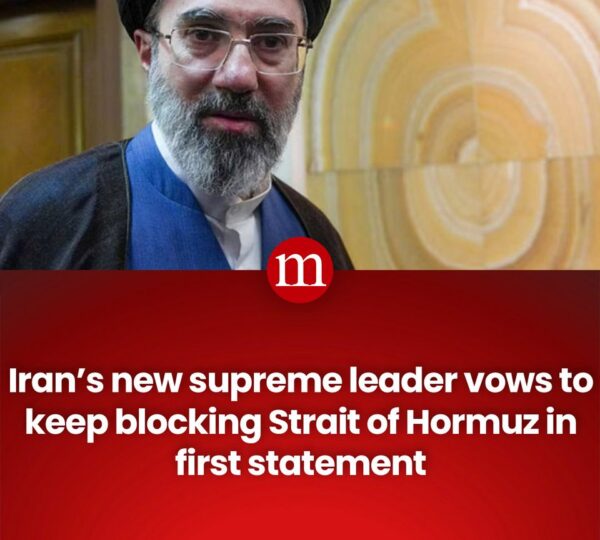
He said the “lever” of closing the Strait of Hormuz must continue to be used as a bargaining tool if the wartime situation persists, reinforcing Iran’s hard‑line approach.
The closure of Hormuz has contributed to soaring global oil prices, prompting emergency releases from strategic petroleum reserves and heightening fears of prolonged disruption to energy markets.
The statement also mentioned potential plans for opening other fronts in areas where the “enemy has little experience and would be highly vulnerable,” signaling a threat of expanded regional conflict.
In the address, Khamenei described seeing his father’s body after the strike that killed him, recounting it as an image of “a mountain of steadfastness” with a clenched hand — a phrase meant to evoke resolve.
The new supreme leader also acknowledged that several members of his family were killed in the same attack, underscoring the personal cost of the conflict for Iran’s ruling elite.
Reports about Khamenei’s health and physical condition vary widely. Some sources claim he was wounded in the strikes that killed his father, but details remain unclear.
A Reuters report cited an unnamed Iranian official saying Mojtaba had been “lightly injured but active,” contradicting some external claims that he was incapacitated.
Meanwhile, some U.S. officials, including the U.S. Defense Secretary, have asserted that Khamenei may be wounded and “likely disfigured,” though these comments have not been independently verified.
Conflicting reports have also circulated that the supreme leader might be in intensive care or even in a coma, fueling speculation about power dynamics within Iran’s leadership and war strategy.
The fact that the first statement was read by a presenter, rather than delivered directly by Khamenei, has further fueled debate about his condition and Iran’s internal control of information.
Political analysts note that the televised, scripted message reinforces Iran’s cautious approach to revealing sensitive details during ongoing wartime — particularly concerning its top leadership.
Mojtaba Khamenei, a mid‑level cleric with strong ties to the Islamic Revolutionary Guard Corps (IRGC), was not widely known to the public before his selection as supreme leader by Iran’s clerical Assembly of Experts.
The Assembly’s vote on March 8 was unanimous, according to state media, and signaled a rapid succession after his father’s death, bypassing prolonged constitutional deliberations due to wartime urgency.
His elevation marks only the third time a supreme leader has been chosen in Iran’s history since the 1979 Islamic Revolution, underscoring the significance of the moment for the country and the region.
International reactions to Khamenei’s appointment and first message have been mixed. Some regional leaders expressed support and pledged continued solidarity with Tehran’s position.
Global powers, particularly Western nations, have criticized the rhetoric and vowed continued opposition to Iran’s hard‑line policies, especially related to retaliation and regional military strategy.
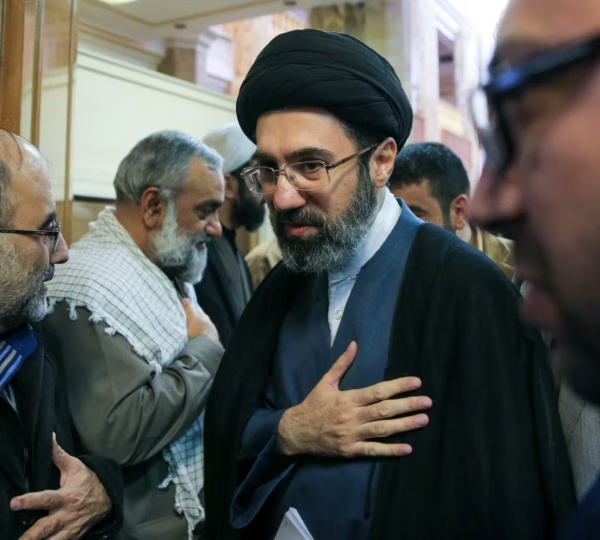
Within Iran, many citizens and analysts continue to watch closely as the new leader navigates internal stability and war pressures, with uncertainty about his long‑term role.
The war, which began in late February with coordinated U.S.‑Israeli strikes, has already claimed thousands of lives, displaced millions, and triggered a major humanitarian crisis across the region.
On diplomatic fronts, other Iranian officials occasionally temper or reinterpret Khamenei’s rhetoric to maintain continuity of trade and energy flows, especially regarding the Strait of Hormuz.
For example, Iran’s ambassador to the United Nations recently stated that Tehran has no intention of fully closing the strait, emphasizing the importance of global energy security and minimizing full disruption.
That diplomatic nuance shows the complexity of Iran’s strategy: balancing maximum pressure on opponents with efforts to avoid further isolating the country economically.
Khamenei’s first statement also reflects broader themes of martyrdom and resistance that have shaped Iranian political discourse for decades, especially during wartime.
By aligning himself with these themes, the new leader seeks to maintain internal support and present a unified front against external adversaries, despite the country’s ongoing strategic challenges.
Observers outside Iran view the message as a warning of continued escalation unless diplomatic or military negotiations change the trajectory of the conflict.
Iran’s stance on retaliation, strategic leverage, and territorial integrity suggests that the government is prepared for a protracted confrontation, with reverberations expected across the Middle East.
The new supreme leader’s words convey a blend of defiance and strategic signaling — one meant to reassure domestic supporters and deter adversaries alike.
As the region braces for further developments, world leaders and analysts will closely monitor Iran’s decisions, particularly regarding military engagement and diplomatic outreach.
While Khamenei’s first statement does not mark the end of conflict, it undoubtedly sets a tone of determination, retaliation, and unwavering national defense as seen by Tehran’s leadership.
In the coming weeks and months, both internal Iranian dynamics and external pressures will shape how this unprecedented chapter in the country’s history unfolds.
The global community remains on edge, watching for signs of escalation, diplomatic openings, and potential shifts in the balance of power in the Middle East.
For now, Iran’s new supreme leader has made his stance clear, staking national honor on retaliation, unity, and strategic leverage against those Iran deems aggressors.

