
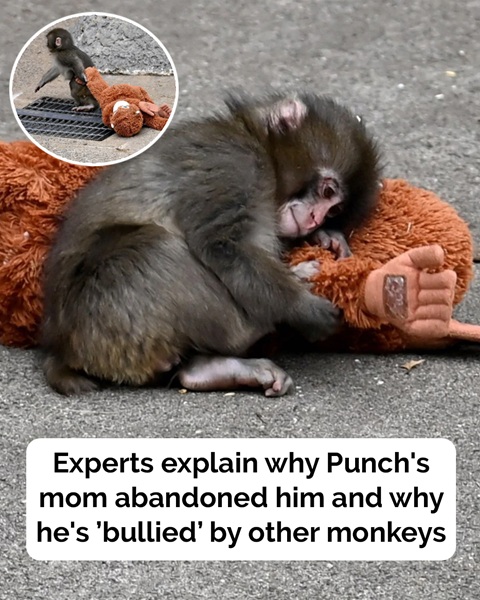
For many around the world, the story of Punch, a baby Japanese macaque, has become impossible to ignore — a tale of vulnerability, resilience, and unusual friendship that transcends species.
Punch is a male Japanese macaque born on July 26, 2025, at the Ichikawa City Zoo — a modest municipal zoo located in Ichikawa, Chiba Prefecture, just east of Tokyo, Japan.
From the moment he entered the world, Punch faced hardship: his biological mother rejected him almost immediately after his birth, leaving him alone in a troop of unfamiliar monkeys.
In wild macaque societies, maternal care is deeply ingrained. Infant macaques cling to their mothers to develop strength and a sense of security during the early weeks of life.
Without that essential early bond, Punch was at risk of stunted development and social isolation — a precarious situation for any young primate.
Zookeepers at Ichikawa City Zoo immediately stepped in to hand‑raise the tiny macaque, feeding him from a bottle and providing round‑the‑clock attention so he wouldn’t suffer without nourishment.
Despite human care, however, a newborn primate’s biological instincts — including the need to cling to a maternal figure — still remained unmet.
To fill that psychological and physical void, keepers tried various comfort items, including towels and soft toys, to help Punch feel secure in his environment.
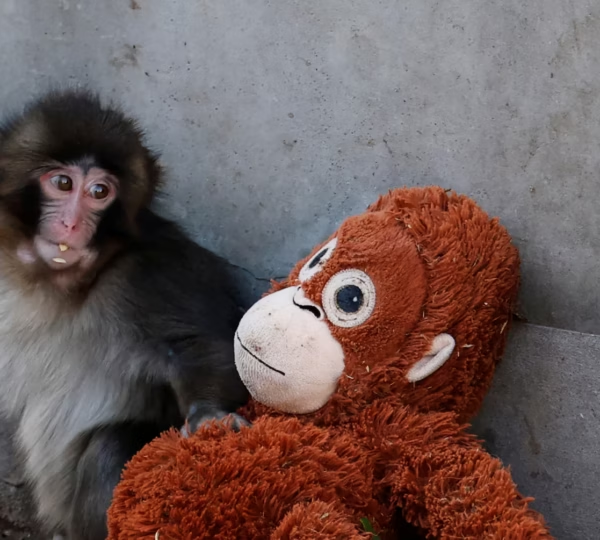
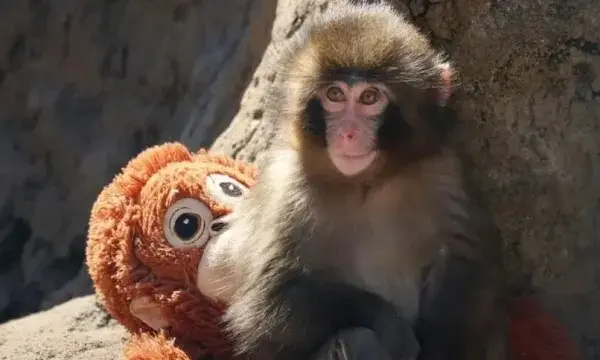
Among these substitutes, he consistently chose an oversized orangutan stuffed toy — an IKEA Djungelskog plush that would soon become inseparable from his daily routine.
Punch clung to the plush toy as if it were a surrogate mother, dragging it with him wherever he went and curling up next to it when he rested.
In nearly every photo and viral video, the tiny macaque can be seen clutching the stuffed orangutan, hugging it as though the soft companion were a living, comforting presence.
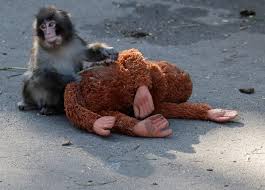
These heart‑stirring images — showing Punch and his toy side by side — quickly spread across social media platforms, drawing millions of views and widespread affection.
In Japan and beyond, people used the hashtag #HangInTherePunch to share videos, photos, and emotional reactions to his story, turning him into a global symbol of perseverance.
Visitors began arriving in droves at Ichikawa City Zoo, following crowds to the “Monkey Mountain” enclosure where Punch could often be found clutching his stuffed friend.
Normally modest, the zoo has become a must‑see destination for travelers and animal lovers curious to witness Punch’s story firsthand.
The plush toy’s presence so captivated audiences that some stores — particularly in Japan and other countries — reported spikes in sales of the same IKEA orangutan doll.
Despite the heartwarming sense of support, there has also been concern about Punch’s social challenges within his macaque troop, especially as he grew older and more aware of others.
In mid‑January 2026, zookeepers began formally introducing Punch to the larger group of about 60 Japanese macaques residing in the Monkey Mountain area of the zoo.
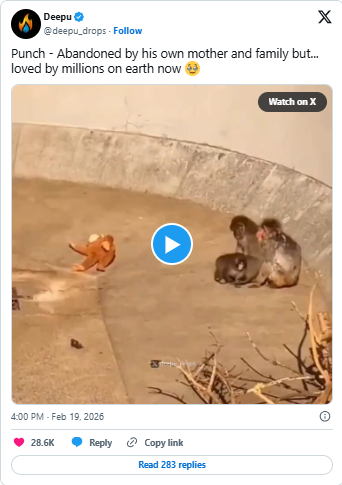
The transition proved difficult at first, as older macaques — guided by their strict social hierarchy — sometimes shooed the young orphan away.
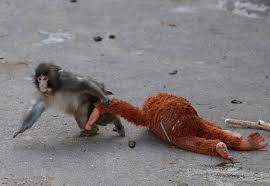
In viral clips shared worldwide, Punch can be seen being dragged, pushed, or chased by adult monkeys who reacted negatively to his presence or unfamiliar behavior.
Some viewers interpreted these interactions as “bullying,” prompting questions about whether Punch was being harmed by the other macaques in his enclosure.
However, experts and zoo officials stressed that such behavior — while upsetting to watch — reflects normal social dynamics within macaque groups, where dominant members assert rank over less‑experienced individuals.
Japanese macaques live in strict matrilineal hierarchies, meaning that rank and family connections influence behavior more than simple friendliness or cruelty.
Because Punch lacked maternal protection and his own place in the troop’s lineage, he was more vulnerable to assertive responses from higher‑ranking macaques.
In response, the zoo’s staff emphasized that these interactions are part of Punch’s social education, helping him learn macaque communication and acceptance protocols.
The official zoo account even issued statements explaining that the “discipline” Punch received from other monkeys wasn’t meant to harm him, but rather to teach him ground rules of monkey society.
As days passed, Punch showed signs of gradual social progress — playing with other macaques, being groomed, and even riding on the backs of peers during communal activities.
Visitors have shared clips of Punch interacting gently with other monkeys, indicating the beginnings of acceptance and mutual curiosity within the troop.
One fan told reporters that seeing Punch climb on other macaques or sit calmly amongst adults gave reassurance that he was being integrated into his social environment.
These small breakthroughs suggest that Punch’s journey from isolation to inclusion may be progressing — a hopeful sign for his future development.
As Punch matures, he has relied less on his plush toy, though he still sleeps with it, especially at night, providing emotional comfort while he builds confidence.
Zookeepers have described Punch as “mentally strong” — a resilient personality trait that helps him cope with adversity and learn macaque social cues.
Despite initial struggles, the fact that he is increasingly accepted as part of the group is a heartening milestone for those who have followed his story online and in person.
Experts in primate behavior explain that maternal rejection can happen — especially in captivity among first‑time mothers, stressed environments, or lower‑ranking individuals within the troop.
In Punch’s case, his mother’s rejection likely stemmed from stress during a heatwave and her inexperience as a first‑time parent, factors that influence maternal care among Japanese macaques.
Researchers note that wild macaque mothers rarely abandon their infants without strong environmental or physiological stressors influencing maternal instincts.
The lack of early mother‑infant bonding can leave young monkeys without vital social cues, which zookeepers must attempt to provide through surrogate care and structured reintegration.
This makes Punch’s initial attachment to a plush toy more understandable: the soft companion fills both a comfort and developmental role in absence of maternal contact.
Psychologists studying primate behavior point out that monkeys seek tactile comfort similarly to human infants, and a soft figure with apprehensible form can simulate that connection.
In Punch’s case, the plush orangutan toy had long, easy places to hold and a primate‑like appearance, which may have made it especially receptive to his primal attachment instincts.
While the toy cannot replace real social partners, it offers emotional security and encourages muscle strength and grounding behavior, both key to healthy development in macaques.
Such surrogate comfort mimics findings from classic studies on attachment behavior, which show infant primates clinging to soft figures rather than less comforting alternatives.
Beyond monkey psychology, Punch’s story has broader resonance, prompting discussions about animal welfare, zoo care practices, and environmental challenges faced by wildlife.
His experience has also drawn attention to how climate factors, like heatwaves, can influence animal behavior and stress levels among captive and wild populations.
Punch’s global visibility has helped increase zoo attendance, requiring caretakers to implement viewing guidelines — such as limiting visit time — to reduce stress on the larger primate community.
The zoo has asked visitors to keep quiet and respect the space of all monkeys, recognizing that Punch’s viral fame can unintentionally affect the welfare of others.
The attention paid to Punch has inadvertently sparked dialogue about the ethics of social media virality around animals, including how online fame can affect perceptions and behavior toward wild species.
Critics have warned that romanticizing stories like Punch’s could unintentionally encourage illegal exotic pet trade or misunderstandings about the needs of wild animals in human care.
Primatologists emphasize that monkeys like Punch belong with their own kind and require complex social structures not easily replicated outside natural troop environments.
Despite these concerns, many animal lovers see Punch as a bridge between species, reminding the world of shared emotional capacities and the importance of empathy in conservation.
As Punch’s story continues to unfold, his journey from abandonment to tentative acceptance stands as a testament to resilience, care, and the unexpected ways in which connection can form.
In time, zookeepers hope Punch will continue to socialize more fully with his troop, find confidence among his peers, and eventually sleep curled up not just with his toy but with fellow macaques.
For now, millions around the world watch, root for him, and find in his gentle perseverance a story that touches hearts — one small monkey teaching big lessons about belonging and growth.

