

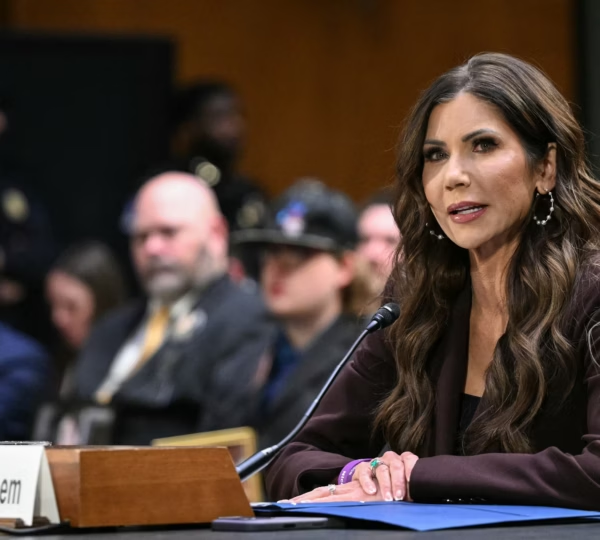
Homeland Security Secretary Kristi Noem has once again become one of the most discussed figures in Washington, D.C., after a contentious Senate Judiciary Committee hearing on March 3, 2026.
What began as an oversight hearing on immigration enforcement and border security quickly escalated into a broader debate about Noem’s leadership, judgment, and public persona — fueled in part by passages from her 2024 memoir No Going Back: The Truth on What’s Wrong with Politics and How We Move America Forward.
The hearing, and the reaction to Noem’s past comments about her personal life, reflect deep partisan divisions over immigration policy, government accountability, and the role of personal character in public office.
Why Noem Was in the Hot Seat: Immigration Enforcement and Deadly ICE Operations
At the center of headlines leading into this week’s hearing was the aggressive immigration enforcement campaign launched in January known as Operation Metro Surge.

Those operations resulted in the fatal shootings of two U.S. citizens, Renée Good and Alex Pretti — a development that has sparked nationwide criticism from lawmakers of both parties.
Senators pressed Noem on this tragic outcome and on broader management of the Department of Homeland Security (DHS), questioning whether operational planning and oversight were sufficient.
Some critics have alleged that DHS under Noem’s leadership has emphasized enforcement numbers over careful, intelligence‑driven strategies — a claim Noem has denied.
In the hearing, Noem defended her department’s actions and casting of events, including controversial public statements in which she described those killed as “agitators” or “domestic terrorists,” language that was sharply disputed by other lawmakers and contradicted by video evidence and eyewitness accounts.
Despite this, Noem has refused to retract her characterization and instead attributed it to “chaotic initial field reports.”
Sen. Thom Tillis Confronts Noem — And Links Her Leadership to a Story From Her Memoir
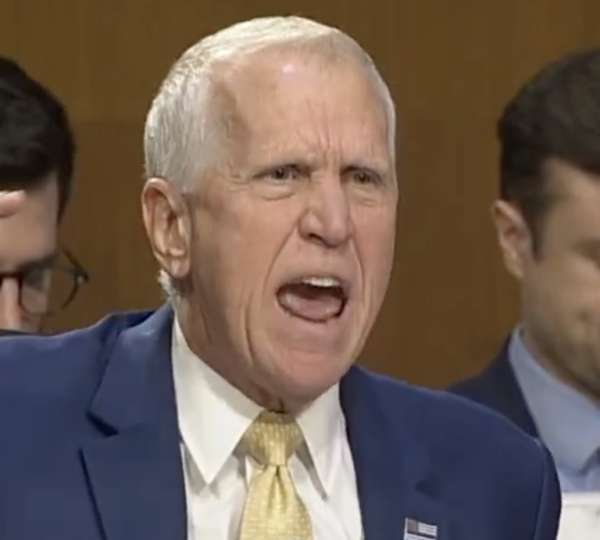
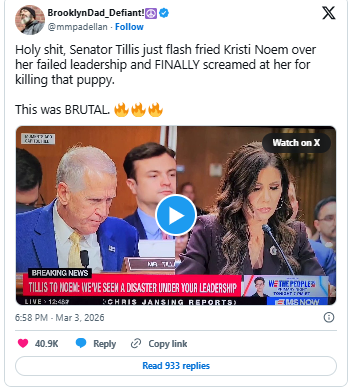
What made Tuesday’s committee session stand out even more was Republican Senator Thom Tillis’s unusually forceful critique of Noem’s leadership, which went far beyond standard policy disagreements.
Tillis, a Republican from North Carolina who is not seeking reelection, sharply criticized Noem’s decisions, both professional and personal, ultimately calling for her resignation.
A central moment in Tillis’s remarks was his reference to a passage from Noem’s memoir that gained wide attention when The Guardian published an excerpt ahead of the book’s release in 2024.
In that passage, Noem recounts how she shot her 14‑month‑old hunting dog, Cricket, after deciding the animal was “untrainable” and dangerous. The dog reportedly attacked a neighbor’s chickens during a pheasant hunt.
“I train dogs, alright? And you are a farmer. You should know better,” Tillis said, according to accounts of the hearing.
“You decided to kill that dog because you had not invested the appropriate time in training, and then you have the audacity to go into a book and say it’s a leadership lesson about tough choices.”
The exchange was notable not only for the intensity of Tillis’s rhetoric but for the degree to which he brought a personal anecdote from Noem’s life into an official oversight hearing — a move that drew attention from media outlets across the political spectrum.
In addition to the dog story, Tillis highlighted a second incident Noem wrote about in her book: killing a “nasty and mean” goat on her family farm.
Tillis contrasted these stories with the complex decisions facing DHS leadership, arguing that they reflect poor judgment rather than strength.
What Kristi Noem Wrote in Her Memoir, and Why It Matters Now
In No Going Back, Noem wrote about her experiences on her South Dakota farm long before she entered the Trump administration as Homeland Security Secretary.
In addition to describing tending livestock and working dogs, she included candid (and controversial) stories about putting down animals she said posed a danger or could not be trained safely for their intended purpose.
In the chapter involving Cricket, a 14‑month‑old wirehaired pointer, Noem detailed how the dog failed to become a reliable hunting companion and later attacked livestock.
After attempting training with an electronic collar and other techniques, she said she ultimately chose to end the animal’s life herself, telling readers that “it was not a pleasant job, but it had to be done.”
Noem also wrote about a male goat she described as “nasty and mean” because it was not castrated. According to her memoir, the goat chased her children and caused problems on the farm, leading her to make the difficult decision to kill it as well.
When the excerpt was first published in 2024, the reaction included shock from animal lovers, criticism on social media, and debate among political commentators about whether such personal anecdotes were appropriate for public figures to share.
Noem defended including the stories, framing them as examples of tough decisions farmers and ranchers sometimes face, and saying that her intent was to illustrate leadership under challenging circumstances.
She also pointed out — as many farm owners do — that laws in states like South Dakota allow animals that pose a danger to livestock or people to be put down to protect property and safety.
Public and Political Reaction: Divided and Heated
The resurfacing of the memoir excerpt in a Senate hearing has reignited broader debates about Noem’s tenure and suitability for the role of DHS Secretary. Some critics argue that bringing up a decades‑old, personal story is unfair or irrelevant to governance.
Others contend that how a public official speaks about life‑and‑death decisions reflects on their judgment and leadership philosophy. The issue unearthed strong opinions on both sides of the aisle.
On social media and in commentary, the controversy has at times turned very emotional, with some animal rights advocates and public figures expressing horror at Noem’s description of killing the animals.
Others, particularly those with farming or rural backgrounds, defended her choice as a painful but sometimes necessary part of animal husbandry and farm life.
In Congress, there has been additional pressure from some lawmakers over the operational outcomes tied to immigration enforcement.
Democratic senators and a few Republicans have raised concerns that DHS has employed overly aggressive tactics or failed to sufficiently protect civil liberties during recent enforcement actions.
Meanwhile, other news outlets have noted that criticism of Noem is not limited to the shooting stories.
Opponents in the Senate have also scrutinized her handling of emergency aid through FEMA, DHS spending on advertising campaigns, and how the department communicates with the public about its operations.
Does Noem Plan to Resign? What Comes Next
Despite calls from Sen. Tillis and others to resign, Noem has shown no indication that she plans to step down.
She continues to defend her record as DHS Secretary, emphasizing enforcement achievements, large drug seizures at the border, the arrest of known gang members and terrorists, and ongoing efforts to secure the nation’s borders.
President Donald Trump, who appointed Noem to the Cabinet, has reiterated his support for her tenure, highlighting her role in what the administration describes as unprecedented enforcement actions against illegal immigration.
In the immediate future, Noem is expected to face further congressional scrutiny. Following the Senate hearing, she has scheduled testimony before the House Homeland Security Committee, where lawmakers are likely to revisit questions about the Minnesota operation, DHS policy priorities, and how the department balances security with civil rights protections.

What This Means for Public Perception and Political Debate
The controversy over Noem’s memoir, and the way it has been used in official hearings, speaks to a larger cultural moment in U.S. politics: the intense scrutiny of personal narratives and how they intersect with governance.
In an era characterized by rapid spread of information and heightened political polarization, even long‑ago anecdotes can become focal points in debates over leadership and accountability.
For Noem, the discussions pose both risks and opportunities. Supporters may see her willingness to share difficult personal experiences as evidence of authenticity; critics may interpret the same stories as poor judgment or lack of empathy.
How this ultimately affects her standing within the administration or her broader political future remains a subject of active speculation.

