
The early morning sun had barely crested the horizon when Michael Carter pulled into the parking lot of Carter’s Diner, a place that had been the heart of his life since childhood.
The building’s red-brick exterior and striped awning looked familiar, almost comforting, but today they struck him differently.
Something was off. Normally, the diner would emit the smell of fresh coffee and sizzling bacon even before the doors opened, a warm invitation to anyone passing by.
Today, it felt more like a set piece—a stage where the actors moved mechanically, performing motions without meaning.
Michael adjusted the flannel shirt he had picked from the back of his closet and tugged his worn jeans into place. His decision to visit the diner incognito had been sudden but necessary.
For weeks, he had poured over spreadsheets, puzzled at declining profits, inconsistent numbers, and an unsettling rise in staff turnover.
The seven locations under the Carter brand had always thrived through a combination of solid business practices and genuine care for employees and customers alike.
Now, despite positive online reviews and loyal regulars, the numbers told a different story. Something intangible, something fundamental, was failing—and Michael needed to see it with his own eyes.
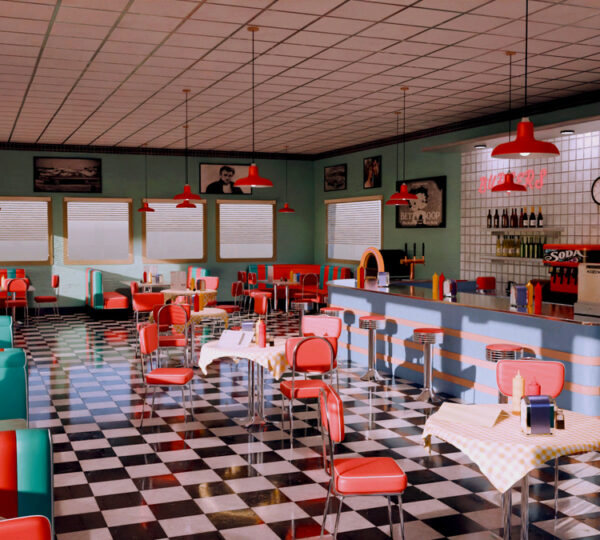
Stepping through the diner’s entrance, Michael was immediately struck by the sound of clattering plates, sharp voices, and the metallic hiss of coffee machines.
The morning rush was in full swing, but unlike the hustle of previous years, there was an edge to it: employees were brisk, almost curt, moving from task to task with minimal interaction.
Patrons were served, but the smiles were fleeting, mechanical. There was little warmth, little recognition of the people who had been coming here for decades.
He slid into a seat at the counter, a vantage point that allowed him to observe without being noticed. Behind him, a group of teenagers fumbled with orders, and the scent of burnt toast drifted from the far side of the kitchen.
Michael sipped his coffee, taking care to blend in. This was no ordinary coffee run; it was reconnaissance. He watched, note-taking silently in his mind, cataloging each behavior, each small interaction, every indication of morale—or the lack thereof.
One employee, a young woman named Megan, seemed more interested in chatting with a coworker than attending to her register.
Another, Troy, was hurriedly counting cash while ignoring the line of customers waiting patiently. Their movements were efficient in a mechanical sense but completely devoid of the friendliness and attentiveness that had always defined Carter’s Diner.
Michael had never worried about micromanaging; he trusted his team. But what he was seeing now made it clear that something had shifted beneath the surface.
Then he noticed Henry.
Henry was the dishwasher, a man in his late seventies with a slow, deliberate way of moving. His hands were steady, precise, and his eyes crinkled warmly as he greeted patrons who caught his attention.
Unlike the other employees, Henry treated each customer as a person rather than a transaction. Michael observed how he carried himself—quiet dignity amidst a flurry of careless motion.

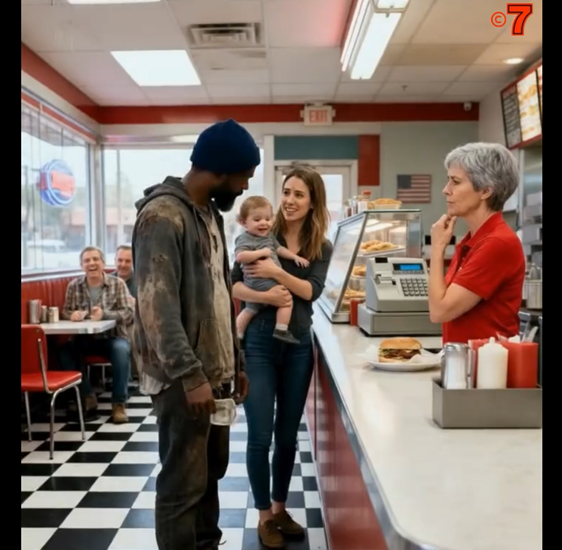
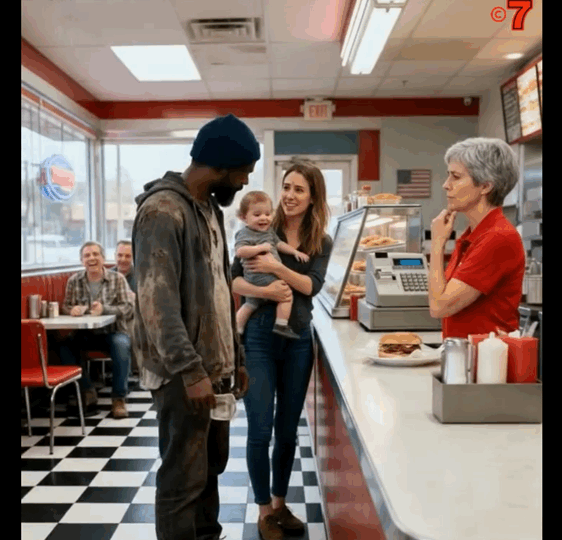
As the morning progressed, Michael’s attention was drawn to a small drama unfolding near the register. A young mother, frazzled and exhausted, fumbled with her wallet.
She had clearly miscalculated the total and was panicked, worrying aloud about how she would cover the bill. Before anyone else could intervene, Henry quietly stepped forward.
He reached into his own pocket and covered the cost of her meal. The woman’s eyes widened in gratitude, but the moment was immediately met with derision from Megan and Troy.
“Seriously? You’re going to do that again?” Megan muttered, rolling her eyes. “You’re acting like everyone’s charity case.”
“Yeah,” Troy added, sneering. “Maybe retire before you become everyone’s personal bank.”
Michael felt a chill run down his spine. These were the employees entrusted with running the diner’s daily operations, and here they were mocking the very ethos upon which Carter’s Diner had been built. It wasn’t just disrespect—it was a betrayal.
Over the next hour, Michael continued observing, increasingly alarmed at what he saw. Cash discrepancies, ignored complaints, and subtle manipulations became apparent.
It was clear that some staff members were taking advantage of Henry’s good nature and the trust of their patrons. The financial issues he had noted on paper weren’t the result of market fluctuations or competition—they were internal, systemic.
Michael left the diner that morning with a mix of emotions: disappointment, anger, and a renewed resolve. He returned home, spending the rest of the day reviewing security footage, cross-checking receipts, and gathering statements from customers who had experienced similar incidents.
By evening, he had a full picture of what was happening—proof beyond doubt that Henry had been unfairly blamed for cash shortages and that Megan and Troy had engaged in misconduct to cover their errors.
The following day, Michael returned to the diner, but this time he came prepared. He had brought with him the security footage, the financial records, and testimonials from both staff and patrons.
The moment he revealed the evidence, the room fell silent. Megan and Troy, unable to deny the facts, attempted to fabricate excuses, but Michael was unyielding. He removed his disguise and addressed everyone in the diner.
“Henry has worked here longer than any of you have been alive,” he said, voice steady but carrying the weight of authority.
“He has built this place with his dedication, his kindness, and his respect for the people who come through these doors. And now, he’s been treated unfairly by those we trusted. That ends today.”
“I am clearing your debts, Henry. You will have a new home, and I’m promoting you to Floor Manager. You will oversee this diner, not just for orders and schedules, but for the culture and heart that define Carter’s Diner. You will restore the spirit we’ve all missed.”
Henry’s eyes welled with tears. He had spent decades quietly caring for others, often unnoticed, and now, for the first time, the recognition was public and profound.
In the weeks that followed, Michael witnessed a transformation that went beyond numbers. Profits began to rise, yes, but the real change was in the atmosphere.
Staff who had previously been disengaged started to take pride in their work. The culture of the diner shifted back toward its original values: respect, attentiveness, and community.
Regular patrons returned, noting the difference immediately, remarking on the warmth of the service and the feeling that the diner was alive again.
Michael often observed from his office, a small space behind the kitchen where he could watch without being intrusive. He saw Henry mentoring younger staff, not only teaching them the practical aspects of their work but also modeling the attitude and ethics that had made Carter’s Diner special from the very beginning.
He watched new hires, inspired by Henry’s example, adopt a sense of care that Michael had feared lost forever.
The story of Henry’s quiet heroism spread, subtly at first, among the local community. Customers shared tales of the dishwasher who paid for meals, went out of his way to make each visitor feel welcome, and treated the diner as a family rather than a business.
Local media picked up on the story, celebrating the idea that integrity and kindness could still shape the success of a business.
For Michael, the experience was a profound lesson in leadership. He realized that profits, reviews, and awards were only part of what made a business successful.
True success came from the people who worked there, the values that guided daily interactions, and the trust and respect that leaders extended to their employees. The diner’s menu could be impeccable, the recipes time-tested, but without heart, the business would falter.
Months later, Carter’s Diner had not only regained its financial footing but had become a model for how businesses could balance growth with care.
Michael implemented training programs, inspired by Henry’s approach, focusing on empathy, customer engagement, and mentorship. Staff turnover decreased dramatically, and a culture of recognition and appreciation flourished.
Michael often thought back to that first morning when he sat at the counter in disguise. He had expected to observe minor lapses or slow service.
Instead, he had uncovered a deeper issue, one that required immediate intervention. More importantly, he had witnessed the quiet courage of an individual whose integrity had never wavered, even in the face of neglect and mistreatment.
The diner continued to expand, not just in terms of locations, but in the richness of its culture. New employees were carefully chosen for character as much as for skill, ensuring that the values Henry exemplified would persist.
Michael established regular staff recognition events, celebrated acts of kindness, and created an environment where employees felt like contributors to something meaningful rather than cogs in a machine.
Henry remained at the heart of the operation, a living reminder that one person’s commitment to doing the right thing could transform not only a workplace but an entire community.
Michael often said that the real menu of Carter’s Diner wasn’t listed on the walls—it was made up of respect, dedication, and compassion. Those ingredients, he realized, were far more potent than any dish he could serve.
Through this journey, Michael Carter learned that leadership is not merely about oversight but about observation, understanding, and intervention when needed.
It’s about recognizing the unseen contributions of people like Henry and ensuring that their work is valued and respected. It’s about remembering that the true measure of success lies in the lives touched, the culture preserved, and the community nurtured.
Carter’s Diner had been founded on principles of family, care, and connection. Under Michael’s renewed leadership and Henry’s unwavering example, those principles were no longer at risk—they were thriving.
The business was not only profitable but resilient, grounded in values that could withstand challenges, turnover, and the pressures of expansion.
In the end, Michael’s undercover morning wasn’t just an experiment in observation—it was a revelation. He saw firsthand the importance of people over processes, of integrity over efficiency, and of heart over mere numbers.
By acknowledging Henry, confronting misconduct, and recommitting to the diner’s original spirit, he ensured that Carter’s Diner would not only survive but flourish, a testament to what happens when leadership and empathy go hand in hand.
And for Henry, the recognition was bittersweet but deeply fulfilling. He had spent decades quietly shaping the diner, guiding others, and embodying the principles Michael had hoped to instill.
Now, with his new role, he could mentor, protect, and influence the next generation of staff, creating a ripple effect of integrity and care that would sustain the diner for years to come.
In a world where businesses often prioritize profit over people, the story of Carter’s Diner serves as a reminder: the heart of any successful enterprise lies not in the menu or the marketing, but in the people who serve with dedication, kindness, and respect.
One act of courage, one demonstration of integrity, can restore an organization and inspire an entire community.

