
I have always shared a deep and unbreakable bond with my daughter, Emily. From the moment she was born, she brought a kind of light into my life that is difficult to describe in words.
She had her mother’s smile and her quiet determination, and from an early age she showed a sensitivity that made her both compassionate and strong.
I never imagined that I would one day have to raise her without her mother by my side. But life, as it often does, changed in an instant.
When Emily was just fifteen years old, her mother passed away suddenly. The loss was devastating. For Emily, it meant losing the person she confided in about school, friendships, and dreams for the future.

For me, it meant losing my partner — the person who balanced me, guided me, and shared in the everyday joys and challenges of parenting. Overnight, our world shifted.
Those first months were a blur of grief and adjustment. I quickly realized that I had to become more than just a father. I had to learn how to be emotionally present in ways I had not always been before.
I had to listen more carefully, notice subtle changes in her mood, and create space for conversations that might once have felt uncomfortable.
I had to take on responsibilities that her mother once handled with grace — from school meetings to helping her navigate the complexities of adolescence.
It was not easy. There were nights when I lay awake wondering whether I was doing enough. There were moments when I saw sadness in her eyes and felt helpless.
But through all of it, Emily and I leaned on each other. We developed routines that grounded us — Sunday breakfasts together, evening walks, and quiet talks at the kitchen table. Slowly, we found a new rhythm. It wasn’t the same as before, but it was ours.
Over time, our relationship grew even stronger. We learned to communicate openly. We respected each other’s space but remained deeply connected.

I watched her grow from a grieving teenager into a thoughtful and resilient young woman. When she graduated, I felt a pride so profound it nearly brought me to tears. Her strength through adversity reminded me daily of her mother’s courage.
A few years later, after much reflection and hesitation, I decided to open my heart again. Loneliness can settle deeply after loss, and while I would never replace my late wife, I knew that companionship is part of a full life. That is when I met Linda.
Linda was warm, intelligent, and independent. She had her own story — she, too, had experienced hardship and was raising a daughter, Jesse, from a previous relationship.
Jesse was close in age to Emily, though their personalities were quite different. When Linda and I married, we hoped to create a blended family built on understanding and mutual respect.
At first, everything appeared harmonious. We shared meals, celebrated holidays, and tried to establish traditions that included everyone.
Emily was polite and respectful toward Linda and Jesse. Linda made efforts to connect with Emily, inviting her to join in outings and family activities.
But as time passed, I sensed an undercurrent of tension. It wasn’t overt conflict. There were no loud arguments or obvious disagreements. Instead, it was subtle — a change in tone, a certain distance at the dinner table, moments of silence that felt heavier than they should have.
Emily never complained directly to me. If I asked how things were going, she would smile and say, “Everything’s fine, Dad.” Yet I know my daughter.
I could see when something was weighing on her. There were times when she seemed to withdraw slightly, choosing to spend more time in her room or away with friends.
I tried to encourage open dialogue, but I also didn’t want to create problems where there might not be any. Blended families are complex.
Adjusting to new roles and dynamics takes time. I hoped that patience and understanding would smooth out whatever minor strains existed.
Years passed. Emily moved into her own place, built a career, and continued to grow into an independent adult. Our bond remained strong. We spoke frequently and spent time together whenever possible.
Then, one day, she shared news that filled my heart with joy: she was expecting her first child.
The moment she told me I was going to be a grandfather, I felt an overwhelming wave of emotion. It was as though life, in all its unpredictability, was offering a new beginning.
I imagined holding that baby, telling stories, and passing down family traditions. I thought about how proud her mother would have been.
I wanted Emily to feel supported every step of the way. Pregnancy is both beautiful and demanding. It requires physical strength and emotional reassurance. I decided to prepare our home so she would always feel welcome.

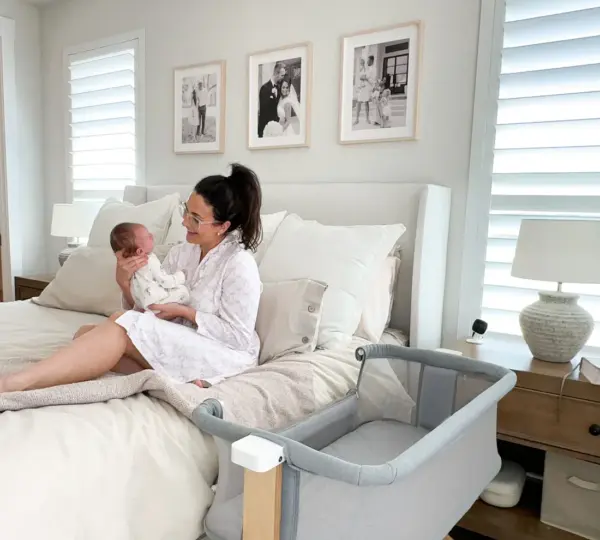
I transformed our guest room with care and attention. I painted the walls a soft, calming color. I brought in a comfortable mattress, fresh linens, and gentle lighting.
I even set up a crib, thinking ahead to future visits with the baby. I wanted her to know that this house would always be a safe haven — a place of comfort and unconditional love.
Last week, I had to travel for a brief business trip. Before I left, Emily mentioned that she might stop by sometime soon. I told her she was welcome anytime and reminded her that the guest room was ready for her.
My meetings concluded earlier than expected, and I decided to return home late that same evening. I was excited at the thought of surprising her, perhaps sharing a late-night cup of tea and catching up on everything I had missed.
When I walked through the door, the house was quiet. I assumed everyone was asleep. As I made my way down the hallway, I saw something that stopped me in my tracks.
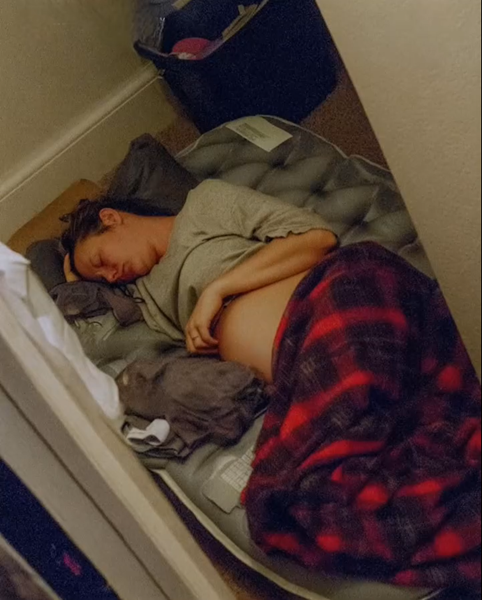
There, on the floor, was my daughter — seven months pregnant — lying curled up on a thin air mattress. She was wrapped in a blanket, her face pale with exhaustion.
For a moment, I couldn’t process what I was seeing. My heart pounded. I rushed to her side and gently asked why she was sleeping there instead of in the guest room.
Her eyes filled with tears. In a quiet voice, she explained that Linda had told her there were no beds available and that the air mattress was the only option.

I felt a mixture of disbelief and anger. I knew that the guest room was fully prepared. I had arranged it myself. I walked to the door and opened it.
The room was untouched.
The bed was perfectly made. The crib stood exactly where I had placed it. Nothing had been disturbed.
In that moment, something inside me shifted. My daughter, who had already endured so much loss in her young life, had been made to feel unwelcome in her own father’s home.
She was carrying my grandchild, vulnerable and in need of comfort — and she had been given the bare minimum.
The next morning, I asked Linda to speak with me privately. I approached the conversation calmly, though my emotions were strong. I explained what I had found and asked her to help me understand why Emily had not been offered the guest room.
The discussion was difficult. There were attempts to justify the situation, explanations that did not align with what I knew to be true. But I made one thing clear: disrespect toward my daughter would not be tolerated.
I told Linda that Emily deserved comfort, especially during pregnancy. She deserved kindness. She deserved to feel secure in her father’s home.
Family requires more than shared space. It requires empathy and fairness.
After much conversation and reflection, Linda and Jesse decided it would be best for them to move out. It was not a decision made lightly, but it was necessary.
Since then, the atmosphere in our home has changed. There is a sense of peace that had been missing. Emily visits without hesitation. She rests comfortably in the room prepared for her. We talk about baby names, nursery ideas, and the future.
Watching her prepare for motherhood has reminded me of how quickly time passes. It feels like yesterday that I was guiding her through teenage years, helping with homework, and offering advice about life’s uncertainties.
Now she is preparing to guide someone else.
This experience has taught me something profound. Family is not defined solely by marriage certificates or shared addresses. It is defined by actions — by who shows up consistently with love, respect, and integrity.
It is about creating an environment where each person feels valued.
I do not harbor bitterness. Life is complex, and relationships require understanding. But I am certain of one truth: my responsibility as a father does not end when my child becomes an adult. It evolves.
As I await the arrival of my grandchild, I feel gratitude. Gratitude for resilience. Gratitude for second chances. Gratitude for the opportunity to stand firmly in support of the person who has trusted me since she was a little girl holding my hand.
Our home is once again a place of warmth and safety. And as I prepare to hold my grandchild for the first time, I am reminded that love — steady, protective, and unwavering — is the foundation upon which true family is built.

