
As a child growing up in Bolivia, Emiliana Rodríguez remembers a night that would shape her understanding of illness forever.
She was watching a group of neighborhood friends playing soccer under dim streetlights when one of the players suddenly collapsed. What began as an ordinary evening quickly turned tragic.
The young man died unexpectedly, leaving confusion and fear in the community. At the time, Rodríguez did not fully understand what had happened.
Soon afterward, however, she heard adults whisper about something called Chagas disease — described to her as a “monster” that comes out at night.
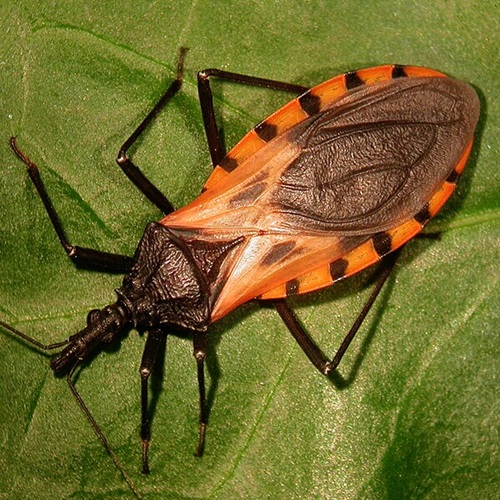
That “monster” was not a myth. It was a parasitic infection transmitted by nocturnal insects known as triatomine bugs, often referred to as “kissing bugs.”
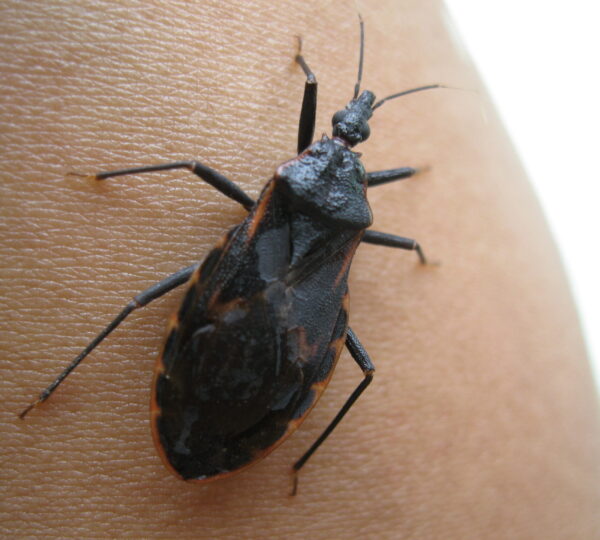
According to the World Health Organization (WHO), Chagas disease affects an estimated 6 to 7 million people worldwide, primarily in Latin America.
Each year, approximately 12,000 people die from complications related to the disease. Though preventable and treatable in certain stages, it remains one of the world’s most neglected tropical diseases.
A Childhood Fear That Became Reality
Rodríguez eventually moved from Bolivia to Barcelona, Spain, where she has lived for nearly three decades. Despite building a new life in Europe, Chagas disease followed her in an unexpected way.
Eight years ago, while pregnant with her first child, Rodríguez learned that she was infected with the parasite Trypanosoma cruzi, the organism that causes Chagas disease.
The diagnosis brought back vivid memories of her childhood friend’s sudden death. She described feeling paralyzed with shock and overwhelmed by fear.
“I remembered all the stories of people dying suddenly,” she has said publicly. “My first thought was: What will happen to my baby?”
Chagas disease can be transmitted from mother to child during pregnancy through the placenta. Fortunately, early detection made a difference.
Rodríguez received appropriate medical care to reduce the risk of congenital transmission. After birth, her daughter was tested and confirmed not to have the infection.
Her experience highlights one of the most critical aspects of Chagas disease: early screening and treatment can prevent serious outcomes, especially in newborns.
A Mother’s Unexpected Diagnosis in Mexico
In Mexico, Elvira Idalia Hernández Cuevas encountered Chagas disease from a different angle. She had never heard of the illness until her 18-year-old daughter donated blood near Veracruz.
During routine screening, doctors detected infection with Trypanosoma cruzi.
The news was alarming. Hernández recalls searching online and encountering descriptions of Chagas as a “silent killer.”
The term refers to the fact that many infected individuals experience no symptoms for years — sometimes decades — before developing severe complications.
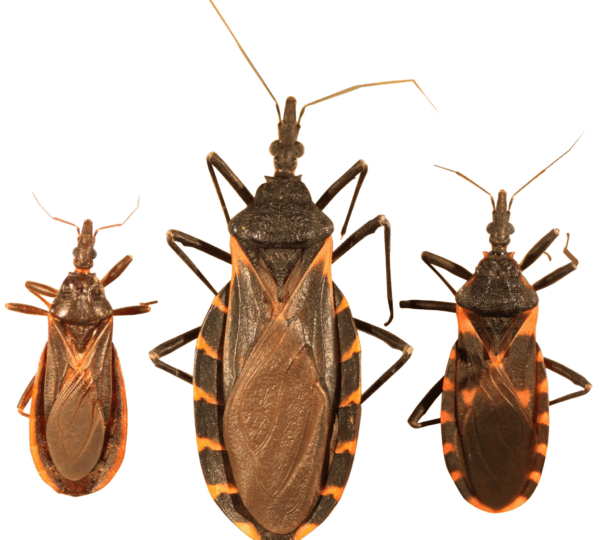
Chagas disease is transmitted primarily through contact with the feces of infected triatomine bugs. These insects feed on blood and typically bite at night.
After biting, they may defecate near the wound. If the person scratches the bite site, the parasite can enter the body through broken skin or mucous membranes.
Transmission can also occur through blood transfusions, organ transplantation, contaminated food, laboratory accidents, and from mother to child during pregnancy.
Because of migration and global travel, cases have been identified outside Latin America, including in parts of Europe, North America, Asia, and Oceania.
Hernández describes feeling lost within the healthcare system.
She and her daughter consulted several doctors but struggled to find professionals with experience in diagnosing and managing Chagas disease. Limited awareness among healthcare providers remains a challenge in many regions.
A Discovery More Than a Century Ago
Chagas disease was first described in 1909 by Brazilian physician and researcher Carlos Chagas.
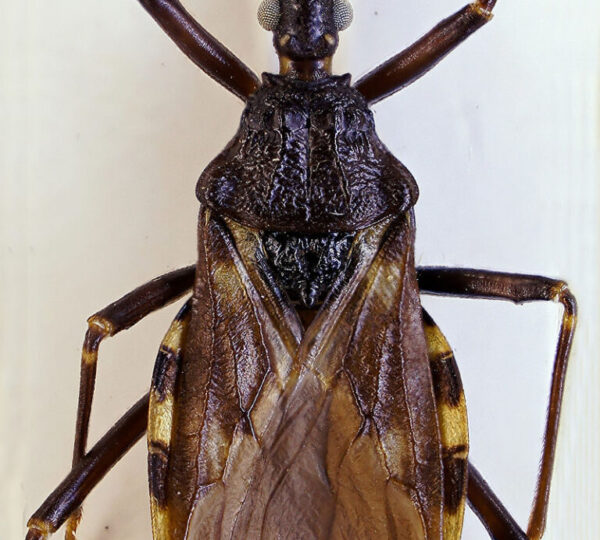
In a remarkable scientific achievement, he identified the parasite (Trypanosoma cruzi), the insect vector, the animal reservoirs, and the clinical manifestations of the disease — all within a short period of research.
Despite being recognized for more than a century, Chagas disease continues to affect millions, particularly in low-income rural or peri-urban areas where housing conditions may allow triatomine bugs to hide in cracks in walls and roofs.
The WHO classifies Chagas disease as a neglected tropical disease.
This designation reflects not only its biological characteristics but also the social and economic factors that contribute to underdiagnosis, limited research funding, and reduced access to care.
A Hidden Epidemic
The WHO estimates that between 6 and 7 million people worldwide are infected with Trypanosoma cruzi. Most cases are concentrated in Mexico, Central America, and South America.
However, due to migration patterns, hundreds of thousands of people living in the United States and Europe are also believed to carry the infection.
In the United States, the Centers for Disease Control and Prevention (CDC) estimates that roughly 300,000 people may be living with Chagas disease, most of whom acquired it in endemic countries.
Although local transmission has been documented in limited areas of the southern U.S., the disease is not considered endemic nationwide.
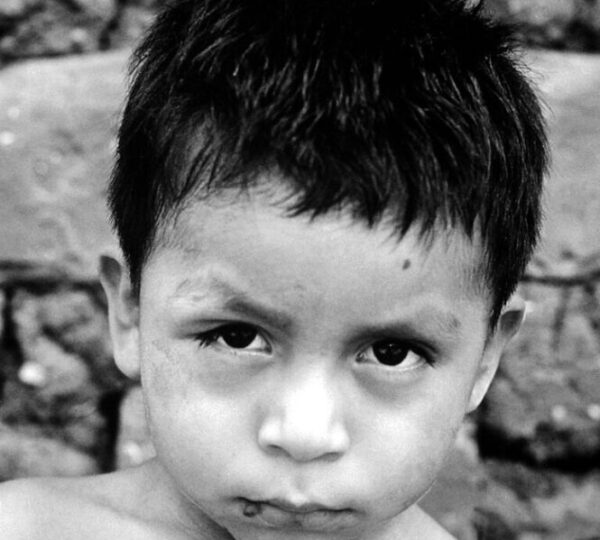
One of the most concerning features of Chagas disease is its progression. After an initial acute phase — which may involve mild fever, swelling, or fatigue — many individuals enter a prolonged indeterminate phase. During this stage, which can last decades, people may feel completely healthy.
However, according to the CDC, approximately 20% to 30% of infected individuals will eventually develop chronic complications.
These can include serious heart problems such as cardiomyopathy, arrhythmias, heart enlargement, or heart failure. Some individuals may develop gastrointestinal complications, including enlargement of the esophagus or colon.
These long-term effects contribute to the estimated 12,000 annual deaths attributed to Chagas disease.
Barriers to Diagnosis
Despite its impact, only about 10% of infected individuals worldwide are believed to receive a formal diagnosis. Several factors contribute to this low detection rate:
-
Lack of routine screening in non-endemic countries
-
Limited awareness among healthcare providers
-
Absence of early symptoms in many patients
-
Social stigma and limited public knowledge
Hernández has spoken about confusion within medical settings in Mexico, where Chagas-related heart disease may sometimes be misattributed to other causes if physicians are not specifically trained to recognize it.
Improving screening — particularly among pregnant women and blood donors — is considered a critical strategy in preventing transmission and complications.
Treatment and Its Limitations
Two medications are currently approved for treating Chagas disease: benznidazole and nifurtimox. Both have been used for more than 50 years.
They are most effective during the acute phase of infection and in young children. Early treatment in newborns can result in cure rates exceeding 90%.
In adults with chronic infection, treatment may reduce parasite levels and slow disease progression, but it does not guarantee complete cure.
Additionally, both medications can cause side effects, including rash, gastrointestinal discomfort, neuropathy, dizziness, and allergic reactions.
Rodríguez has described experiencing side effects such as nausea and skin reactions during her course of therapy. Nevertheless, she completed treatment and now undergoes regular monitoring.
Because Chagas primarily affects populations with limited financial resources, pharmaceutical investment in developing new treatments has historically been limited.
Organizations such as the Drugs for Neglected Diseases initiative (DNDi) are working to support research into safer and more effective therapies.
Colin Forsyth, associated with DNDi’s research efforts, has noted publicly that the disease’s long silent phase makes it harder to detect early and therefore more difficult to prioritize in global health agendas.
Global Awareness Efforts
To increase visibility and action, the WHO declared April 14 as World Chagas Disease Day. The date honors the 1909 discovery by Carlos Chagas.
The goal is to raise awareness, promote testing, encourage prevention efforts, and support research.
Efforts are also underway in Europe. In Spain, Rodríguez collaborates with the Barcelona Institute for Global Health (ISGlobal) to promote awareness and screening, especially among Latin American immigrant communities.
In the United Kingdom, Dr. David Moore at the Hospital for Tropical Diseases leads initiatives to improve detection and prevent mother-to-child transmission.
However, experts acknowledge that global elimination targets for 2030 will be challenging to meet without increased funding, education, and healthcare infrastructure.
Preventing Kissing Bug Infestations
Prevention remains a cornerstone of public health strategy. The CDC recommends several practical steps to reduce the risk of triatomine bug infestations:
-
Seal cracks and gaps in walls, floors, ceilings, and around doors.
-
Repair or install window and door screens.
-
Remove debris, woodpiles, and brush near the home.
-
Limit access to attics and basements.
-
Keep pets indoors at night when possible.
-
Regularly clean and inspect pet sleeping areas.
If a triatomine bug is found, experts advise avoiding direct contact. Instead of crushing it — which may increase risk of exposure — it should be carefully placed in a container and either preserved in alcohol or frozen in water for identification.
Living With the “Silent and Silenced” Disease
For Rodríguez, Chagas disease remains a part of her life story. Although she completed treatment, she continues regular medical follow-up to monitor for potential complications.
She speaks openly about overcoming fear and breaking silence.
“I’m tired of people not talking about it,” she has said. “We need testing. We need awareness. We need treatment.”
Hernández shares that mission as president of the International Federation of Associations of People Affected by Chagas Disease (FINDECHAGAS), working to amplify patient voices and advocate for stronger health systems.
A Disease That Demands Attention
Chagas disease is both a medical and social challenge. It affects millions yet remains underrecognized. It can remain silent for decades but may eventually lead to life-threatening complications.
It disproportionately impacts vulnerable populations, yet its reach extends across continents due to global migration.
The science behind the disease is well established. The parasite Trypanosoma cruzi has been studied for more than a century. Diagnostic tools exist. Treatments, though imperfect, are available. Prevention strategies are known.
What remains urgently needed is broader awareness, stronger healthcare access, and sustained research investment.
The story that began with a childhood soccer game in Bolivia reflects a much larger global reality. Behind statistics are individuals and families navigating uncertainty, fear, and hope.
Through education, early screening, and global cooperation, Chagas disease can be better controlled and its impact reduced.
Breaking the silence is the first step.

