
Nine-year-old Milly had always been fascinated by the natural world. While most children her age were content with video games or TV shows, she found magic in leaves rustling in the wind.
In the chirping of birds, and in the intricate patterns of spiderwebs glistening with morning dew. Every weekend, she would take long walks in the woods near her home, a sprawling forest dotted with towering oaks, pines, and maples.
Armed with her small wicker basket, a pair of magnifying glasses, and a few empty jars, she delighted in collecting anything that sparked her curiosity: brightly colored insects, smooth stones, mushrooms with curious gills, and occasionally, small mammals that she observed from a safe distance.
Her parents, while occasionally exasperated by the mess she brought home, indulged her curiosity because they recognized that Milly possessed a rare, unrelenting passion for exploration.
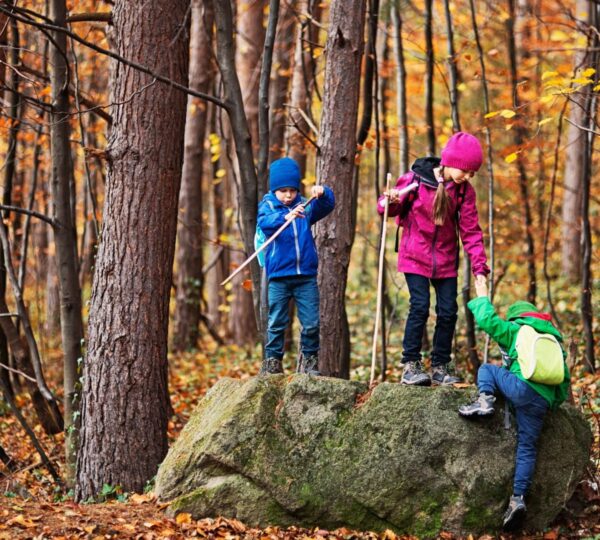
One sunny afternoon in early summer, Milly ventured deeper into the woods than usual. The sunlight filtered through the canopy above, creating shifting patterns on the forest floor.
Birds sang overhead, and the faint scent of pine mingled with the earthy aroma of damp soil. As she navigated a particularly dense patch of undergrowth, her sharp eyes caught sight of something unusual.
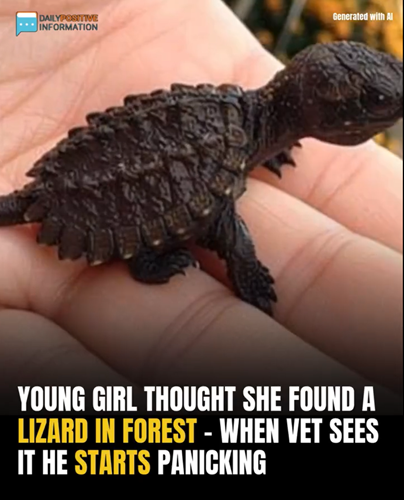
Nestled among the fallen leaves and tangled roots was a creature that didn’t resemble anything she had encountered before. Its body was dark, almost glossy black, and covered in smooth, scaly skin.
At first glance, Milly thought it might be a lizard, but it was larger than any lizard she had ever seen, with an elegant, sinuous shape and a head that seemed sharper and more angular than typical forest reptiles.
The creature’s eyes glimmered like polished obsidian, reflecting the sunlight in an eerie, captivating way. Though Milly felt a shiver of nervousness, her curiosity overpowered her fear.
She carefully approached, making sure not to startle it, and gently coaxed it into one of her empty jars, placing a soft piece of cloth at the bottom for cushioning.
By the time she reached home, the excitement and apprehension intertwined in her chest. She placed the jar in her bedroom, where the creature seemed to hunker down, its small tongue flicking in and out of its mouth as if tasting the air.
Milly scoured every field guide she could find and typed countless search terms into her tablet, hoping to identify her mysterious find. Despite hours of research, nothing matched the animal she had discovered.
The scales, size, and movements didn’t align with any known species native to her region, or even those found in neighboring countries.
With her heart racing, Milly decided to keep her discovery a secret, at least temporarily, determined to solve the puzzle herself before sharing it with her parents.
For the next few days, she observed the creature meticulously. She documented its movements, feeding patterns, and reactions to light. Yet over time, she noticed troubling signs.
It began to move sluggishly, its once-alert eyes now dull and half-lidded. It refused food that had previously been accepted, and its skin, once sleek and shiny, seemed dry and dull.
Anxiety gnawed at Milly; she feared it might die. Unable to bear the thought of losing her new companion, she finally decided it was time to tell her father.
Her father, a practical yet gentle man, immediately agreed to accompany her to the local veterinarian. The vet’s office, a small building at the edge of town, smelled faintly of antiseptic and pet food.
They carefully transferred the creature from the jar to a secure terrarium provided by the clinic. At first, the veterinarian examined it casually, checking the creature’s size, scales, eyes, and mobility.
But as he looked more closely, his expression shifted from routine curiosity to outright alarm. His eyes widened in disbelief, and he instinctively stepped back. “Please,” he said, his voice tense, “both of you, step back from the terrarium.”
Without providing further explanation, the vet picked up his phone and made an urgent call. He left the room, closing the door firmly behind him. Milly and her father exchanged worried glances.
What had they brought into their home? Was it dangerous? Could they be in trouble for handling it? The uncertainty was terrifying.
Her father kept his voice calm as he reassured Milly, but even he looked concerned, his usual composure shaken.
They waited in silence, the minutes stretching like hours, until the vet finally returned, now accompanied by a serious expression and a palpable tension that filled the room.
The vet explained that the creature Milly had found was not a normal lizard. It did not belong to the local ecosystem, nor did it match the description of any species known to inhabit their country.
In fact, it was extremely rare, possibly exotic, and could even be illegal to possess. The creature’s unusual physiology and unfamiliar behavior suggested it might have originated from a different continent or a controlled breeding environment.
The vet admitted that he did not have the expertise to handle such a specimen and had contacted wildlife specialists and conservation authorities, who were en route to examine it.
Before the specialists arrived, the vet asked Milly’s father a series of precise questions: where exactly the creature had been found, how it had been handled, and whether anyone else had come into contact with it.
Each question underscored the seriousness of the situation. Milly realized with growing apprehension that she had stumbled onto something far more unusual than she had imagined.
The forest she had loved exploring had given her not just a glimpse of nature, but a potential discovery that could impact wildlife regulation, conservation efforts, and perhaps even the local ecosystem.
When the wildlife specialists arrived, they were immediately struck by the uniqueness of the creature. They examined it closely, taking detailed measurements, photographs, and samples.
Their initial assessment suggested that it might belong to a family of reptiles not commonly found outside tropical or subtropical regions. Its scales, skin texture, and muscular build indicated a creature adapted to a humid, dense forest environment — very different from the temperate woods near Milly’s home.
Some of the specialists speculated that it could have been smuggled or released illegally, while others considered the possibility of it being a previously undocumented species, an extraordinary possibility in a modern world where most species have already been cataloged.
Milly watched with fascination as the experts worked, noting how seriously they treated every detail. She asked questions about its diet, its origins, and how such a creature might survive in her region.
She learned about the dangers it could pose — not because it was inherently aggressive, but because it might carry diseases unfamiliar to local species or compete with native wildlife for resources.
The specialists emphasized the delicate balance of ecosystems and how introducing even one exotic species could have unforeseen consequences.
Her father, meanwhile, listened closely, asking practical questions about legal responsibilities, reporting requirements, and the correct protocols for safely housing or returning such a creature.
They learned that the authorities might decide to relocate it to a research facility, a sanctuary, or a controlled environment for study, rather than releasing it back into the wild.
For Milly, this was bittersweet. She had grown attached to the creature, given it a name, and dreamed of observing it in her own garden, yet she understood the importance of protecting both it and the environment.
Over the following days, Milly and her father documented everything meticulously: the creature’s movements, feeding habits, and reactions to its new surroundings at the vet’s facility.
They learned that it was extremely intelligent for its size, capable of complex movements, problem-solving when offered food, and even showing signs of recognition when familiar people approached.
The specialists marveled at its adaptability and noted that it could provide significant insights into reptile behavior, physiology, and even evolutionary biology.
The story quickly spread beyond their small town. Local newspapers ran feature articles about the “mystery reptile found by a nine-year-old,” and wildlife forums buzzed with speculation.
Experts from distant universities reached out, eager to examine photographs and DNA samples. Milly became somewhat of a local hero, her curiosity and careful handling of the creature highlighted as exemplary for young naturalists.
She was invited to visit the facility where the creature would be kept for research, under strict supervision, allowing her to continue observing it while ensuring both her safety and that of the animal.
Through this extraordinary experience, Milly gained a profound understanding of science, responsibility, and conservation. She realized that curiosity must be balanced with caution, and that the most thrilling discoveries sometimes come with serious obligations.
She learned about invasive species, wildlife trafficking, and the importance of reporting unusual findings to trained professionals. And most importantly, she understood that her own actions — however innocent or well-intentioned — could have significant ecological implications.
Though she initially worried about losing her mysterious companion, she came to appreciate that allowing specialists to care for the creature was a necessary step to protect both it and the surrounding environment.
She continued to visit, documenting behaviors, asking questions, and even learning about the creature’s possible origins and taxonomy.
What began as a simple afternoon walk had blossomed into a lifelong lesson about the delicate interplay between humans and nature, and about the role of careful observation, research, and respect in scientific discovery.
Milly’s story became a testament to the wonder that can emerge when curiosity meets the unknown. It showed how a child’s fascination with the natural world can lead to encounters that challenge knowledge, provoke careful thought, and inspire communities to engage with conservation efforts.
The small, dark creature she had discovered was more than a lizard — it was a catalyst for education, reflection, and an enduring sense of responsibility toward the living world around her.
In the end, Milly returned to the woods regularly, but her perspective had changed. Every rustle in the leaves, every insect on a branch, every unusual shape among the undergrowth now carried the weight of possibility and consequence.
She understood that discovery, however exciting, comes with accountability, and that patience, observation, and collaboration with experts are essential tools for anyone seeking to understand the natural world.
Her adventure, once a simple collection of curiosity-driven actions, became a story that would be shared for years: a reminder that even the smallest explorers can uncover mysteries that challenge experts, highlight the importance of ethical stewardship, and reveal the unexpected marvels hidden in plain sight.
And for Milly, it became a defining moment — a childhood memory that shaped her approach to nature, science, and the responsibilities of discovery.

