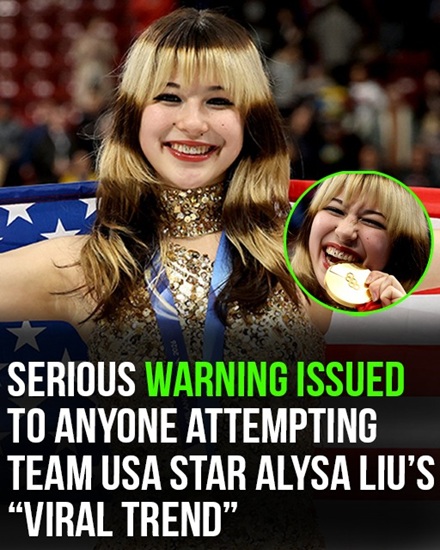
If you followed even part of the 2026 Winter Olympics in 2026 Winter Olympics, you likely saw Alysa Liu’s name rising again and again — not only for her skating.
But for the quiet force of a comeback years in the making. What unfolded on the ice in February was more than a competition; it was the culmination of a journey marked by perseverance, self‑belief, and a redefined relationship with pressure, health, and identity.
At just 20 years old, Liu emerged as one of the most compelling stories of the Games. On February 19, she delivered a performance that blended technical precision, emotional depth, and remarkable control under pressure.
In the women’s singles competition, Liu’s skate was steady, her presence composed, and her execution of difficult elements — including triples and combinations at elite level — spoke to a maturity beyond her years.
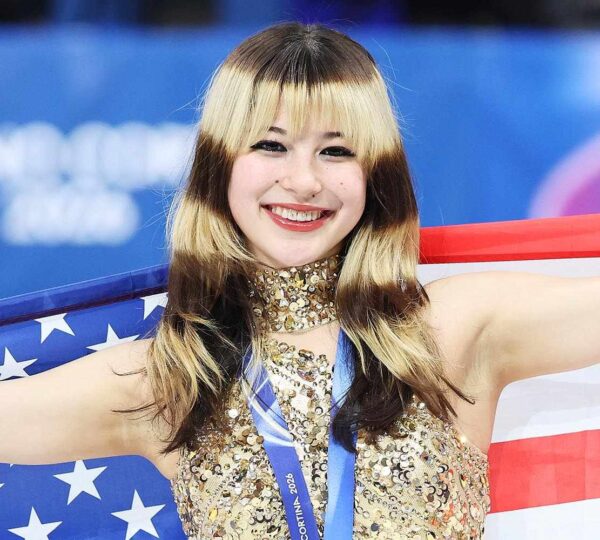
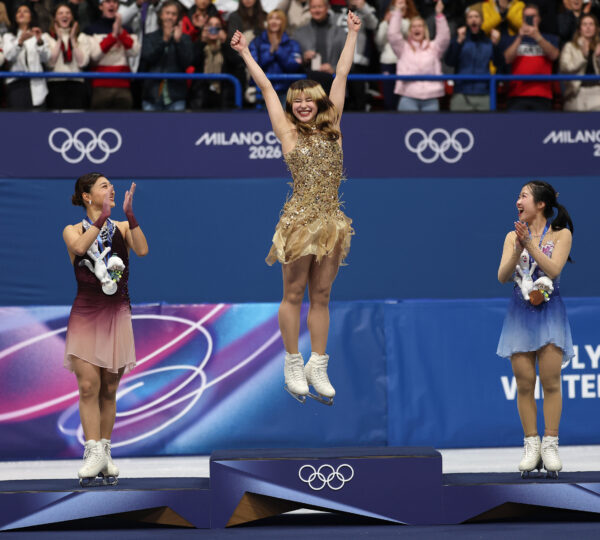
When the final scores lit up the scoreboard, she stood atop the podium, having captured gold — a milestone moment for U.S. figure skating.
It was the first time an American woman had won an individual Olympic gold medal in figure skating in more than twenty years, a span marked by near‑misses, heartbreaks, and intense global competition.
The significance of the achievement was amplified by what Liu had endured just a few years earlier. After a meteoric rise through the junior and national ranks in her mid‑teens, she stepped away from competitive skating in 2022, citing exhaustion and burnout.
At a time when many young athletes are still learning to balance training, education, and personal growth, Liu faced a level of expectation that would strain even the most seasoned professionals.
The cumulative stress — physical, emotional, and psychological — led her to make the difficult, honest decision to prioritize her well‑being over competition.
In a culture that often equates success with relentless pursuit, that step back was itself an act of courage.
In 2023, Liu returned to competition with what observers described as a steadier footing. Her comeback was not defined by spectacle or dramatic proclamations, but by a quiet, consistent rebuilding.
She recalibrated her training environment, focused on sustainable conditioning, and worked with coaches and sports psychologists to develop strategies for managing stress and expectation.
Rather than chase perfection, she began aiming for balance — a shift that didn’t dilute her ambition but gave it a durable foundation.
Her victory in 2026 was not loud. It was earned. What she accomplished on the ice was the result of years of incremental growth: refining technique, building confidence, and learning to trust her instincts under the most intense scrutiny imaginable.
Her supporters celebrated not just a medal, but a return to a love of skating that had been temporarily overshadowed by pressure.
Yet, as often happens in moments of public triumph, attention drifted to something smaller — something unexpected, and initially peripheral to her athletic achievement.
During the medal ceremony, in the bright lights and busy cameras sweeping the arena, many viewers noticed a detail that instantly went viral: two tiny silver studs above Liu’s upper teeth, placed through the thin piece of skin that connects the lip to the gums.
This type of oral jewelry is commonly referred to as a “smiley” piercing because it becomes visible predominantly when someone smiles.
The jewelry itself was delicate and subtle, but it caught the public’s eye almost immediately. Within hours, images and clips spread across social media platforms, fan pages, and news feeds.
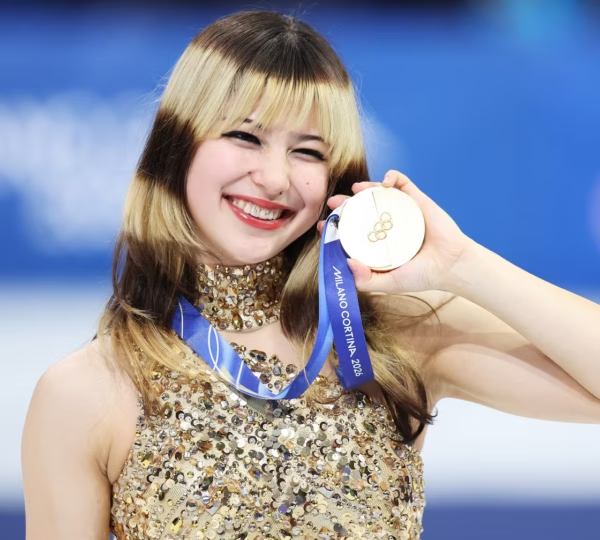
Some viewers shared admiration — a young champion expressing individuality with confidence. Others expressed curiosity: What was the piercing like? Did it affect her skating?
What inspired her to get it? The attention grew as commentators and fans dug deeper into the story, eventually noting that in a past interview, Liu had mentioned that she pierced it herself with help from her sister.
That detail, simple and personal, became a focal point: a young woman navigating self‑expression, creativity, and bodily autonomy in a world where athletes’ choices are constantly examined.
For many fans, the anecdote was charming — a spontaneous, even playful expression of personality. A teenage twist on the traditional narratives of disciplined training.
A symbol, some said, of confidence and independence at an age when many are still figuring out their identities.
But as is often the case when personal decisions meet public scrutiny, the conversation soon turned toward health — and specifically toward the risks associated with oral piercings.
Dental professionals, including orthodontists and oral surgeons, weighed in on the burgeoning conversation with a mixture of explanation and caution.
They noted that oral piercings, by virtue of being in the mouth, carry risks that many people don’t fully appreciate. Unlike ear or nose piercings, the mouth is teeming with bacteria — part of its normal environment — and this makes infections more likely.
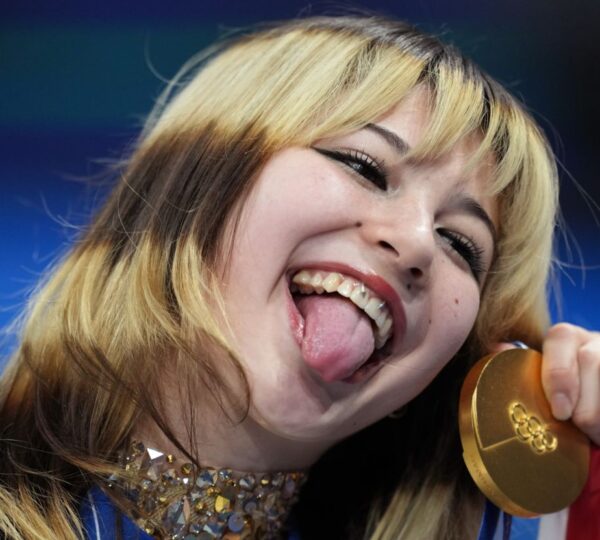
The jewelry can rub against teeth, potentially causing enamel wear, chips, or cracking. As the metal comes into sustained contact with gums, it can lead to gum recession, which, once it occurs, cannot easily be reversed.
Left unchecked, these issues can progress to pain, sensitivity, and in some cases infections that require professional intervention or even surgical repair.
Experts emphasized, repeatedly and clearly, that such messages were not intended to shame anyone — including Liu — for their personal choices.
Instead, the intention was to inform and educate: to slow the rush toward imitation and encourage anyone considering oral jewelry to think carefully and consult a qualified dental professional.
Proper care — including regular cleaning, avoiding playing with the jewelry, and monitoring for signs of irritation — can reduce risks, but it cannot remove them entirely. The message was one of awareness and informed decision‑making, not judgment.
Importantly, professionals also made a point of differentiating between impulsive or DIY piercings and those conducted under sterile, professional conditions.
A piercing performed without proper sterilization or by someone without training significantly increases the chance of complications.
This distinction mattered because Liu’s own experience, involving her sister’s help, was discussed in fan circles; some interpreted it as an example of youthful independence, while health experts reminded readers that expertise matters when it comes to anything involving our physical well‑being.
Through all of this, Liu’s achievements remained — and rightly so — at the heart of the story. Her gold medals, her comeback, her composure under pressure: these were the elements that defined her Olympic narrative.
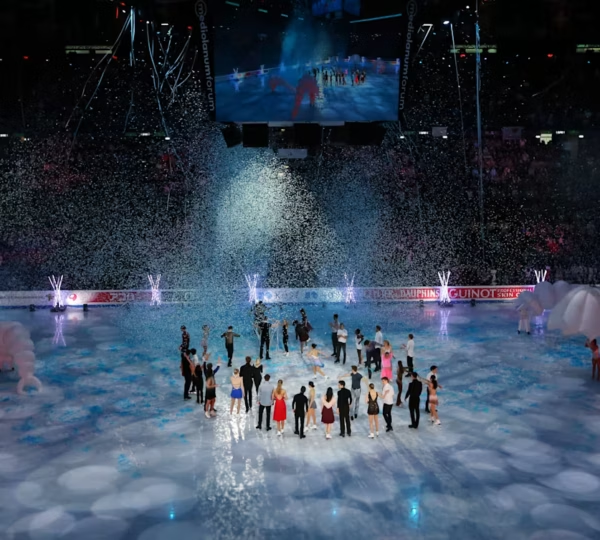
The discussion around her piercing did not diminish her accomplishment; rather, it opened a subtler, broader conversation about how we interpret bodily choices in public figures, especially young ones.
In a society increasingly driven by visual moments and shareable images, the reaction to Liu’s smile — and the jewelry that accompanied it — became a reflection not only of her individuality but of how quickly small details can magnify into cultural talking points.
As some commentators noted, the piercing itself was neither unusual in the world of personal fashion nor indicative of broader stylistic trends among athletes; what made it noteworthy was the context: a quiet champion accepting her highest honor, her joy expressed in a way that was uniquely hers.
In the aftermath of the attention, there emerged a quiet lesson in balance. On one hand, there was celebration — of Liu’s expression, her personality, and her willingness to be herself in a spotlight that often demands conformity.
On the other, there was a reminder that our bodies — the vessels through which we chase dreams and endure hardship — deserve careful consideration, respect, and informed choices.
Several commentators framed the conversation as part of a larger cultural moment: the intersection of athletic excellence and self‑expression.
In a world where athletes are often seen primarily as performers or representatives of institutions, Liu’s visible choice reminded many that these young people are individuals first — with personal preferences, friendships, and the same desire to explore identity that many of their peers experience away from the spotlight.
The dual focus — on her Olympic performance and on the conversation surrounding her piercing — underscored a broader truth: public figures, especially young ones, navigate complex terrain when private choices become public spectacle.
For every cheer that greeted her performance, there were thousands of curious comments online. For every news headline about her gold medal, there were social media posts about her jewelry.
Both reactions were human, but they highlighted something important about our relationship to celebrity, image, and influence.
In the midst of it all, Liu herself remained composed. Rather than wade into debate, she allowed her skating to remain the primary narrative. Her focus continued to be on her training, her fans, and her future in the sport.
Through interviews and post‑event reflections, she emphasized gratitude for support, respect for her teammates, and joy in representing her country.
She did not shy away from personal expression, nor did she invite controversy; she simply lived her truth, on her terms, while continuing to pursue a sport that demands grace under pressure.
For many observers, this balance was inspiring: a reminder that success does not require erasing individuality, and self‑expression does not negate discipline.
Rather, the two can coexist — as long as the choices we make about our bodies are thoughtful, informed, and grounded in care.
In the weeks following the Olympics, sports analysts, health professionals, and fans alike revisited the broader themes of Liu’s journey: resilience, humility, and self‑awareness.
Her story became a touchstone for discussions about athlete mental health, the importance of pacing one’s career, and the ways in which young champions define themselves beyond medals and titles.
Ultimately, what began as a viral detail in the backdrop of Olympic triumph became a catalyst for reflection — on how we view public figures, how we balance admiration with thoughtful discourse, and how even small choices can prompt important conversations about health and self‑care.
Liu’s smile — radiant, confident, expressive — was not the headline. Her gold medals were not diminished by it. But the attention it attracted became a reminder that our bodies are not trends, and choices made lightly can echo longer than expected.
Moments in the spotlight often invite imitation. Wisdom invites pause.
In Liu’s case, her smile reflected confidence and individuality — and the response around it has become, for many, a quiet lesson in balance: celebrating expression, while respecting the care the body deserves.
And perhaps that, too, is part of growing into greatness: knowing when to move boldly forward, and when to protect what carries you there.
