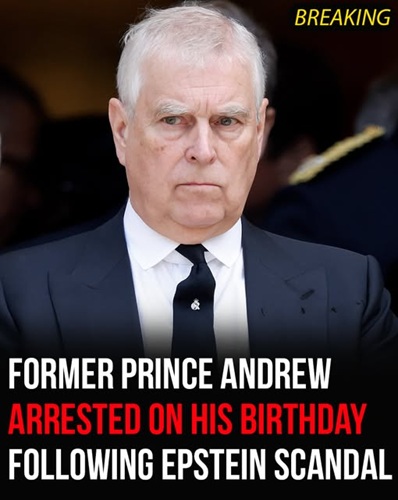
London / Norfolk, United Kingdom — On Thursday, 19 February 2026, former British royal Andrew Mountbatten-Windsor, previously known as Prince Andrew.
Was arrested by UK police on suspicion of misconduct in public office, in a development that has become one of the most significant controversies involving the British monarchy in decades.
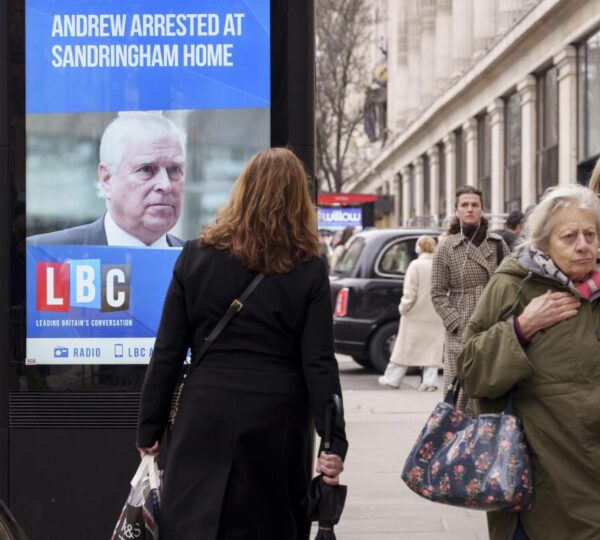
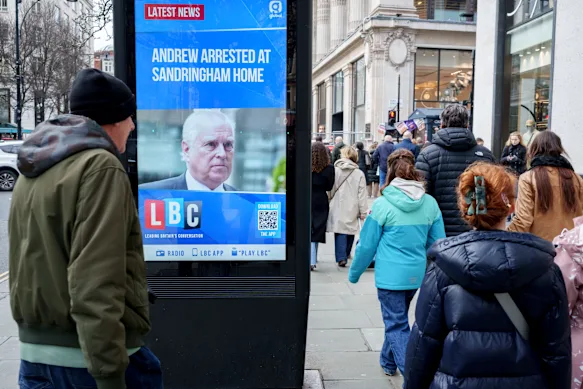
The arrest, confirmed by Thames Valley Police, took place at his residence on the Sandringham estate in Norfolk on the morning of his 66th birthday. It follows weeks of intense scrutiny of his past activities, especially his long‑standing connections to the late financier and convicted sex offender Jeffrey Epstein and allegations related to his role as a UK trade envoy.
This article sets out the full timeline and context of the arrest, the nature of the allegations, reactions from officials and the royal family, ongoing legal proceedings, and its implications for British public life.
Background: Who Is Andrew Mountbatten‑Windsor?
Andrew Mountbatten‑Windsor is the second son of the late Queen Elizabeth II and the younger brother of King Charles III. For decades, he was one of the most high‑profile members of the British royal family, widely known as Prince Andrew, Duke of York.
After a military career in the Royal Navy, he served for nearly a decade as the United Kingdom’s Special Representative for International Trade and Investment, a government‑appointed role that saw him promoting British business interests overseas.
In recent years, his reputation has been overshadowed by his association with Jeffrey Epstein and related controversies.
Amid mounting criticism, he stepped back from public royal duties in 2019, and in October 2025 Buckingham Palace formally removed his princely titles and asked him to vacate his primary residence at Royal Lodge in Windsor Great Park.
Timeline of the Arrest
Morning of 19 February 2026
Shortly before 8 a.m. local time, police officers in plain clothes arrived at Mountbatten‑Windsor’s home at Wood Farm, a more modest property on the Sandringham estate where he had been living since leaving Royal Lodge.
Multiple unmarked police vehicles were seen entering the estate. Officers were later reported to also be conducting searches at other addresses, including a location in Berkshire connected to the former royal.

Thames Valley Police issued a brief statement confirming they had “arrested a man in his sixties from Norfolk on suspicion of misconduct in public office” and that searches were under way at addresses in Norfolk and Berkshire.
They did not name Mountbatten‑Windsor at the time, in line with UK law enforcement policy intended to protect the fairness of ongoing investigations.
Released Under Investigation
After approximately 11–12 hours in custody, Mountbatten‑Windsor was released under investigation on the evening of 19 February 2026.
This means that, while he has not been formally charged with any offence, the police investigation is continuing, and the Crown Prosecution Service may later decide whether evidence is sufficient for charges.
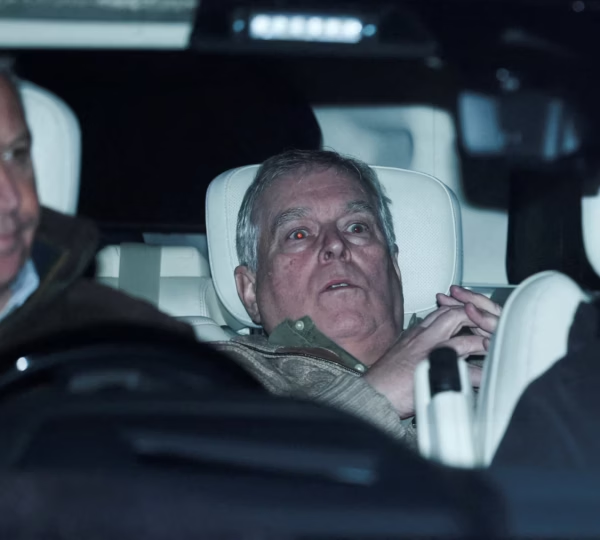
A widely circulated photograph by Reuters photographer Phil Noble showed Mountbatten‑Windsor in the back of a police vehicle as he left Aylsham Police Station, becoming one of the most discussed images of the day and symbolizing the extraordinary nature of the event.
Why Was He Arrested?
Allegations and Scope of Inquiry
The arrest stems from allegations that Mountbatten‑Windsor engaged in “misconduct in public office” during his time as the UK’s trade envoy between 2001 and 2011.
This allegation is connected to a set of documents often referred to as the Epstein files, millions of pages of records released from the U.S. Department of Justice relating to Epstein’s contacts with influential figures worldwide.
According to information reviewed by journalists and investigators, some of these emails appeared to show Mountbatten‑Windsor potentially sharing official government information — including sensitive commercial and diplomatic communications — with Epstein or through intermediaries linked to him.
Critics have alleged that this could represent abuse of his public role and a breach of confidentiality.
The specific allegation being investigated is that he “wilfully misconducted” himself in a way that constitutes misconduct in public office — a common law offence in the UK that can carry a maximum sentence of life imprisonment, though convictions for similar cases involving senior figures are rare and legally complex.
Misconduct in Public Office
Under UK law, the offence of misconduct in public office covers circumstances where a person holding a public post abuses their position, neglects duties, or acts in a manner that undermines the trust placed in them.
Police and prosecutors must prove that any alleged wrongdoing was intentional, was a clear breach of public duty, and lacked any reasonable justification.
Importantly, an arrest does not mean guilt has been established — it means authorities believe there is enough evidence to investigate further. Charges could yet follow if prosecutors believe there is a realistic prospect of conviction.
Legal and Institutional Reactions
Police and Prosecutors
Thames Valley Police have been cautious in their public comments, emphasizing the need to protect the integrity of their investigation.
Police have completed searches at Mountbatten‑Windsor’s Norfolk residence, while searches at his former Berkshire property reportedly continued after his release.
The force’s Assistant Chief Constable Oliver Wright said investigators had “opened an investigation into this allegation of misconduct in public office” after a “thorough assessment,” and stressed that information would be released only at appropriate times.
Royal Family Response
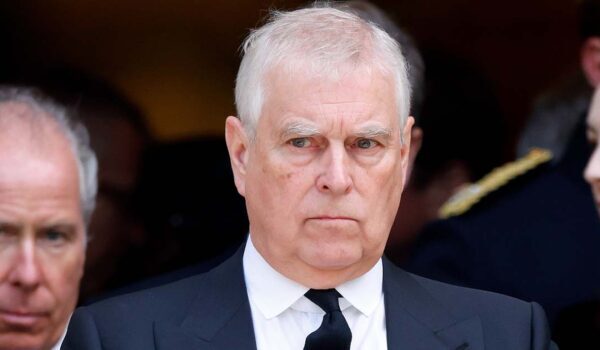
King Charles III, Mountbatten‑Windsor’s elder brother, issued a statement following the arrest, expressing deep concern and stating that due process must be allowed to proceed.
The monarch affirmed that the royal family was cooperating fully with the authorities and that “the law must take its course.”
Other senior royals, including Queen Camilla and Princess Anne, reportedly continued with scheduled official duties, illustrating the institution’s attempt to maintain continuity amid the crisis.
Government and Public Officials
UK Prime Minister Keir Starmer echoed the sentiment that “no one is above the law,” emphasizing the seriousness with which the government viewed the allegations and police action.
Some members of Parliament — across multiple parties — have publicly suggested that the government should pursue legislation to remove Mountbatten‑Windsor from the line of succession, a symbolic but constitutionally complex step given his position as eighth in line to the throne.
Buckingham Palace has indicated it would not oppose such moves if they were brought forward.
Public and Advocacy Group Reactions
Advocacy and Survivor Perspectives
The arrest was welcomed by some advocacy groups and survivors linked to the Epstein case. Family members of Virginia Giuffre, a Epstein victim whose allegations against Mountbatten‑Windsor have been publicly known for years, described the police action as an important affirmation that “no one is above the law.”
Giuffre died in 2025, but her siblings reacted strongly to the arrest.
Civil society organisations and campaigners for greater accountability in public office also hailed the development as a significant — if overdue — step in investigating high‑level conduct.
Royalists and Critics
Opinion in the UK and internationally has been sharply divided. Monarchists and royal supporters have expressed concern over the reputational damage to the monarchy, while republican and reformist voices have used the moment to call for more radical changes to Britain’s system of constitutional monarchy.
What Happens Next?
Ongoing Investigation
At this stage, Mountbatten‑Windsor remains released under investigation. This means that police inquiries will continue, including reviewing documents, interviewing potential witnesses, and assessing evidence. Prosecutors from the Crown Prosecution Service will ultimately determine whether a formal prosecution is appropriate.
Possible Legal Outcomes
If prosecutors decide there is sufficient evidence for charges, a criminal case could be brought. Misconduct in public office is a serious offence and carries a potentially wide range of penalties — up to life imprisonment — though actual sentences depend on judicial findings, severity of conduct, and other legal factors.
Historical Significance
The arrest of a close member of the British royal family is historically notable. The last arrest of a senior royal on criminal suspicion in the UK was more than three centuries ago, when King Charles I was detained during the English Civil Wars.
Mountbatten‑Windsor’s case — involving allegations tied to his public office and links to a major international scandal — represents an unprecedented modern constitutional and legal moment.
Conclusion
The arrest of Andrew Mountbatten‑Windsor on suspicion of misconduct in public office — connected to his conduct as a former UK trade envoy and longstanding scrutiny of his ties to Jeffrey Epstein — has triggered intense legal, political, and media attention in the United Kingdom and abroad.
While he has been released under investigation and not charged, authorities continue their inquiries, and the implications for the royal family, public trust in institutions, and British governance remain profound.
This remains a developing story and further official statements and legal actions are expected as the investigation proceeds.
