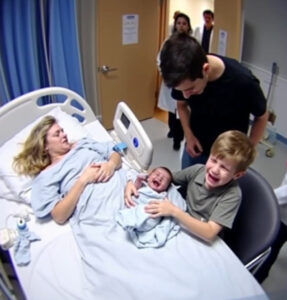
The room had gone completely still in a way that did not feel natural. Only minutes earlier, it had been alive with urgency. Doctors had spoken in calm but firm voices.
Nurses had moved swiftly between machines and monitors. The steady rhythm of medical equipment had filled the air with reassurance.
It was the sound of professionals doing what they were trained to do. It was the sound of expectation. Then everything stopped.
The beeping faded. The instructions ended. The movement slowed. What remained was a silence so thick it felt as though the oxygen had been pulled from the room itself.
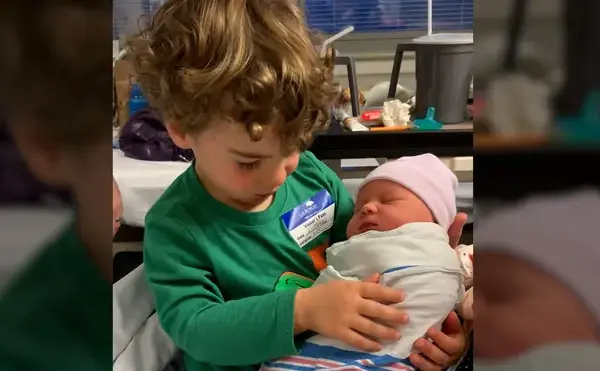
It was the kind of silence that presses against the chest and makes it hard to breathe. The kind that signals something irreversible.
Emily Turner lay exhausted against the hospital pillows, her body trembling from the strain of labor, her mind suspended somewhere between shock and disbelief.
Just hours earlier, she and her husband Michael had walked into the hospital carrying a small overnight bag and enormous anticipation. They were about to meet their son.
They had imagined the cry. They had imagined the first photograph. They had imagined Jacob, their seven-year-old, proudly stepping into his new role as big brother.
But instead of celebration, they were facing words no parent is ever prepared to hear.
There was no detectable heartbeat at delivery.
No spontaneous breathing.
Resuscitation efforts had not produced the expected response.
Their baby had been still.
He was wrapped gently in a soft blue blanket, carefully placed in his mother’s line of sight. His tiny fingers were curled naturally, his eyelashes resting delicately against his cheeks. He looked as though he were sleeping. But the stillness was different. Too quiet. Too complete.
Michael stood beside the bed, frozen. His hand rested on the railing, gripping it tightly as if it were the only stable thing in a collapsing world.
He could hear the doctor speaking, explaining, offering clinical clarity. But the words blurred together, dissolving into a hollow ringing in his ears.
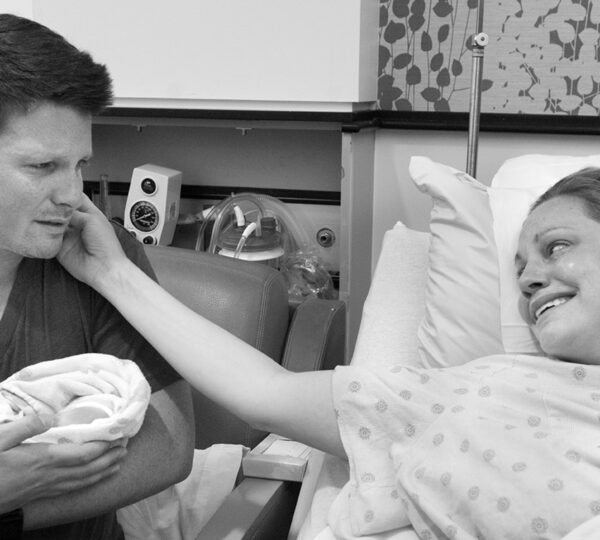
Jacob was brought closer.
The nurse knelt to his height, her voice gentle and steady despite the tears forming in her eyes. She asked if he would like to hold his baby brother.
Jacob nodded slowly.
For months he had talked to that baby. He had leaned against his mother’s belly and told stories about school. He had promised to share his toys.
He had practiced being careful. He had told everyone he was going to be the best big brother in the world. Now he held him. The room did not move.
Emily’s eyes never left her son’s face. Her mind replayed the pregnancy in fragments—doctor visits, ultrasounds, the first time she felt a kick, the nursery she had carefully arranged. How could something that had felt so alive be gone?
And then, in the middle of that crushing stillness, something shifted.
At first it was so faint that no one was sure if it was real. A tiny sound. Soft. Fragile. Almost like air catching in a throat.
Then it came again.
A cry.
Not loud. Not strong. But unmistakable.
Time seemed to fracture. Emily’s breath caught violently in her chest. Michael’s knees weakened as he turned sharply toward Jacob. The nurse closest to the baby leaned in immediately, her training overriding her disbelief.
“He’s breathing,” she whispered, almost to herself.
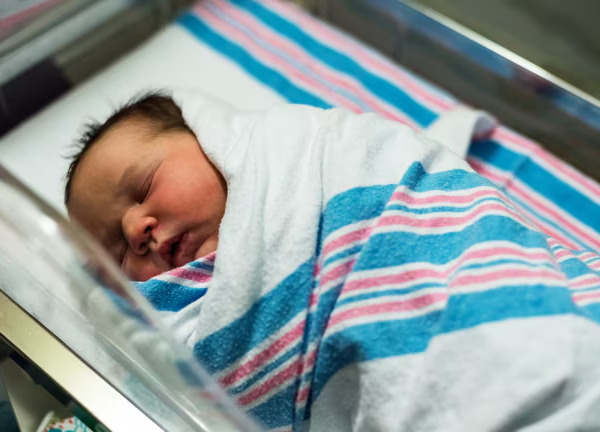
The transformation was instant.
Monitors were switched back on. Oxygen was administered. The neonatal team was called urgently. Hands moved quickly but precisely, attaching sensors, checking vitals, assessing response. The room that had moments ago felt like a place of mourning became a controlled storm of hope.
On the screen, a faint rhythm appeared.
A heartbeat.
Weak, but present.
Benjamin was alive.
The emotional shift was almost too much to comprehend. Just minutes earlier, they had begun grieving their son. They had started imagining a future without him. They had been preparing to say goodbye.
Now they were watching him fight.
Emily’s tears came in waves, not delicate but uncontrollable. Michael stood beside her, silent tears streaming down his face, his hand resting on her shoulder as if anchoring both of them to the moment.
Neither of them dared to speak too loudly. It felt as though the slightest disturbance might shatter the fragile miracle unfolding before them.
Jacob stood nearby, clutching the corner of the blue blanket that had wrapped his brother. His wide eyes moved between the machines and the adults.
“Is Ben going to be okay?” he asked quietly.
No one could answer that. Not yet.
Benjamin was transferred swiftly to the Neonatal Intensive Care Unit, where specialists continued monitoring him closely. Tubes assisted his breathing. Sensors tracked his oxygen levels and heart rhythm. Every number on every monitor mattered.
Emily was wheeled into the NICU later that evening. Though her body was drained from labor, her mind refused to rest.
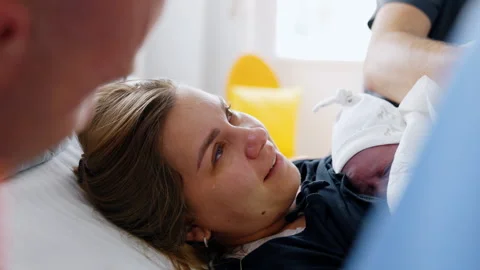
She sat beside the incubator, staring at the tiny rise and fall of Benjamin’s chest. The mechanical assistance did part of the work, but he was responding. His body was fighting.
Hospitals at night carry a different kind of energy. The lights dim. The corridors quiet. Time stretches longer than it should.
For Emily and Michael, that night felt endless. Every small change in a monitor reading triggered a rush of fear. Every stable minute felt like a victory.
Doctors explained carefully that in rare cases, newborns may initially show minimal or undetectable signs of life but respond to continued intervention.
Neonatal medicine is built around those narrow windows of possibility. Sometimes, the body simply needs more time. More support. More patience.
Benjamin had needed that time.
The next 24 hours were critical. They watched for signs of oxygen deprivation, neurological response, stable heart function. Progress was measured in small increments—steady oxygen levels, improved reflexes, reduced need for respiratory assistance.
Each milestone felt enormous.
Emily found herself overwhelmed not just by relief, but by the psychological aftermath of what they had endured. She had mourned her son. She had felt the unbearable weight of loss. And now she was being asked to hope again.
Grief and gratitude lived side by side in her chest.
Michael later admitted that the moment he heard that cry would remain the dividing line in his life—everything before it and everything after it. He had felt completely powerless. Then, suddenly, possibility returned.
Jacob adjusted in his own quiet way. He visited the NICU carefully, standing on tiptoe to see his brother through the incubator window. He spoke softly, as if reminding Benjamin of the promises he had made months earlier.
“You’re supposed to play with me,” he whispered once.
Days passed.
Gradually, the machines did less work. Benjamin began initiating more breaths on his own. His heartbeat strengthened. His tiny fingers tightened around Emily’s finger one afternoon, a reflex perhaps—but it felt intentional.
There were no grand celebrations. No balloons tied to the hospital bed. No large family gatherings. Just quiet conversations, gentle smiles from nurses, and cautious optimism from doctors.
Eventually, the day came when the ventilator was no longer necessary. Then came the day when the monitors were reduced. Then came the day when discharge was discussed.
When the Turners finally carried Benjamin out of the hospital, the air outside felt different. Sharper. Brighter. Every sound felt amplified. The world had continued turning during their darkest hours, unaware that everything had nearly changed for them.
Emily buckled Benjamin carefully into his car seat. Michael adjusted the straps twice to be certain. Jacob leaned over and looked closely at his baby brother.
“I knew you were strong,” he said softly.
Benjamin’s story did not begin the way anyone had imagined. There were no first-day photographs filled with laughter. No immediate phone calls of celebration. His arrival had been marked by silence, fear, and heartbreak.
But it had also been marked by resilience.
By skilled medical care.
By the fragile power of a single cry.
And that cry—small, trembling, but fierce—became something more than a sound. It became a reminder that life can hang by the thinnest thread and still hold on. That hope can reappear in the most unlikely moment. That silence is not always the end.
For the Turners, that day would never fade into memory as simply the day their son was born. It would forever be the day they lost him—and the day they got him back.
And in the quiet moments that followed in the weeks and months ahead, when the house was still and Benjamin’s breathing filled the room, Emily would sometimes close her eyes and remember that first cry.
The one that broke the silence.
The one that changed everything.
The one that marked not an ending—
but a beginning.
