
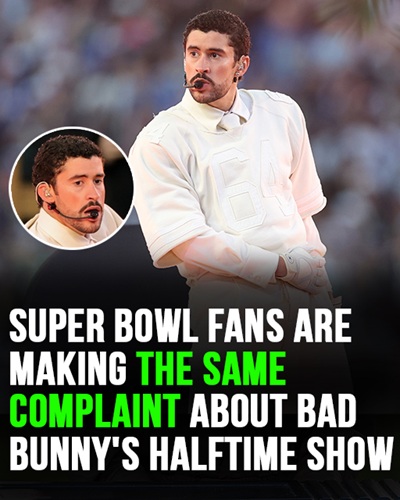
On February 8, 2026, millions of football fans around the world tuned into Super Bowl LX at Levi’s Stadium in Santa Clara, California — one of the sport’s biggest nights and one of the most watched television broadcasts of the year.
As expected, the game captivated audiences, but for many viewers the most talked‑about moment came not from the gridiron, but from the halftime stage.
Where global superstar Bad Bunny delivered one of the most vibrant, culturally rich, and widely discussed performances in Super Bowl history.
Officially named the Apple Music Super Bowl LX Halftime Show by its sponsor, this year’s halftime entertainment marked several historical firsts. Bad Bunny — born Benito Antonio Martínez Ocasio — became the first Latino solo artist to headline a Super Bowl halftime show, and the first to present a performance consisting mostly in Spanish.
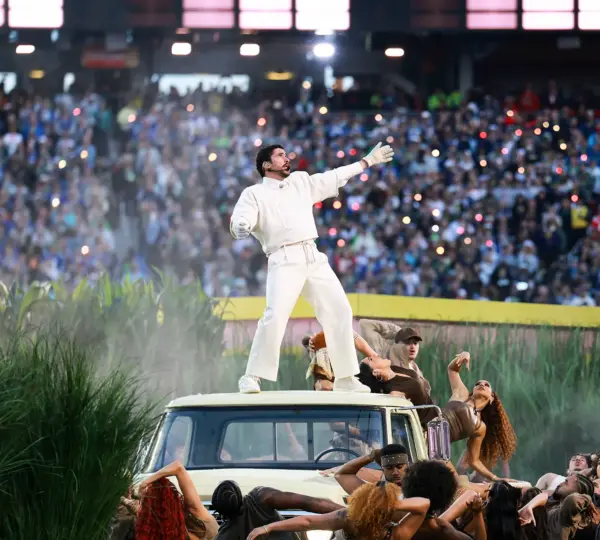
What followed was a 13‑minute artistic statement that combined music, spectacle, cultural pride, and political symbolism in ways that thrilled millions — and ignited heated debates across American society.
A Show Rooted in Identity and Celebration
From the moment the music began, it was clear Bad Bunny had crafted something very different from the typical halftime spectacle.
He opened with high‑energy reggaeton hits like “Tití Me Preguntó” and “Yo Perreo Sola,” creating a party atmosphere that immediately got fans on their feet.
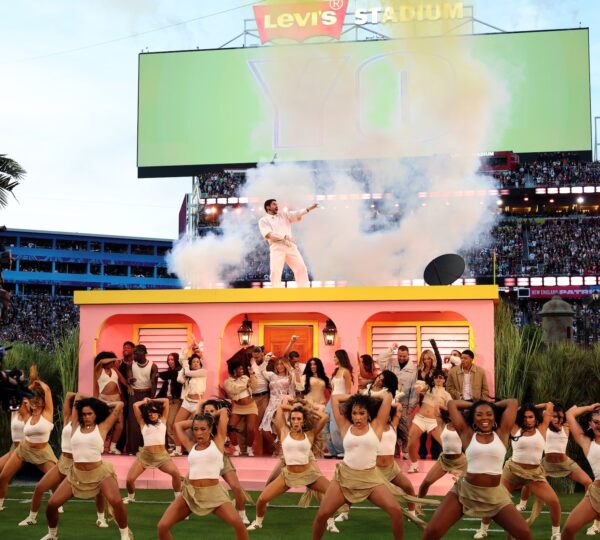
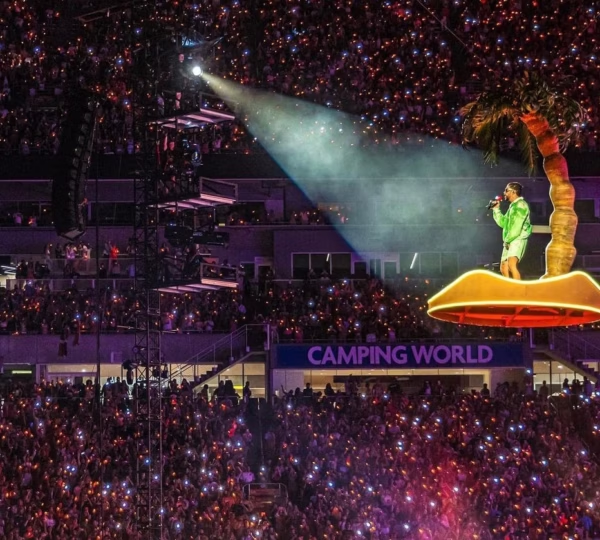
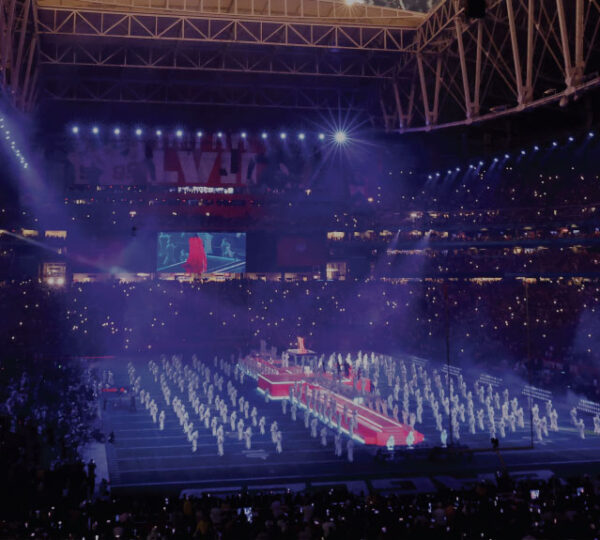
The stage itself was a celebration of Latin culture. Dancers, musicians, and beat‑driven choreography blended seamlessly with imagery and sounds that honored Puerto Rico and Latin music’s influence across the Americas.
The show wasn’t just about catchy tunes — it was about embracing heritage on one of the world’s largest entertainment stages.
One of the defining elements was the inclusion of multiple surprise guest appearances, which added star power and cross‑genre appeal:
-
Lady Gaga joined Bad Bunny for a salsa‑infused rendition of her song “Die With a Smile,” blending English and Spanish influences with a live horn section and dance ensemble.
-
Ricky Martin, a fellow Puerto Rican music icon, performed a version of “Lo Que Le Pasó a Hawaii,” further reinforcing the cultural thread throughout the set.
-
Celebrities like Pedro Pascal, Cardi B, Karol G, Jessica Alba, and Alix Earle appeared during various parts of the performance, reinforcing the moment as both a musical event and a community celebration.
By the final minutes, confetti foamed across the stadium and flags representing countries from North, Central, and South America waved behind the performers. Bad Bunny held up a football inscribed with “Together, We Are America” and the stadium’s giant screen shared the message, “The only thing more powerful than hate is love.”
Public Reaction: Near‑Universal Attention, Bitterly Divided Opinion
Almost immediately after the performance aired live, social media lit up with reactions — both celebratory and critical.
Praise and Support
For many fans and cultural commentators, Bad Bunny’s halftime show was a triumph. Supporters pointed out:
-
It was historic and authentic — a major global stage unapologetically showcasing a Spanish‑language performance.
-
Viewers who didn’t speak Spanish still felt the energy and emotion through music, movement, visuals, and charisma.
-
Artists such as Kacey Musgraves publicly expressed admiration for the show, saying it made her feel “more proudly American” than alternative tributes to the holiday.
-
Many observers noted that despite language differences, the messages of celebration and unity transcended linguistic barriers.
Fans took to social platforms to celebrate the creativity and inclusivity of the performance. Many viewers noted that the storytelling, choreography, and staging told a universal story — one that could be felt even without understanding the lyrics.
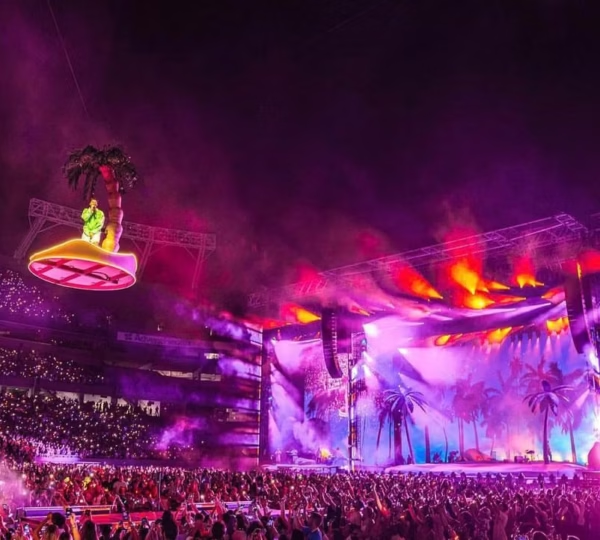
Some saw the performance as not just entertainment, but an assertion of cultural pride — a moment that recognized the influence and contributions of Latinx communities to American life and popular culture.
Criticism and Controversy
But not all responses were positive.
A vocal minority — including some conservative commentators and political figures — sharply criticized the performance for various reasons:
-
Language Use: Some viewers complained the show was performed “entirely in Spanish,” saying they couldn’t understand the lyrics and felt alienated by the linguistic choice.
-
Political Interpretation: Critics claimed the show carried a political message or cultural agenda, asserting it was inappropriate for a widely broadcast entertainment event.
-
Cultural Backlash: Figures like former U.S. President Donald Trump publicly attacked the performance, calling it “absolutely terrible” and saying it did not reflect his idea of American values.
Online commentary from some fans echoed these criticisms, focusing on their inability to understand the lyrics or discomfort with non‑English content.
Some reactions on social media were notably harsh, with certain commentators claiming the show was among the “worst halftime shows in history.”
Turning Point USA’s “All‑American Halftime Show” Alternate Event
The backlash in the lead‑up to Bad Bunny’s halftime appearance was significant. Before the show, the conservative political organization Turning Point USA announced its own “All‑American Halftime Show” as alternative programming, featuring artists such as Kid Rock, Brantley Gilbert, Lee Brice, and Gabby Barrett.
The stated goal of the alternative event was to celebrate “faith, family, and freedom” in contrast to Bad Bunny’s selection.
Despite heavy promotion, its live viewership ultimately paled in comparison with Bad Bunny’s official halftime performance, and early reports indicated Bad Bunny’s halftime show became one of the most‑watched in Super Bowl history — including millions of views on social media platforms after the broadcast.
Critics of the alternate show also noted technical issues and uneven production in reviews of the Turning Point USA event.
Celebrity Voices and Broader Cultural Commentary
High‑profile entertainers and public figures weighed in from multiple perspectives:
-
Lady Gaga, who joined Bad Bunny onstage, described it as an “absolute honor” to be part of the show — highlighting collaboration and celebration across artists and cultures.
-
Tom Brady, NFL legend and Super Bowl attendee, also reacted positively, praising the performance’s energy and unity message.
Others in the entertainment industry publicly defended Bad Bunny against critics, pointing out that his artistry and cultural lens gave millions of viewers an experience that went beyond word‑for‑word translation.
Why This Moment Mattered
Beyond the controversy and acclaim lies the broader significance of Bad Bunny’s performance
Cultural Representation at Its Peak
Bad Bunny’s show made it clear that one of the biggest entertainment stages on Earth can reflect multilingual and multicultural identities without diluting them. His performance celebrated Latino culture and identity in an American context — a powerful statement about inclusivity and representation.
Unity Through Art
Even viewers who didn’t speak Spanish reported feeling connected to the performance because of its energy, passion, and emotion. Many commented that music — especially live performance — transcends language.
Cultural Velocity and Impact
Bad Bunny’s performance trended globally throughout Super Bowl night and the following days. The halftime show wasn’t just a musical set — it became a cultural talking point shared across news outlets, talk shows, social platforms, and everyday conversations.
Final Notes on Legacy and Legacy Debate
In the hours and days that followed:
-
Streams of the halftime performance on platforms like YouTube quickly climbed into the tens of millions — a testament to the global appeal and enduring interest in the show.
-
Supporters praised Bad Bunny not merely for spectacle but for claiming a space for cultural authenticity.
-
Detractors continued to voice their objections, sparking wider discussions about language, culture, identity, and what it means to represent “America” on its biggest entertainment stage.
What’s certain is that regardless of opinion, Bad Bunny’s Super Bowl halftime show became a moment of cultural resonance — one that expanded the definition of mainstream entertainment and sparked passionate conversation across political, cultural, and musical communities worldwide.

