

Concern swept through the 2026 Winter Olympics in Milan‑Cortina d’Ampezzo, Italy, when American skiing legend Lindsey Vonn suffered a devastating crash during the women’s downhill final.
An event that would not only end her race but also become one of the most talked‑about moments of these Games.
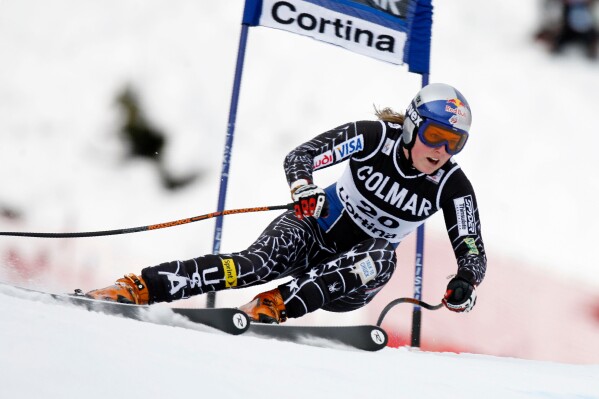
The 41‑year‑old Olympic icon, widely regarded as one of the greatest alpine skiers in history, launched herself down the famed Olimpia delle Tofane course in Cortina with determination and grit, despite already facing a serious injury.
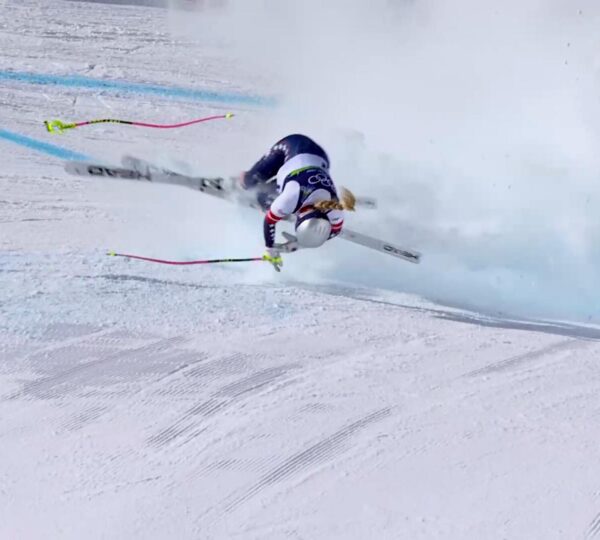
Just seconds into her run—less than a quarter of the full descent—Vonn clipped a course marker at high speed, lost control, and crashed violently on the steep, icy slope.
The normally roaring crowd fell abruptly silent as medical personnel rushed to her side. Moments later, a helicopter was summoned, and Vonn was airlifted from the mountain with urgent medical care underway.
A Remarkable Comeback Cut Short
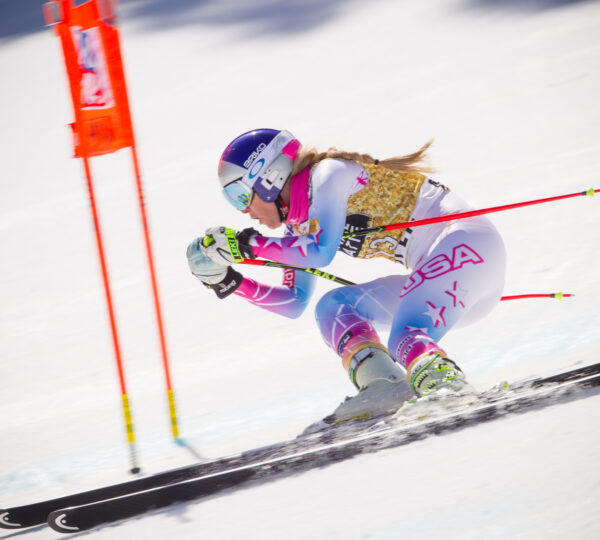
Vonn’s presence at the 2026 Winter Olympics was itself a story of extraordinary resilience. She had come out of retirement after nearly six years to compete once again at the highest level, having already solidified her legacy with 84 World Cup victories, Olympic medals, and historic achievements across three decades.
Just days before the downhill final, Vonn had suffered a complete tear of her left anterior cruciate ligament (ACL) during a World Cup race in Switzerland—an injury that typically sidelines athletes for months.
Yet true to her indomitable spirit, she continued to train, underwent intense therapy, and bravely stepped into the Olympic start gate wearing a knee brace, determined to compete in what many hoped would be her final Olympic moment.
That determination made her crash all the more heartbreaking for fans and fellow competitors alike.
The Crash and Immediate Aftermath
Television footage and witness accounts from the famed Tofane course paint a dramatic picture: Vonn accelerated powerfully off the gate and was building speed when a slight miscalculation near a turn caused her boot or pole to catch a gate, throwing her off balance.

She was seen spinning violently before hitting the snow with significant force, remaining motionless for several tense minutes as on‑course medical teams attended to her.
Race officials temporarily halted the event as a helicopter circled to retrieve her. Spectators—many with tears in their eyes—applauded Vonn as she was lifted into the sky, a poignant tribute to her career and courage.
Soon after the incident, U.S. Ski & Snowboard and Olympic organizers confirmed that she had been taken to Ca’ Foncello Hospital in Treviso, Italy, one of the region’s top medical centers, for further evaluation and treatment.
Diagnosis, Surgery, and Stable Condition
Medical teams diagnosed a fracture in Vonn’s left leg, confirming that she would require surgery to stabilize the injury. Later updates from the hospital and Team USA stated that the surgery was successful and that she was being cared for by a multidisciplinary team of orthopedic specialists.
Vonn was reported to be in stable condition, and doctors expressed confidence in managing her recovery locally in Treviso rather than transferring her to a larger facility.
While the exact details of the fracture—such as the specific bone involved—were not publicly disclosed, multiple reputable news outlets described the injury as significant enough to prevent her from continuing in the Games.
A Legacy of Bravery and Support from the Skiing World
The outpouring of support for Vonn was immediate and widespread. Fellow athletes, Olympians from other nations, and fans shared messages of solidarity across social media platforms.
Breezy Johnson, Vonn’s American teammate who went on to win the Olympic downhill gold medal, spoke openly about how the crash affected the competition and the emotional atmosphere among the racers.
Many in the skiing community defended Vonn’s decision to compete despite her recent injury, emphasizing that alpine skiing is inherently dangerous and that the risks are always front of mind for elite racers.
International Ski Federation officials and fellow athletes highlighted her autonomy and experience, applauding both her bravery and her humility in facing a grueling physical challenge at the highest level of sport.
In the moments following the crash, the spirit of the event shifted from a pure competition to a reflection on the risks athletes willingly take in pursuit of excellence and passion.
Whether or not she had medaled that day, Vonn’s presence on the start list was itself a testament to her enduring commitment to the sport.
The Race Continues, But the Mood Changed
Once Vonn had been safely transported off the mountain, competition resumed. Breeze Johnson maintained her lead under clear skies and delivered a commanding performance, securing gold for Team USA.
While the race concluded with competitive triumph, many spectators and commentators noted that Vonn’s crash cast a solemn shadow over what otherwise would have been a joyful occasion.
What This Means for Vonn’s Career
In the days after the accident, there was significant discussion about the future of Vonn’s skiing career. Her father, former ski racer Alan Kildow, stated publicly that if it were up to him, this injury might mark the end of her competitive career, given the cumulative toll of years of elite racing and previous surgeries.
Vonn herself did not immediately announce retirement following the crash, and no official statement about her long‑term skiing plans had been released at the time of these reports.
But the consensus within the sport was clear: her comeback was remarkable, and her legacy as one of the sport’s most daring and accomplished athletes was already secure.
A Story of Courage, Passion, and the Fragility of Sport
Lindsey Vonn’s crash at the 2026 Winter Olympics stands as a powerful reminder of both the immense risks inherent in high‑speed alpine skiing and the extraordinary courage elite athletes must possess to compete at the highest level.
Racing down icy slopes at speeds exceeding 80 miles per hour, Olympic skiers put everything on the line in moments that can last minutes—or mere seconds.
For Vonn, who has faced injury after injury over decades at the top of her sport—from knee surgeries to broken bones and ligament tears—her decision to compete was not merely about medals, but about embracing challenge, defying odds, and continuing to do what she loves even when the cost is immense.
As news of her stable condition spread and messages of support poured in, one theme resonated across social media and sports commentary alike:
Lindsey Vonn’s story is not defined by any single race or result, but by her relentless pursuit of excellence, her willingness to inspire others, and the deep respect she commands around the world.

Fans everywhere are rooting for a full and healthy recovery, hoping that the skiing icon will soon be back on her feet—smiling, strong, and surrounded by the same camaraderie that defines the sport she helped elevate.

