
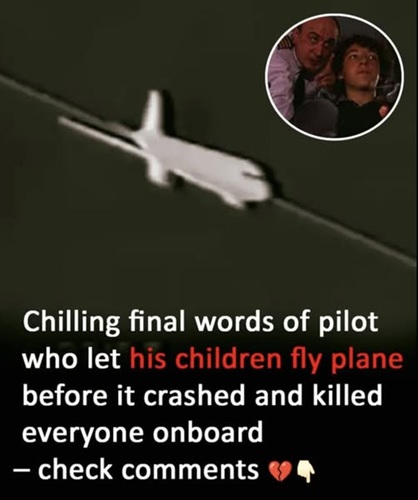
Some plane crashes are more haunting than others, lingering in the minds of aviation enthusiasts and ordinary people alike. Among the most chilling incidents in modern aviation history is the story of Aeroflot Flight 593.
Which crashed on March 23, 1994, killing all 75 passengers and crew on board. What makes this accident particularly tragic—and preventable—was the human error at its core:
the decision by an experienced pilot to allow his children into the cockpit and let them handle the controls. The story of Flight 593 is a sobering reminder of how even highly trained professionals can make mistakes, and how critical adherence to regulations is in aviation.
It’s also a cautionary tale for parents and aviation enthusiasts alike. Over the years, this crash has been featured in documentaries such as Air Crash Investigation, but even decades later, it continues to send chills to anyone who studies aviation safety.

Background: Aeroflot and the Flight
Aeroflot Flight 593 was a long-haul passenger flight scheduled to fly from Moscow’s Sheremetyevo International Airport to Hong Kong International Airport.
The aircraft was an Airbus A310-304, a twin-engine wide-body jet introduced in the late 1980s as part of Russia’s effort to modernize its fleet after the Soviet Union’s collapse.
This model was designed for international flights and was considered highly reliable, equipped with sophisticated autopilot systems intended to reduce pilot workload on long-haul journeys.
On the day of the accident, Captain Yaroslav Kudrinsky, 38, was in command. He was an experienced pilot with over 8,940 flight hours, including extensive time on Airbus aircraft.
First Officer Igor Steinberg and Flight Engineer Sergey Yentsev completed the three-person cockpit crew. On board were 75 passengers, including family members, business travelers, and tourists, many of whom were unaware of the events about to unfold in the cockpit.
The Children in the Cockpit
At the time of the flight, Captain Kudrinsky’s children—Yana, 13, and Eldar, 15—were traveling with him. The family was taking part in a rare opportunity to experience international travel on a modern aircraft.
Like many pilots of that era, Kudrinsky considered it safe to allow family members a brief visit to the cockpit. However, there was a strict regulation: passengers, especially children, were not permitted to manipulate the controls of an aircraft in flight.

Autopilot was active, and the captain mistakenly believed that letting his children “explore” the controls posed no real danger.
It’s worth noting the context of post-Soviet Russia in 1994. The airline industry was transitioning, combining older Soviet protocols with new international standards.
At that time, cockpit visitors were not uncommon, and pilots often allowed family or VIPs to observe operations—though never at the expense of safety. Kudrinsky’s decision was a grave lapse in judgment.
The Fateful Flight: How Disaster Struck
The flight had been routine for the first several hours. At cruising altitude over the Kuznetsk Alatau mountains, Kudrinsky invited Yana and Eldar into the cockpit.
Initially, Yana sat at the controls, curious about the instruments and joystick. Her father gave casual guidance: pointing out stars and city lights, warning her not to touch any buttons. It seemed harmless at the time.
The critical moment came when Eldar took the control stick. Encouraged by his father to “turn left” and “watch the ground as you turn,” Eldar was merely pretending to fly. However, in the process, he accidentally disengaged the autopilot system, switching the aircraft to manual control.
A small warning light illuminated on the dashboard, signaling the change—but the crew, unfamiliar with the intricacies of this Airbus A310’s system, failed to recognize the severity of the warning. Eldar was the first to notice the plane was starting to bank unintentionally.
Within four minutes, the aircraft had begun a dangerous rightward roll, tilting to approximately 45 degrees. The resulting G-forces pinned crew and passengers to their seats, causing panic in the cabin.
Captain Kudrinsky attempted to regain control with one hand while trying to instruct Eldar, shouting, “Eldar, get away! Go to the back!” Despite his efforts, the plane continued to descend uncontrollably.

The Fatal Descent
The Airbus A310’s autopilot is designed to maintain altitude, heading, and speed, but once manual override is engaged without sufficient training, small control inputs can create large and rapid changes in the aircraft’s orientation.
In Flight 593, Eldar’s inadvertent input created a steep bank angle, leading to a stall. At cruising altitude, a stall can quickly develop into an unrecoverable situation if not corrected immediately.
The cockpit crew attempted emergency procedures, but the combination of high G-forces, unexpected manual control, and the inexperience of a child at the controls made recovery impossible.
The aircraft began a spiral descent, losing altitude rapidly at over 160 miles per hour. The mountainous terrain below offered no opportunity for recovery, and within minutes, the plane crashed.
All 75 people on board were killed instantly, including the children, Captain Kudrinsky, the first officer, and flight engineer. The landing gear remained retracted, and no distress signals were transmitted before impact. The crash site was remote, making rescue and recovery operations difficult.
Investigation Findings
Immediately after the crash, Aeroflot denied wrongdoing, claiming the cockpit was secure and that the pilots had followed procedures.

However, a transcript of the cockpit voice recorder (CVR), later published by Moscow-based magazine Obozrevatel on September 28, 1994, confirmed that the children were indeed present and had manipulated the controls.
The official investigation revealed several key points:
-
Human error was the primary cause. Allowing the children to manipulate the controls violated both Aeroflot’s regulations and international aviation standards.
-
Autopilot disengagement: Eldar inadvertently switched the plane from autopilot to manual mode. The warning signals were ignored or misinterpreted by the crew.
-
Lack of cockpit discipline: Standard protocols were not enforced. Crew members should have ensured that only trained personnel operated the aircraft controls.
-
Environmental factors: The mountainous terrain and high cruising altitude reduced the time available to correct the aircraft’s attitude.
The final report concluded that the crash was preventable and emphasized that even highly experienced pilots must adhere strictly to operational procedures. It remains one of the most notorious examples of human error compounded by lapses in judgment.
Lessons from Flight 593
Aeroflot Flight 593 serves as a powerful lesson for aviation safety and parental responsibility:
-
Never allow untrained individuals to operate aircraft controls, regardless of autopilot engagement. Even minor manipulations can result in catastrophic consequences.
-
Strict adherence to safety protocols is essential. Post-Soviet airlines were modernizing in the 1990s, but procedural lapses still posed risks.
-
Cockpit discipline is critical: Cockpit access should be controlled at all times to ensure that only qualified personnel are in charge.
-
Technology is not a substitute for training: Advanced autopilot systems can fail if mismanaged or overridden incorrectly.
The Chilling Cockpit Voice Recorder
The CVR of Flight 593 provides one of the most unsettling audio records in aviation history. Listeners can hear:
-
Laughter and casual conversation initially, as the children explore the cockpit.
-
Excited commands from Eldar, asking to manipulate controls.
-
Urgent instructions from Captain Kudrinsky as the aircraft begins to bank uncontrollably.
-
Panicked final moments, with crew shouting and attempting emergency recovery.
For aviation experts and enthusiasts alike, the CVR is a disturbing testament to the consequences of a single lapse in judgment.
Legacy of the Accident
The crash of Flight 593 led to several important outcomes:
-
Reinforcement of cockpit rules: Airlines worldwide emphasized stricter enforcement of regulations preventing untrained passengers from operating controls.
-
Increased pilot awareness: Training programs began highlighting the dangers of distractions and the importance of maintaining cockpit discipline at all times.
-
Documentary and educational exposure: The story has been featured in numerous documentaries, books, and educational programs, such as Air Crash Investigation, ensuring the lessons are remembered.
Though it occurred nearly three decades ago, the tragedy remains a somber reminder of human fallibility in aviation.
Final Thoughts
Aeroflot Flight 593 exemplifies the devastating potential of preventable mistakes in aviation. A routine flight became a nightmare due to a moment of misplaced trust and casual decision-making.
Captain Kudrinsky’s decision, though human and understandable in context, highlights the absolute necessity of strict operational discipline. The lives lost, including those of his own children, are a stark reminder that in aviation, safety rules exist for a reason, and no circumstance justifies their breach.
This tragic incident also emphasizes the critical role of crew training, alertness, and situational awareness in the cockpit.
Advanced aircraft technologies provide remarkable capabilities, but without skilled, disciplined, and focused operators, even sophisticated systems cannot prevent disaster.
Today, aviation safety has significantly improved, thanks in part to lessons learned from crashes like Flight 593. Modern protocols, cockpit security regulations, and automation safeguards are designed to prevent unauthorized access and human errors.
Still, the story of Flight 593 continues to resonate, chilling those who study aviation history and reminding us that even a single moment of negligence can have irreversible consequences.
Conclusion
The crash of Aeroflot Flight 593 on March 23, 1994, remains one of the most unsettling tragedies in aviation history. It was a disaster entirely avoidable—a direct result of human error compounded by poor judgment and lack of adherence to established safety protocols.
With 75 lives lost, including those of Captain Kudrinsky’s own children, the accident underscores the importance of discipline, training, and respect for aviation rules.
Even decades later, the chilling recordings, detailed investigation reports, and widely studied lessons continue to educate pilots, aviation enthusiasts, and the general public.
Flight 593 is a stark reminder that in aviation, the combination of experience and responsibility is non-negotiable, and even a moment of misjudgment can have catastrophic consequences.

