Have you ever paused for a moment to look closely at your palms and wondered what all those lines might mean?
The human hand is a remarkable and complex structure, and the intricate patterns etched into our palms have fascinated people for thousands of years.
Across cultures and centuries, these lines have been interpreted as symbols of personality, emotional tendencies, and life experiences. For some, palm lines are nothing more than natural creases formed by movement and genetics.
For others, particularly those interested in palmistry, they are believed to offer insight into character, strengths, challenges, and potential paths in life.
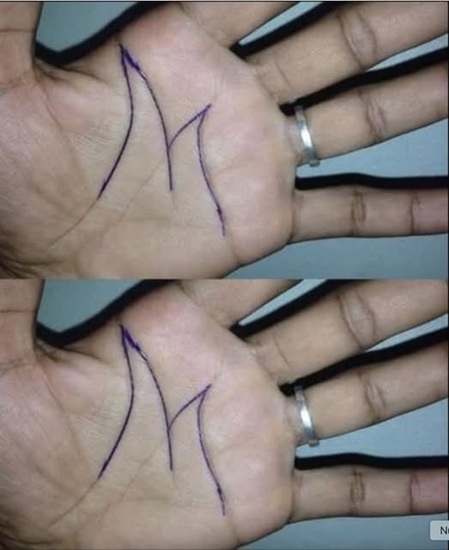
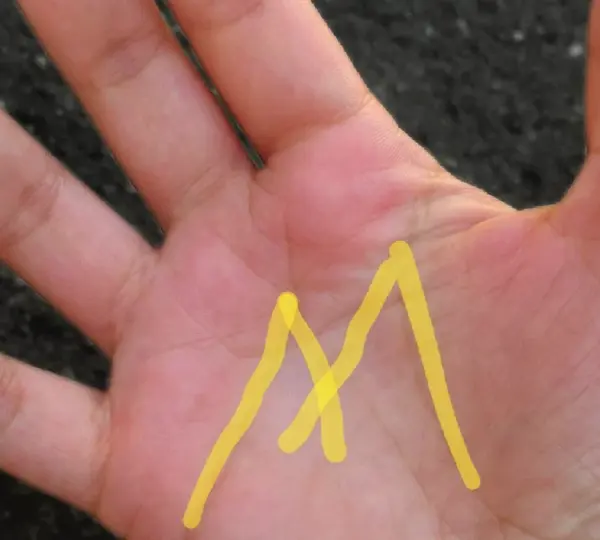
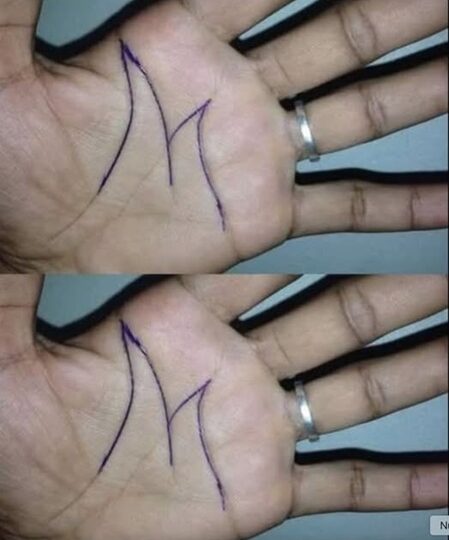
One of the most talked-about palm features is the appearance of a shape resembling the letter “M” formed by the intersection of major palm lines.
According to palm readers and enthusiasts of hand analysis, people who display this marking are thought to possess heightened intuition, leadership qualities, and a strong sense of purpose.
Popular culture has amplified this belief, often associating the “M” shape with well-known figures such as Meghan Markle, Hillary Clinton, and Robert De Niro.
But where do these ideas come from, and what do they really mean?
Palmistry: An Ancient Practice, Not a Science
Palmistry, also known as chiromancy, is an ancient interpretive tradition that dates back thousands of years. It has roots in India, China, Greece, Egypt, and parts of the Middle East.
Historically, palmistry was practiced alongside astrology and other symbolic systems as a way of understanding human nature and destiny.
It is important to clarify, however, that palmistry is considered a cultural and spiritual tradition rather than a scientific discipline. There is no medical or scientific evidence proving that palm lines can predict future events or determine success, intelligence, or personality traits.
Modern palmists themselves often emphasize that palm reading is an interpretive art. Rather than predicting the future, many practitioners believe palm lines reflect tendencies, emotional patterns, and life experiences that may evolve over time.
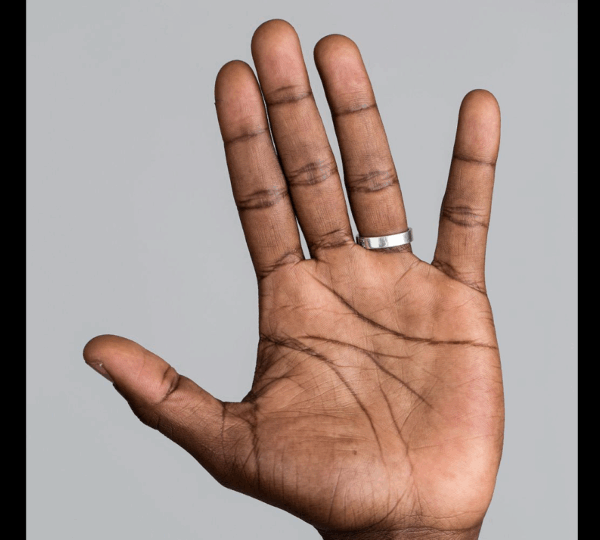
Just like fingerprints, no two palms are exactly the same. While fingerprints are studied scientifically for identification, palm lines are shaped by a combination of genetics, hand movement, and development in the womb. Their uniqueness is undeniable, even if their meanings remain subjective.
The Major Lines of the Palm and Their Traditional Meanings
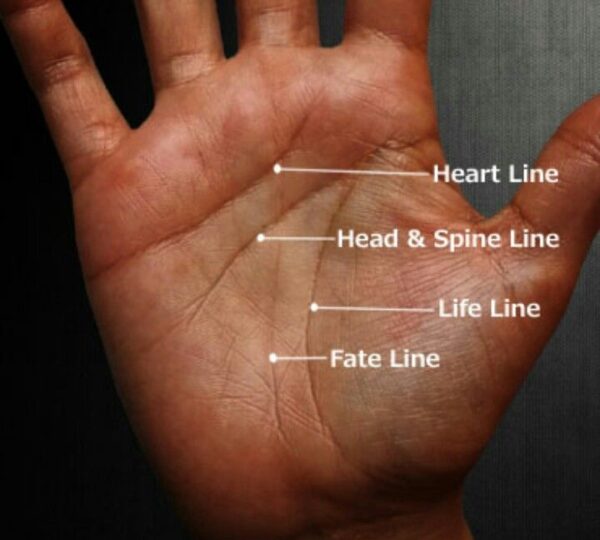
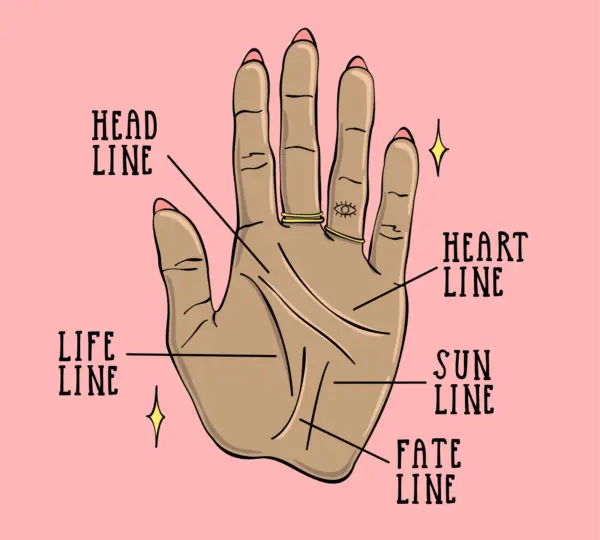
In palmistry, readers typically focus on several major lines. These lines are not viewed as fixed predictions, but rather as symbolic indicators used for interpretation.
The Heart Line
The heart line runs horizontally across the upper part of the palm. Palmists traditionally associate it with emotional expression, relationships, and how a person approaches love.
A curved heart line is often interpreted as openness and warmth, while a straighter line may suggest emotional reserve.
The Head Line
The head line runs below the heart line and is linked to thinking style, intellect, and decision-making. Its length and shape are believed by palm readers to suggest whether someone is more analytical, imaginative, or intuitive.
The Life Line
One of the most misunderstood palm lines, the life line curves around the base of the thumb. Contrary to popular belief, it does not indicate lifespan. In palmistry, it is thought to reflect vitality, resilience, and major life changes.
The Fate Line
The fate line, when present, runs vertically toward the middle finger. Palmists associate it with career direction, life purpose, and external influences.
Some people have a strong fate line, while others have none at all—something palm readers interpret as flexibility rather than a lack of direction.
The Sun Line (Apollo Line)
This line is associated with creativity, fulfillment, and recognition. A clear sun line is traditionally interpreted as a sign of artistic expression or satisfaction with one’s achievements.
The “M” Shape: Symbolism and Popular Beliefs
When certain major lines intersect—most commonly the heart line, head line, life line, and sometimes the fate or sun line—they may form a shape resembling the letter “M.” In palmistry folklore, this formation has become one of the most celebrated markings.
According to palm readers, the “M” shape is believed to symbolize:
-
Strong intuition and insight
-
The ability to read people and situations effectively
-
Leadership tendencies
-
Confidence and determination
-
Potential for success in career or public life
It is often claimed in popular articles and social media posts that only 1–2% of people have this marking. However, it is important to note that this figure is not based on scientific population studies, but rather on anecdotal observations within palmistry communities.
Clarifying a Common Confusion: The Simian Line
The term “Simian line” (more accurately called the single transverse palmar crease) is frequently confused with the “M” shape, but they are not the same thing.
A true Simian line refers to a single crease that runs straight across the palm, formed when the head line and heart line merge into one. This crease is a naturally occurring anatomical variation and is present in a small percentage of the population.
Medical professionals study the Simian crease because it can appear in certain genetic conditions, though it is also found in completely healthy individuals. It is not, in medical terms, a marker of personality, intelligence, or destiny.
In palmistry traditions, some readers symbolically associate this line with intense focus or strong will, but these interpretations are cultural rather than scientific.
Dominant Hand vs. Non-Dominant Hand
Another commonly discussed idea in palmistry is the difference between the dominant and non-dominant hand. Traditional palm reading suggests:
-
The non-dominant hand represents inherited traits, potential, and inner character
-
The dominant hand reflects how those traits are expressed through choices and actions
For right-handed individuals, this means the left hand is often considered the “inner” hand, while the right shows how life unfolds. Left-handed individuals reverse this interpretation.
It’s important to stress again that this framework is part of palmistry tradition and belief, not empirical science.
Meghan Markle and Public Interest in Palmistry
Public fascination with palmistry often grows when celebrities are mentioned. Meghan Markle, the Duchess of Sussex, has frequently been cited by palm readers as someone who appears to have an “M” formation on her palms.
In interviews with lifestyle publications, palm reader Gary Markwick described individuals with such markings as highly sensitive, focused, and driven.
He noted that people with strong palm features may be goal-oriented but can sometimes become narrowly focused on their ambitions.
Referring to Markle specifically, Markwick stated that having similar markings on both hands is uncommon and symbolically powerful within palmistry traditions. These observations, however, are interpretations rather than verifiable assessments.
Beyond palmistry, Markle’s public life and achievements are well documented. She is an actor, author, advocate for social issues, and co-founder of the Archewell Foundation with her husband, Prince Harry.
Her success can be attributed to education, opportunity, determination, and public engagement rather than palm markings.
Why Palmistry Continues to Fascinate People
Despite the lack of scientific validation, palmistry remains popular worldwide. One reason is its deeply personal nature. Looking at one’s hands creates an immediate connection, and interpretations often feel meaningful because they focus on identity, emotion, and potential.
Psychologists suggest that people may find value in palmistry for the same reasons they enjoy personality tests—it encourages self-reflection and storytelling. When presented responsibly, palmistry can function as a symbolic tool rather than a source of literal predictions.
A Balanced Perspective
It is essential to approach palmistry with curiosity rather than certainty. While palm readers may offer interpretations that resonate emotionally, these insights should never replace professional guidance, medical advice, or personal decision-making.
There is no credible evidence that palm lines determine intelligence, success, or destiny. What they can offer, for those who believe in them, is a framework for reflection and conversation.
What Do You See on Your Palm?
Whether you view palm lines as fascinating natural features or as symbols rich with traditional meaning, there is no denying their ability to spark curiosity. Your hands tell a story of movement, growth, and individuality—one shaped by biology, experience, and time.
So the next time you glance at your palm, you may see lines, creases, and patterns. Others might see symbols, metaphors, or inspiration. What matters most is how you choose to interpret them.
What do you see on your palm?
