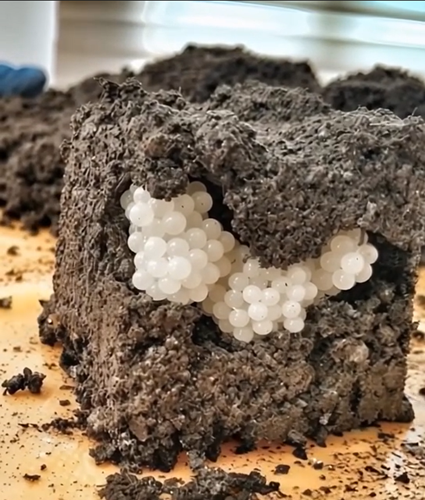
One peaceful morning, as the first gentle rays of sunlight spilled across my garden, I found myself immersed in the familiar rhythm of tending to my plants.
It was a ritual I cherished—one that grounded me and brought a quiet sense of balance. The air was cool and fresh, lightly scented with damp soil and blooming flowers.
Morning dew still clung to the leaves, catching the light and sparkling like tiny crystals. Bees moved lazily from flower to flower, their soft hum blending with the distant chirping of birds perched in nearby trees.
A light breeze rustled through the foliage, carrying with it the earthy fragrance of life waking up after the night.
Everything about that morning felt ordinary, peaceful, and reassuring. It was the kind of day that invites calm reflection, where nothing seems rushed and the world appears perfectly in harmony.
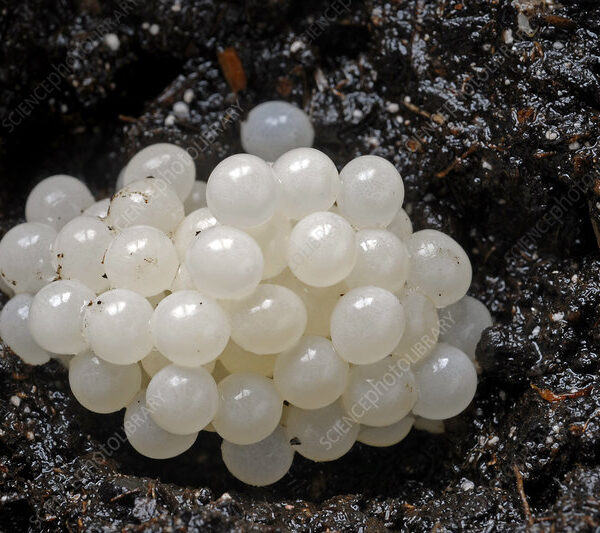
As I knelt beside a rose bush, pruning away a few wilted stems, something unusual caught my attention. Near the base of the plant, partially hidden in the moist soil, I noticed a small cluster of white shapes.
At first glance, they seemed insignificant—perhaps bits of perlite from potting soil, small decorative beads, or even debris carried by the wind. They were tiny, round, and almost luminous against the dark earth.
Curiosity drew me closer. As I leaned in, I realized these objects were unlike anything I had seen in my garden before. Nestled closely together, they formed a compact cluster of perfectly spherical, pearl-like orbs. Each one was smooth and slightly translucent, reflecting the sunlight with a soft glow.
Their uniform shape and delicate appearance made them look intentional, as if placed there carefully rather than randomly scattered.
I paused, my mind running through possibilities. Seeds, perhaps? Fungal growth? Eggs? The thought lingered uncomfortably. Nature often hides its most important processes beneath the surface, and I sensed that what I was looking at was not accidental.
Wearing gardening gloves, I carefully touched one of the spheres. It yielded slightly under gentle pressure—soft, gelatinous, and cool. That texture immediately ruled out stones or plant matter. A faint sense of unease crept in. These were unmistakably biological.
I lifted a few of them into my palm. They felt fragile, almost vulnerable, yet undeniably alive. The experience sent a small shiver through me—not out of fear, but from the realization that I had stumbled upon something in the midst of becoming.
Unsure of what to do next, I decided to take a closer look indoors. Under the brighter light of my kitchen, the details became clearer.
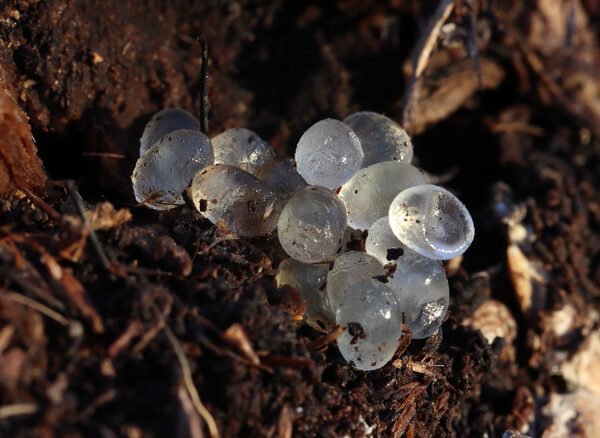
The spheres were translucent enough that faint dark specks could be seen inside some of them. Tiny forms, barely distinguishable, rested within—life suspended in its earliest stage.
That moment brought both fascination and concern. Eggs, without question. But eggs of what?
I turned to research, searching carefully and cross-referencing reliable gardening and biological sources. The answer soon became clear: these were snail eggs.
Snails lay their eggs in moist soil, often in shaded or protected areas like gardens, flower beds, or under dense vegetation.
The eggs are typically white or translucent, spherical, and clustered together—exactly what I had found. In favorable conditions, they hatch within weeks, releasing young snails ready to begin feeding almost immediately.
At first, the discovery felt almost magical. There was something quietly remarkable about witnessing life at such an early stage. But that sense of wonder quickly gave way to practical concern.
While snails play important roles in natural ecosystems—helping decompose organic matter and contributing to soil health—they can become highly destructive in managed gardens.
Left unchecked, a growing snail population can cause significant damage. Tender seedlings, leafy greens, fruits, and flowers can be consumed overnight. Entire plants can be stripped down to stems before signs of infestation are even noticed.
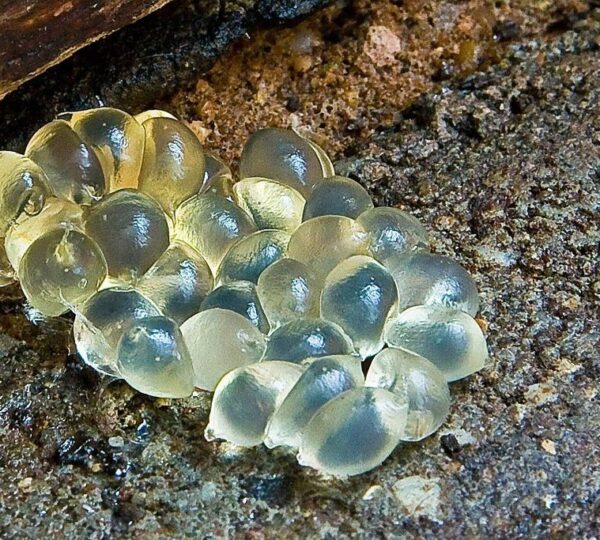
Additionally, although most garden snails are harmless, some species can carry parasites that pose risks to pets and, in rare cases, humans. Proper hygiene and caution are always advised when handling snails or their eggs.
Understanding this, I knew action was necessary—not out of fear, but responsibility. Gardening is about balance. Protecting plants sometimes requires making difficult decisions to prevent larger harm.
I returned to the garden and carefully poured boiling water over the area where the eggs had been found. This method, commonly recommended by horticultural experts, ensures that the eggs do not hatch while minimizing environmental impact when used carefully.
I then gently turned over the surrounding soil, inspecting beneath leaves, stones, and mulch for any additional clusters.
The process was meticulous, almost meditative. Each movement reminded me how interconnected everything in the garden truly is.
A single overlooked detail—a cluster of eggs no larger than a handful of pearls—could alter the entire ecosystem of the space I had worked so hard to cultivate.
As I continued inspecting the garden, I found myself reflecting deeply on the experience. Nature rarely announces itself with urgency. Often, its most significant developments occur quietly, beneath the surface, unnoticed unless one is paying close attention.
The snail eggs were not aggressive or threatening in appearance. They were delicate, beautiful even. And yet, they represented a potential imbalance.
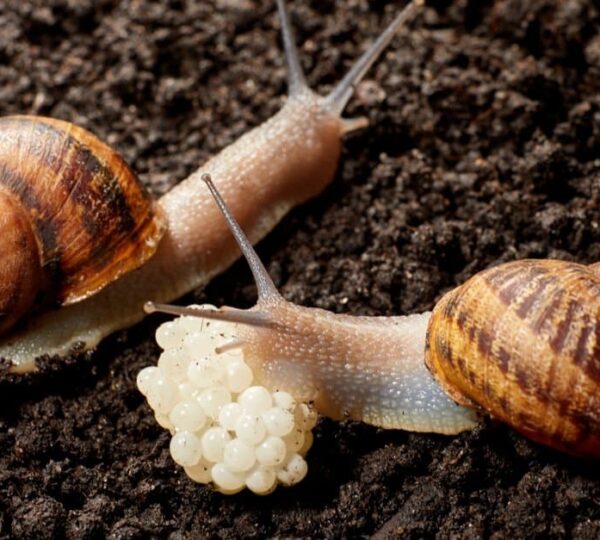
This realization changed the way I viewed my role as a gardener. Gardening is not simply about planting and harvesting. It is about observation, patience, and understanding. It requires recognizing subtle signs and responding thoughtfully rather than reactively.
From that day forward, my approach became more mindful. I examined soil more carefully, paid closer attention to leaf damage, and learned to recognize early indicators of insect and mollusk activity.
I noticed the silvery trails snails leave behind after rain, the tiny holes in leaves that signal feeding, and the patterns of life that unfold quietly each day.
Gardening became more than a hobby. It became a lesson in awareness.
This experience also reshaped my perception of beauty in nature. Those tiny white spheres, so innocent at first glance, reminded me that beauty and danger are not opposites. They often coexist. Nature does not operate on moral terms—it simply follows its cycles. What matters is how we respond.
I learned that respect for nature does not mean inaction. Sometimes, care requires intervention. The key lies in understanding the systems we interact with and acting thoughtfully within them.
Even now, when I walk through my garden in the early morning light, I remember that moment. I look at the soil differently—not with fear, but with informed curiosity.
That quiet discovery of snail eggs became a moment of awakening. It taught me that attention matters. That small details can carry significant consequences. And that stewardship—whether of a garden or the broader natural world—begins with observation and respect.
The garden remains a place of peace for me. The birds still sing. The bees still hum. The flowers still bloom. But now, alongside the serenity, there is awareness. An understanding that life is complex, interconnected, and sometimes fragile.
And every time I kneel down to tend the soil, I do so with a deeper appreciation for the unseen world beneath my feet—a world full of surprises, lessons, and quiet truths waiting to be discovered.
