
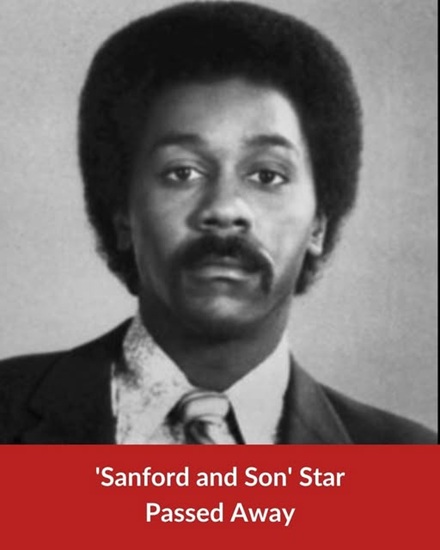
The television landscape of the 1970s was defined by a select number of voices and faces that managed to bridge the gap between laughter and the deeper contours of American life.
Among the most enduring of those figures was Grady Demond Wilson, the actor who brought to life Lamont Sanford on the seminal NBC sitcom Sanford and Son.
On Friday morning, January 30, 2026, Wilson passed away at his home in Palm Springs, California, at the age of 79. His death was confirmed by family and widely reported by major news outlets this week.
Wilson’s son, Demond Wilson Jr., shared with media that his father died due to complications from cancer. Though the family did not publicly specify the exact type of cancer, statements emphasized the strength and character with which Wilson carried himself in his final days.
The outpouring of tributes from fans, colleagues, and public figures reflects the profound impact of a life lived with talent, heart, and purpose.
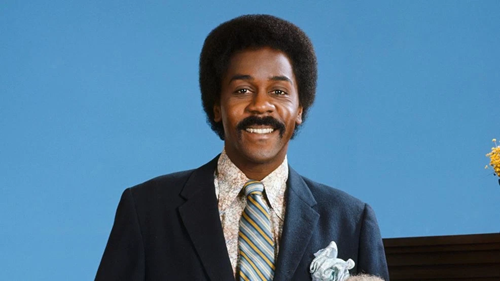
“I loved him. He was a great man,” his son shared in a brief, heartfelt tribute — sentiments echoed across social platforms and in coverage from networks nationwide.
Early Life: Valdosta to New York City
Demond Wilson was born Grady Demond Wilson on October 13, 1946, in Valdosta, Georgia. Shortly after his birth, his family moved to New York City, where he was raised in the vibrant neighborhoods of Manhattan.
From a young age, Wilson displayed a natural affinity for performance. He studied tap dance and ballet, performed on Broadway as a child, and even danced at the famed Apollo Theater in Harlem.
Raised in a Catholic household, Wilson once served as an altar boy and, as a teenager, briefly considered becoming a priest. A near‑death experience at age 12 — his appendix ruptured, nearly costing him his life — deepened his sense of faith and purpose from an early age.
However, his path was soon redirected by another calling: military service.
Service, Sacrifice, and a Return to Art
Wilson served in the United States Army during the Vietnam War. He was assigned to the 4th Infantry Division and was wounded in action, earning a Purple Heart for his service — an experience he later said gave him a lifelong perspective on resilience, empathy, and the preciousness of life.
After an honorable discharge, Wilson returned to New York to pursue performance more seriously. He appeared on stage in Broadway and Off‑Broadway productions and began exploring opportunities in television and film — a career shift that would soon alter American entertainment.
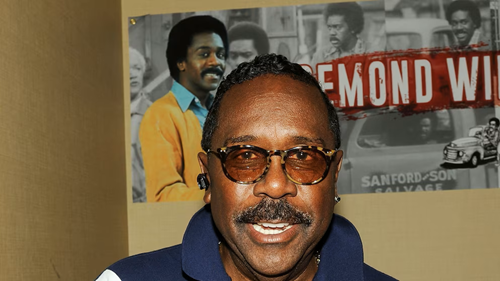
Breakthrough: Sanford and Son
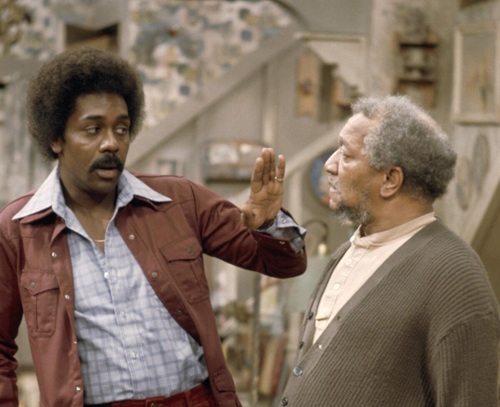
The year 1972 marked a cultural turning point in Wilson’s life. He was cast as Lamont Sanford, the calm, sharp‑minded son opposite comedian Redd Foxx’s explosive and cantankerous Fred Sanford, on the NBC sitcom Sanford and Son.
Adapted from the British show Steptoe and Son, the series followed the comic and often poignant relationship between a father and son running a junkyard in South Los Angeles. While Foxx delivered the show’s explosive laughs — punctuated by the unforgettable “I’m coming to join you, Elizabeth!” gag — it was Wilson who supplied the show’s emotional core.
Lamont was composed yet conflicted: he cared deeply for his father and was loyal to the family business, yet he harbored ambitions beyond the cluttered junkyard.
The interplay between Lamont’s reasoned patience and Fred Sanford’s unpredictable outbursts became the emotional backbone of Sanford and Son, turning the series into one of television’s most influential sitcoms.
Sanford and Son was more than a comedy hit — it became a cultural milestone for its time, earning critical praise and high ratings, while breaking ground for Black actors in mainstream television.
Life After the Junkyard
When Sanford and Son originally concluded its run in 1977, Wilson faced the familiar crossroads that many television stars encounter: where do you go after such a defining role?
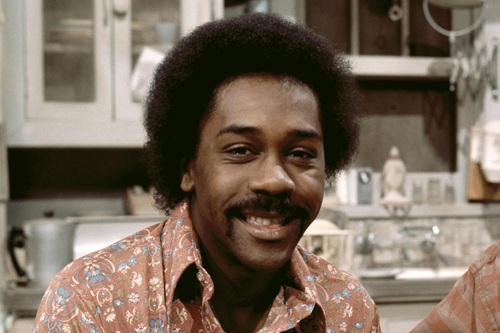
He continued to work steadily. Wilson appeared in television programs including The Love Boat, Fantasy Island, Baby… I’m Back!, and The New Odd Couple. His roles ranged from sitcoms to dramas, and his screen presence remained warm, grounded, and versatile.
His later television work included appearances on shows like Girlfriends, and his film credits spanned several decades.
Despite ongoing work, Wilson candidly spoke later in life about the pressures of Hollywood — the relentless pursuit of the next role, the typecasting that can envelope actors known for iconic characters, and the emotional toll of an industry fixated on novelty. Those pressures gradually weighed on him, and by the early 1980s, Wilson was ready for a new chapter.
A Spiritual Calling and New Purpose
In the 1980s, Wilson experienced a profound spiritual transformation that changed the direction of his life. He became an ordained Christian minister, not as a fleeting phase but as a lifework. He founded a church in Southern California and dedicated himself to community outreach, counseling, spiritual guidance, and service.
His ministry work went beyond the pulpit. Wilson also established outreach programs and became involved in efforts to help formerly incarcerated individuals reintegrate into their communities, blending spiritual care with practical support.
This “second act” — trading Hollywood lights for community service and spiritual leadership — reflected Wilson’s core values: faith, purpose, and compassion. To many who knew him personally, this phase was his most authentic and meaningful.
Author, Thinker, and Cultural Voice
In addition to his entertainment and ministry careers, Wilson was an accomplished author. His memoir Second Banana: The Bittersweet Memoirs of the Sanford and Son Years offered an introspective look at his time on television, his partnership with Redd Foxx, and the challenges of navigating fame from a thoughtful, human perspective.
Wilson also explored wider cultural themes in his writing. The New Age Millennium: An Exposé of Symbols, Slogans, and Hidden Agendas is a critical examination of New Age thought and cultural movements from a faith‑based standpoint.
Through his books, Wilson expressed a mind that remained curious, reflective, and deeply engaged with the world — not just as an entertainer, but as an observer of life and society.
Personal Life: Family and Faith
Wilson’s personal life was rooted in family and long‑term partnership. He married Cicely Johnston in 1974, and together they raised six children. Those closest to him described him as a devoted father, a steadfast husband, and a man whose faith was more than a private matter — it was the foundation of his daily life.
In statements shared by his publicist and family, Wilson’s life was remembered as “rooted in faith, service, and compassion.” Beyond his roles on screen, he touched countless lives through his ministry, his writing, and his personal example.
Legacy: An Anchor on and Off Screen
Demond Wilson belonged to a rare class of performers who managed to transcend typecasting — a fate that traps many sitcom actors in an unshakable identity.
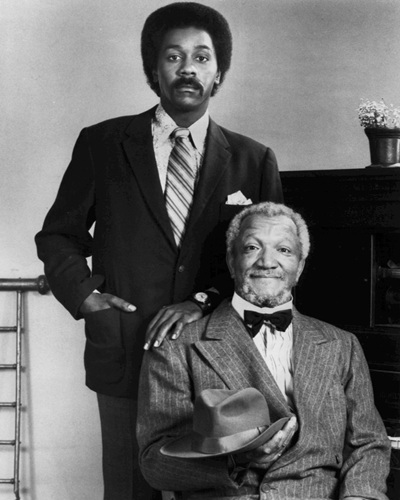
While he will forever be remembered as Lamont Sanford, Wilson spent much of his later life ensuring that he was defined by who he was as a person, not just the character he played.
Watching an episode of Sanford and Son today is still a reminder of his remarkable ability to convey depth with the smallest look — the resigned eye roll at his father’s antics, the soft smile when Fred revealed genuine affection, or the exasperated sigh at yet another absurd scheme.
He was the emotional anchor of the show, and for many viewers, an anchor in their memories of family and everyday life.
Tributes and Reflection
As news of his passing spread, tributes poured in from fans, fellow actors, and public figures alike. Many highlighted Wilson’s varied roles — as a veteran, an actor, a father, and a man of faith. His body of work continues to bring laughter and insight to new generations through syndication, streaming, and cultural remembrance.
But beyond his screen legacy, many remember Wilson for his authentic life off screen — his commitment to family, to helping others, and to living with integrity and purpose. Even after the bright lights of television faded, he found a steady, meaningful glow in service and community.
Conclusion: A Life Remembered
The “son” in Sanford and Son may have taken his final bow, but the impact of Demond Wilson’s life — in its scripted moments and its deeply personal ones — remains.
He lived 79 years guided by authenticity, empathy, and a willingness to evolve. His journey from Georgia to New York, from war to television, and from Hollywood to ministry is a story of resilience and heart.
In an era where fame is fleeting, Wilson’s life reminds us that the truest measures of legacy are found not only in accolades and performances, but in the lives we touch, the principles we uphold, and the compassion with which we move through the world.

