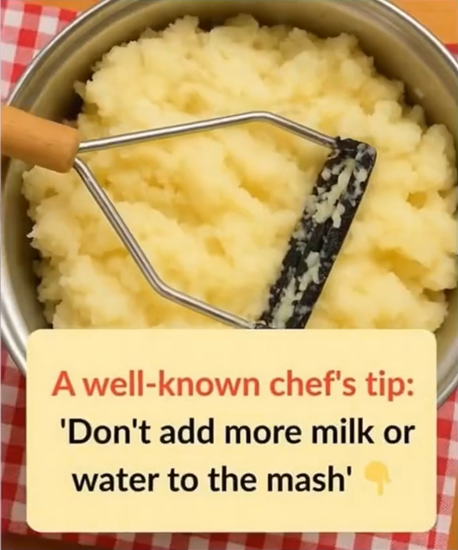
Few dishes evoke the feeling of home, family, and comfort quite like mashed potatoes. The mere aroma of buttery potatoes simmering on the stove has the power to transform an ordinary kitchen into a warm, welcoming space.
Yet mashed potatoes are more than just a side dish; they are a culinary expression of tradition, care, and attention to detail.
Achieving the perfect mash may seem deceptively simple, but as any professional chef will tell you, the difference between ordinary and extraordinary mashed potatoes lies in a series of thoughtful steps, each executed with precision.
In this guide, we will explore every detail—from the choice of potatoes to the final buttery flourish on top—ensuring that anyone, whether a home cook or a budding chef, can create mashed potatoes that are silky, rich, and irresistible.
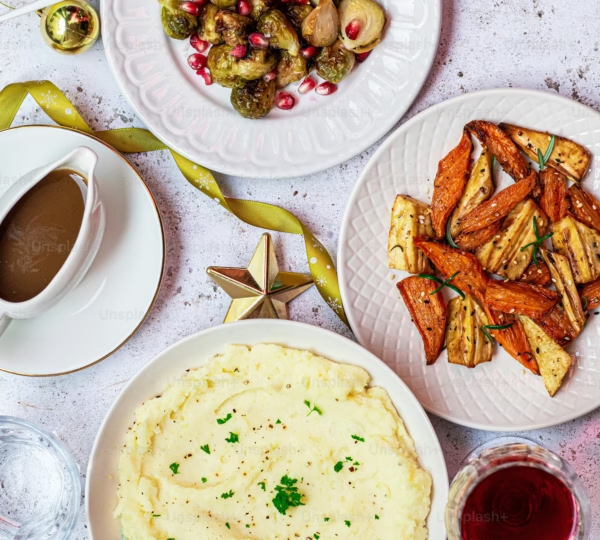
Choosing the Right Potatoes: The Foundation of Great Mashed Potatoes
The journey to perfect mashed potatoes begins with the choice of potato. Not all potatoes are created equal, and understanding the characteristics of each variety is essential.
Potatoes are broadly categorized into starchy, waxy, and all-purpose types, each behaving differently when cooked and mashed.
Starchy potatoes, such as Russet or Yukon Gold, are the gold standard for mashed potatoes. Russets have a high starch content and low moisture, which allows them to break down easily when cooked, resulting in a fluffy, light, and airy texture.
Yukon Golds, slightly waxier but still rich in starch, offer a naturally buttery flavor and a creamy, luxurious consistency. These potatoes absorb butter and cream beautifully, creating the hallmark richness that makes mashed potatoes irresistible.
Waxy potatoes, like Red Bliss or fingerlings, contain more moisture and less starch. While excellent for potato salads or roasted potatoes, they tend to create dense, gluey, or gummy mashed potatoes when overworked. That’s why chefs rarely use them for traditional mash.
All-purpose potatoes, like white potatoes, fall somewhere in between. They can work in a pinch but will never deliver the same level of fluffiness as starchy varieties.
Selecting the right potato is the first crucial step toward creating a truly extraordinary dish. Choosing carefully ensures that every subsequent step enhances the natural texture and flavor rather than compensating for a poor foundation.
Preparation: Peeling, Cutting, and Even Cooking
Once the ideal potato variety is chosen, preparation begins. Peeling the potatoes is highly recommended for classic mashed potatoes, as the skin can introduce an uneven texture and occasional fibrous bits. However, for those who prefer a rustic mash, leaving the skins on adds earthiness and fiber without compromising flavor.
Cutting the potatoes into evenly sized chunks is another key detail. Uniform pieces cook evenly, preventing the frustration of having some pieces overcooked and waterlogged while others remain underdone.
Most chefs cut potatoes into roughly 1.5 to 2-inch chunks, which balances cooking time with ease of handling.
When it comes to cooking, temperature and technique are everything. Many home cooks make the mistake of dropping potatoes directly into boiling water. Professional chefs start with cold, salted water and bring it gradually to a simmer.
This gentle approach ensures that the potatoes cook evenly from edge to center. The addition of salt to the cooking water is also vital—it seasons the potatoes internally rather than leaving the flavor to struggle to penetrate after mashing.
Simmering rather than boiling is another chef’s trick. A rolling boil can break the potatoes apart too quickly, causing them to absorb excess water and become gummy.
A gentle simmer, on the other hand, allows the potatoes to soften gradually, maintaining structure while reaching the ideal tenderness.
Testing readiness is simple: a fork should slide easily through the potato without resistance, but the pieces should still hold their shape until drained.
Moisture Control: The Secret to Silky Potatoes
After cooking, proper drainage and moisture control are critical. Too much water in the potatoes leads to a thin, watery mash, while too little moisture makes the mash stiff and heavy.
Many chefs let the potatoes rest briefly after draining, allowing residual steam to escape. This step, often overlooked in home kitchens, ensures the potatoes retain just the right amount of natural moisture.
The Art of Mashing: Technique Matters
How potatoes are mashed is just as important as how they are cooked. Professional chefs typically avoid electric mixers, which can overwork the starches in the potatoes, resulting in a gluey, sticky texture.
Instead, they rely on potato ricers, food mills, or hand mashers. These tools allow gentle, even mashing that preserves the natural fluffiness of the potatoes.
When mashing by hand, it’s important to avoid overworking the potatoes. A few gentle presses are enough to create a smooth, airy texture. Over-mixing activates starches excessively, which leads to dense, sticky mashed potatoes—the very opposite of the desired light and creamy result.
Temperature Control: Warming the Dairy
Another professional secret is warming the dairy before adding it. Cold milk, cream, or butter can shock the potatoes, causing them to seize and stiffen.
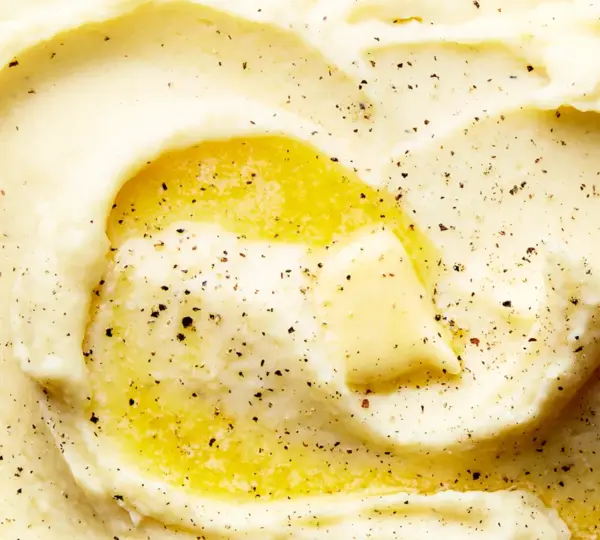
By gently heating these ingredients before incorporation, they blend seamlessly into the mash, creating a velvety, silky texture.
Butter is typically added first, allowing it to melt and coat each potato piece. Cream or milk follows gradually, ensuring the desired consistency is achieved without becoming runny.
Some chefs prefer a ratio of 1 tablespoon of butter per potato cup, adjusting milk or cream based on taste and texture preferences.
Seasoning and Flavor Enhancements
Salt is essential, but chefs also pay attention to subtle seasonings that enhance the flavor without overpowering it. White pepper is often used instead of black pepper to maintain the visual purity of the mash. Other optional flavor enhancers include:
Roasted garlic for gentle sweetness and depth
Sour cream for a tangy, creamy richness
Cream cheese to intensify creaminess
Fresh herbs, such as chives or parsley, for freshness and visual appeal
The key is balance—these additions should complement the potatoes, not dominate them.
Keeping the Mash Warm
Mashed potatoes naturally thicken as they cool, so serving them immediately at the right temperature is essential.
Chefs use a double boiler or a warm pot to maintain heat without overcooking. This step preserves the creamy texture and ensures the mash remains luscious until served.
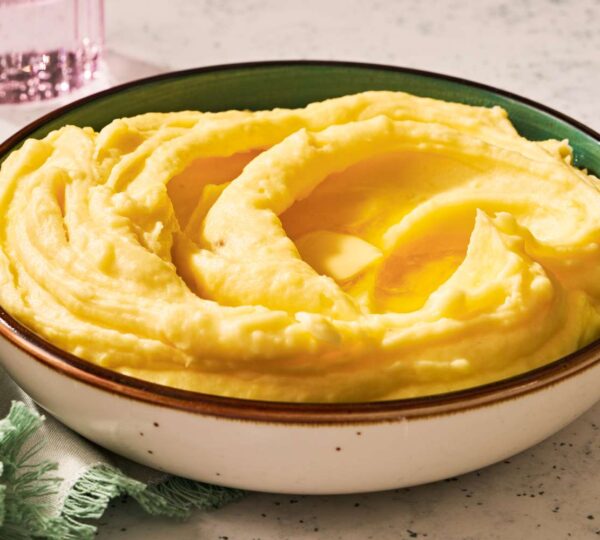
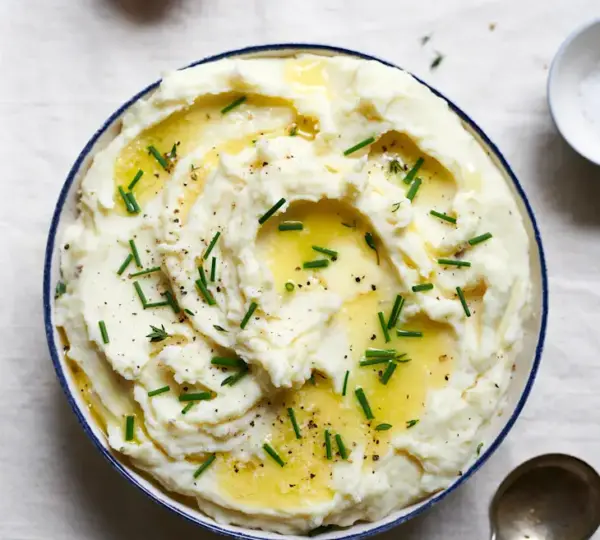
A final pat of butter on top adds an elegant, golden sheen, signaling richness and comfort. As the butter slowly melts, it creates tiny pools of indulgence that elevate both flavor and presentation.
Pairing and Serving Suggestions
Mashed potatoes are extraordinarily versatile. They pair beautifully with a wide array of dishes:
Roasted chicken: The creamy potatoes complement the juicy, savory meat.
Grilled steak: Rich, buttery mash balances the intensity of a perfectly seared steak.
Baked or roasted vegetables: Mashed potatoes add comfort to lighter, healthier meals.
Holiday feasts: From Thanksgiving turkey to Christmas ham, mash is the quintessential side dish.
Presentation can be simple or refined. A smooth surface, a swirl pattern with a spoon, or a sprinkle of herbs can make the dish visually appealing without much effort.
Mashed Potatoes as a Reflection of Care
What transforms mashed potatoes from a simple side dish into something extraordinary is attention to detail, patience, and intention.
Every step—from selecting the potato, controlling moisture, warming the dairy, and mashing gently—is an opportunity to enhance texture, flavor, and presentation.
Beyond technique, mashed potatoes carry emotional significance. They remind us of family gatherings, holiday traditions, and the comfort of home-cooked meals.
The aroma alone can evoke memories and create a sense of belonging. This emotional connection is part of what makes mashed potatoes a timeless favorite across cultures and generations.
Common Mistakes to Avoid
Even experienced home cooks can fall into common pitfalls when making mashed potatoes:
Choosing the wrong potato: Waxy varieties or uneven chunks can compromise texture.
Boiling too aggressively: Leads to waterlogged, gluey potatoes.
Overworking the mash: Activates starches, making potatoes sticky.
Using cold dairy: Can stiffen the mash and ruin silkiness.
Skipping seasoning: Under-seasoned potatoes taste bland, no matter how creamy.
Being mindful of these mistakes ensures consistently superior results.
Variations and Creative Twists
While classic mashed potatoes are beloved for their simplicity, there’s room for creativity:
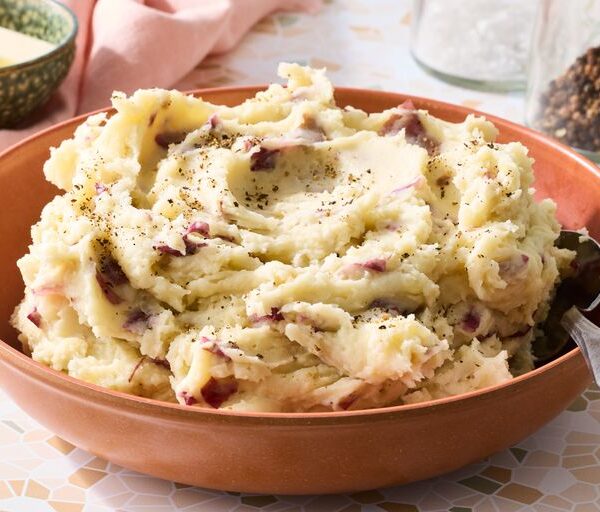
Garlic mashed potatoes: Roast garlic cloves and mash them into the potatoes for a subtle, sweet flavor.
Herb-infused mash: Incorporate fresh rosemary, thyme, or chives.
Cheesy mashed potatoes: Blend in aged cheddar, Gruyère, or Parmesan for a savory twist.
Vegan mashed potatoes: Use olive oil or plant-based butter with unsweetened non-dairy milk for a creamy, dairy-free option.
These variations maintain the comforting essence of mashed potatoes while introducing new flavors to delight the palate.
Final Thoughts
Mashed potatoes may appear simple, but creating the perfect version is a careful orchestration of science, technique, and love.
Each step—selecting the right potato, cooking with care, mashing gently, warming dairy, seasoning thoughtfully, and serving at the correct temperature—contributes to a dish that is greater than the sum of its parts.
Ultimately, mashed potatoes are more than just a recipe; they are a symbol of comfort, family, and tradition. By following chef-approved techniques, anyone can turn this humble dish into an extraordinary culinary experience.
With patience, attention, and care, mashed potatoes can bring warmth to the table, delight the senses, and become a cherished part of family meals for years to come.
Perfect mashed potatoes are an invitation to slow down, savor life, and share joy through food. They are a timeless classic, endlessly comforting, and wonderfully indulgent—proof that even the simplest ingredients, treated with respect, can create something truly exceptional.
