Human beings have always been fascinated by what happens at the edge of life, in the moments when the boundary between existence and nonexistence seems thin.
Across cultures and centuries, people have asked profound questions: What does the mind experience in life-threatening moments? Are there glimpses of a greater reality?
Is there meaning in survival? These questions sit at the crossroads of faith, science, and personal reflection, and their answers vary widely depending on perspective, belief, and experience.
For some, these questions are purely academic or philosophical. For others, they become deeply personal when confronted with medical crises that push the body and consciousness to their limits.
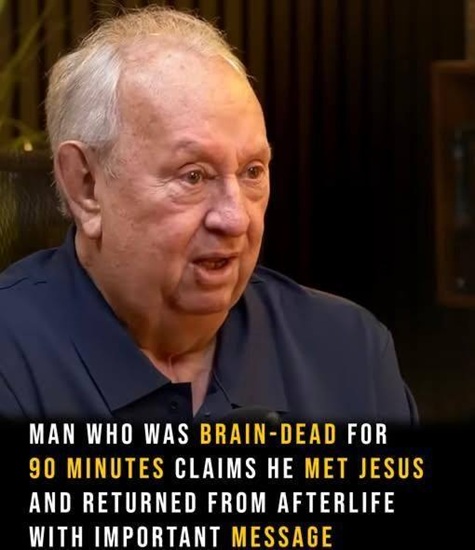
One such account comes from Robert Marshall, an author, husband, and reflective thinker, whose near-death experience in 2024 profoundly shaped how he understands life, purpose, and the enduring value of human connection.

Robert presents his story not as empirical proof of the afterlife or supernatural realities, but as a deeply personal reflection born from recovery, gratitude, and an altered perception of the world.
The Crisis Begins: A Medical Emergency
In the spring of 2024, Robert began experiencing a swelling on his neck that, at first glance, appeared minor. Yet what seemed like a localized issue quickly escalated into a full-blown medical emergency.
The swelling grew rapidly, affecting his ability to breathe and causing distressing pressure on his lungs and heart. Within hours, what had seemed like a manageable medical concern became critical, and Robert was rushed to emergency care.
Doctors worked urgently, recognizing that his condition could quickly deteriorate further. Despite their swift interventions, Robert’s body began to fail in multiple systems simultaneously.
His lungs struggled to oxygenate his blood properly, and his heart exhibited irregularities that signaled extreme physiological stress.
These cascading medical complications required round-the-clock monitoring and a team of specialists coordinating interventions, life support measures, and critical care protocols.
During this period, Robert eventually slipped into a coma, one that lasted several days. For his family, these were terrifying hours, filled with uncertainty, fear, and the weight of seeing a loved one teeter between life and death.
Medical staff employed all available resources to stabilize his condition, from respiratory support to careful medication management. The intensity of the situation underscored the fragility of life and the extraordinary expertise required to preserve it.
The Coma: A Threshold Between Worlds
While Robert’s body was stabilized externally, the experiences of his mind during the coma were both vivid and transformative. When he later reflected on what occurred while unconscious, he described these experiences as distinct from ordinary dreams.
Unlike the fragmented, sometimes nonsensical narratives of typical sleep, Robert recalled clear, coherent, and immersive experiences that felt deeply real.
He described entering a setting marked by profound calm, clarity, and unconditional love. This space, in his memory, was luminous yet gentle, peaceful yet intensely alive.
The sense of presence was immediate and comforting, without the fear, confusion, or disorientation often associated with unconsciousness.
Many who have recounted near-death experiences describe similar phenomena — sensations of moving through light, a sense of detachment from the body, or encounters with entities interpreted spiritually.
In Robert’s case, he interpreted his experiences as spiritual in nature, a perspective shaped by both his upbringing and his personal beliefs.
The Encounter: Connection Over Fear
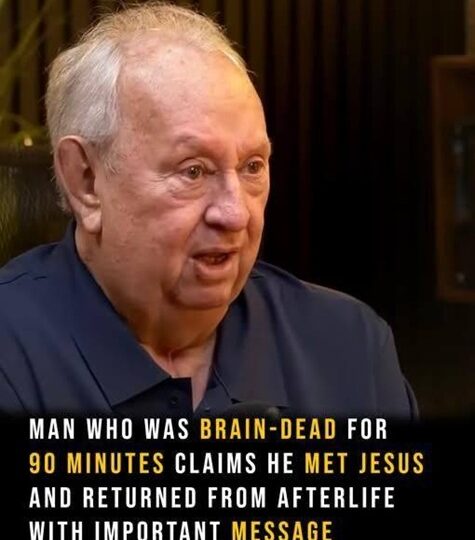
Central to Robert’s recollection was a sense of encountering Jesus, described not as a figure of judgment but of unconditional love and acceptance.
He recalls a feeling of complete safety and profound connection, a contrast to the urgency and fear that characterized the medical emergency in his physical body.
In this space, Robert felt as though he could understand life, death, and existence in a broader, more holistic sense.
The sensation was not just of being observed or cared for, but of being deeply known and valued, as though his past actions, intentions, and relationships were acknowledged and embraced.
For Robert, this encounter emphasized love, meaning, and relational responsibility — a message that would resonate long after he regained consciousness.
The Choice: Returning for Love and Responsibility
A particularly vivid moment in Robert’s recollection involved a conscious desire to return to life. He recalls thinking about his wife, whom he loved deeply and whose life was intertwined with his own.
This sense of responsibility and attachment prompted him to ask to return to the physical world, a decision he interprets as part of the lesson his near-death experience imparted.
Psychologically, this aligns with research on near-death experiences that suggests individuals often report a pivotal realization: their relationships, responsibilities, and unfinished work in the physical world matter profoundly.
Robert’s reflection underscores this duality — the peace of the spiritual realm contrasted with the human imperative to return to care, connection, and purposeful living.
Recovery: Physical, Emotional, and Spiritual
After regaining consciousness, Robert faced a long and arduous recovery. Physically, his body required careful rehabilitation, including breathing exercises, nutritional support, and gradual reintegration into normal activity.
The lingering effects of his medical crisis demanded patience, resilience, and the guidance of a dedicated team of doctors, nurses, and therapists.
Emotionally, the experience left him contemplative. He described moments of fear, uncertainty, and awe, as well as a newfound appreciation for the fragility and value of life.
Many who experience medical crises report similar patterns: the juxtaposition of vulnerability and resilience often sparks deep psychological and spiritual reflection.
Robert’s story is particularly notable because he integrated his near-death experience into his ongoing life philosophy. Rather than viewing the experience as something to fear or dismiss, he treats it as a source of insight: a reminder of the importance of love, presence, and intention in everyday life.
The Spiritual Perspective
Robert frames his experience through a spiritual lens, emphasizing connection, unconditional love, and renewal. In recounting his encounter with Jesus, he highlights qualities often associated with spiritual teachings:
Compassion and empathy for others
Responsibility toward loved ones and community
Acceptance of life’s fragility and unpredictability
Gratitude for survival and opportunity
Importantly, Robert presents these reflections without claiming objective verification, acknowledging that the experiences are subjective.
He emphasizes that whether interpreted spiritually or psychologically, the insights are meaningful, actionable, and life-affirming.
Psychological Insights
From a psychological standpoint, Robert’s account aligns with well-documented phenomena observed in near-death experiences. Studies indicate that individuals who undergo comas or near-fatal medical crises often report:
Heightened awareness of relational and moral priorities
Vivid imagery that may be interpreted as encounters with spiritual entities
Deep emotional clarity, sometimes described as “life flashing before the eyes” or an overview of personal values
Reduced fear of death and increased appreciation for life after recovery
Neuroscientists hypothesize that such experiences may result from brain activity under extreme stress, oxygen deprivation, or altered neurotransmitter function.
Regardless of the neurological mechanisms, the resulting perceptions often have profound psychological and behavioral impact.
Lessons in Love, Resilience, and Intentional Living
For Robert, the experience was transformative not only because it was extraordinary, but because it reoriented his perspective on everyday life. Today, he shares his story as a message of renewal, gratitude, and intentionality. Core takeaways include:
Love as central – Relationships and empathy are at the heart of meaningful existence.
Responsibility matters – Our choices and commitments to others create lasting significance.
Resilience is cultivated – Recovery requires patience, courage, and trust in support systems.
Life is precious and finite – Moments of crisis highlight what is truly valuable.
By emphasizing these principles, Robert encourages others to approach life with mindfulness, compassion, and purpose — whether they view his experience through a spiritual lens or as a reflection on human consciousness.
The Broader Context of Near-Death Experiences
Robert’s story is part of a broader tapestry of accounts from people who have experienced life-threatening medical events. Across cultures, near-death experiences often share recurring themes:
Encounters with bright or loving presences
Out-of-body sensations or feeling detached from the physical body
Perceptions of time slowing down or experiencing events in a nonlinear sequence
Profound emotional and spiritual clarity
While interpretations vary widely — from religious or spiritual frameworks to psychological or neurological explanations — the impact on the individual is universally significant. Many report lasting behavioral change, increased generosity, and a deeper appreciation for life, family, and personal purpose.
Conclusion: Living With Awareness and Gratitude
Robert Marshall’s 2024 medical crisis and subsequent near-death experience illustrate the intersection of physical fragility and human consciousness.
His reflections on love, responsibility, and the meaning of life resonate deeply because they emerge from real suffering, real danger, and real recovery.
Whether interpreted as a spiritual encounter, a psychological phenomenon, or a combination of both, the story emphasizes that moments at the edge of life can inspire profound transformation. For Robert, surviving the crisis became a catalyst for living more intentionally, valuing relationships, and embracing each day with gratitude.
In sharing his story, he reminds readers that life’s unpredictability is inseparable from its beauty and meaning. Even in the face of medical crises and uncertainty, there exists the opportunity for growth, reflection, and renewed purpose.
For those seeking to understand life’s deeper dimensions, Robert’s experience provides both a window and a guide — a testament to resilience, love, and the enduring power of human spirit.
