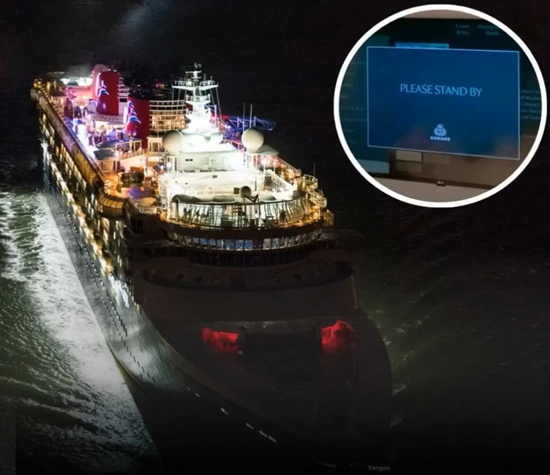
When most people picture a luxury cruise, they imagine moonlit dinners on open decks, sparkling oceans stretching to the horizon, and the gentle hum of waves beneath their feet.
Passengers on the Cunard Queen Anne, on her grand 111‑night maiden world voyage, expected exactly that:
elegant evenings, unforgettable destinations, and the discreet bustle of life aboard one of the world’s most prestigious ships. Yet on one night in March 2025, as the vessel glided through a calm stretch of ocean, the captain’s announcement turned what had been a fairy‑tale journey into a moment that felt like something from a suspense film.
What followed was an eerie blend of luxury cruising and pragmatic maritime safety — a testament to the unpredictable nature of the world’s oceans.
Luxury on the Water
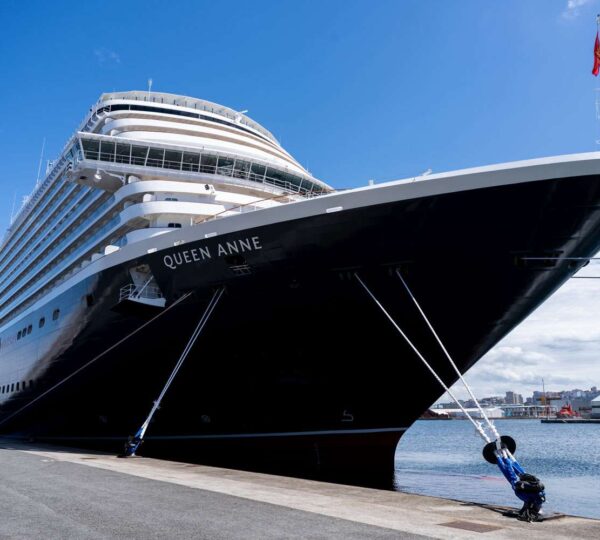
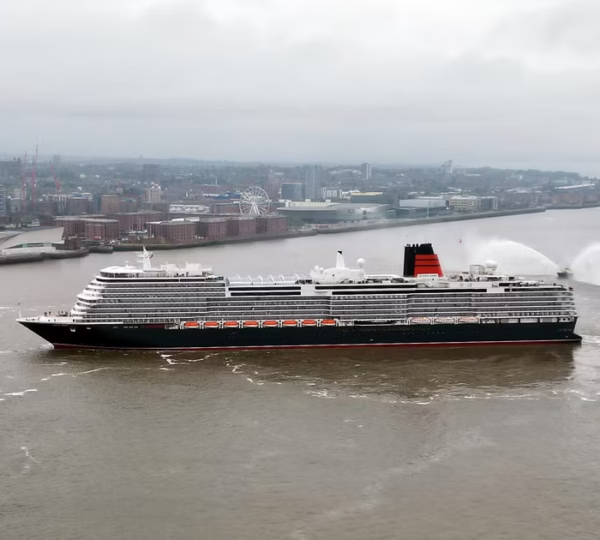
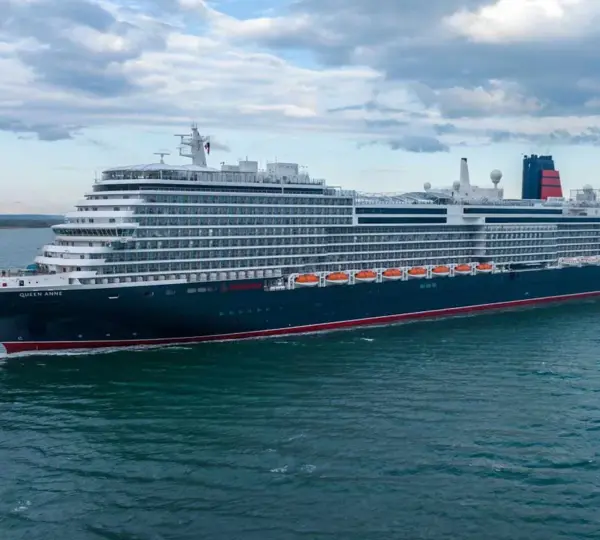
Launched by Cunard, a cruise line with more than a century of seafaring history, the MS Queen Anne is one of the newest and most celebrated additions to the company’s fleet.
Designed to evoke both classic ocean liner elegance and modern amenities, she carries thousands of guests — nearly 3,000 passengers and more than 1,200 crew members — on a global itinerary that spans continents, cultures, and climates.
On a typical night aboard the Queen Anne, guests might enjoy:
Fine dining in opulent restaurants
Live music or theatre performances
Lounges with panoramic sea views
Quiet strolls under starlit skies
This was the dream: a journey of discovery, comfort, and sea‑borne escape. But that all changed with a matter‑of‑fact announcement over the ship’s broadcast system on a calm evening in the Sulu‑Celebes Sea.
The Unexpected Announcement
As night fell, passengers were gathering for dinner, dancing, or quiet conversation when a voice came over the loudspeaker with unusual instructions: “Cabin lights are to be turned off, curtains drawn, and external decks closed for the night.”
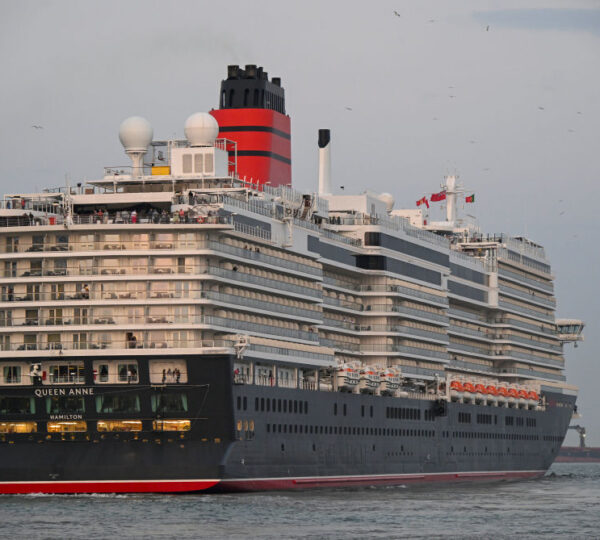
The captain explained that the ship had entered waters historically associated with piracy and maritime crime — specifically the Sulu and Celebes Seas between Indonesia, Malaysia, and the Philippines.
This region, an important crossroads of international shipping, has a long history of piracy and kidnapping‑for‑ransom incidents.
While attacks have significantly declined in recent years and no abductions have been reported since 2020, the threat level had only recently been downgraded to “low” as of January 2025 by maritime security monitoring groups. However, the legacy of past incidents still influences maritime precautions today.
Why the Precautions? The Maritime Context
Piracy isn’t just a relic of history books — it remains a very real concern in specific sea lanes around the world. Regions like the Gulf of Aden, off the coast of Somalia, and parts of Southeast Asia have seen significant pirate and militant activity over the past few decades.
The waters between Indonesia and the Philippines, in particular, were once notorious for kidnappings and armed robberies at sea.
Groups such as the Abu Sayyaf Group, a militant organization based in the southern Philippines, were historically responsible for numerous maritime abductions and ransom situations that drew international attention.
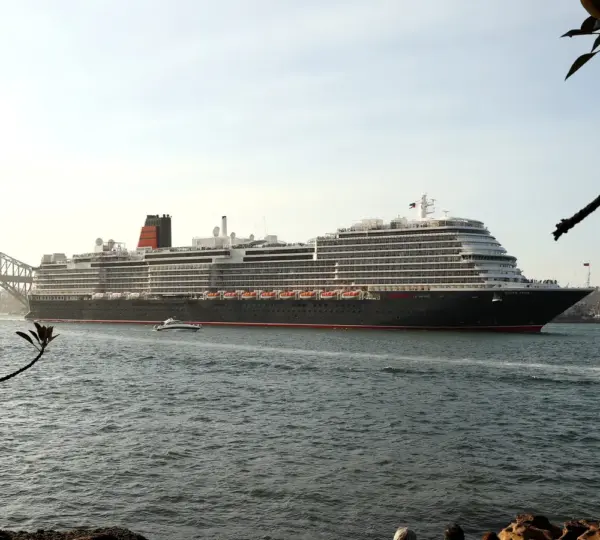
Although international naval patrols, cooperation between neighboring nations, and enhanced security protocols have reduced these incidents dramatically in recent years, the maritime community still treats certain waters as higher risk.
Ships navigating these zones — especially slower or smaller vessels — have traditionally employed heightened vigilance: varying routes, sailing through daylight when possible, and following stringent visibility protocols to make themselves less noticeable at night.
For the Queen Anne, one of the safest large cruise ships afloat, these conditions called for extra care.
A Night in the Dark
Passengers captured the moment on video, and clips from onboard quickly circulated online — including footage where the quiet hum of normal cruise life gave way to scenes of dim hallways and curtains drawn tight against the darkness outside.
In many cabins, guests complied with the instructions enthusiastically, while others recorded the eerie contrast between the ship’s normally bright interior and the blackened exterior views.
External promenade decks were officially closed between 9 p.m. and 5 a.m., with only essential lighting permitted for safety — a measure meant to reduce the ship’s nighttime visibility and thus reduce any potential attention.
Guests were told that if an emergency were to occur, they would be directed to their staterooms or designated secure zones by crew members.
Crew members also reportedly prepared measures such as pressurized fire hoses and water cannons on outer decks — not for use against pirates directly, but as standard deterrence equipment and part of established safety protocols for high‑risk maritime zones.
The captain’s tone was steady and reassuring, and no immediate threat was identified at any point. “The safety and security of everyone aboard is my highest priority,” he emphasized, making clear that these steps were precautionary rather than a response to specific intelligence.
Modern Piracy: What’s Real and What’s Not
Despite the unsettling atmosphere of that evening, experts — including Cunard officials — have stressed that pirate attacks on large cruise ships are extremely rare.
Modern cruise vessels are massive, highly visible, and equipped with advanced radar, communication systems, and onboard security.
These factors make them less appealing targets compared to smaller commercial cargo or oil tankers, which often carry valuable cargo but have fewer defensive capabilities.
Historically, most piracy in the 21st century has focused on commercial shipping — not passenger liners — especially in areas like:
The Gulf of Aden and waters off the Horn of Africa
Parts of West Africa’s Gulf of Guinea
Certain Southeast Asian archipelagos
Incidents where pirates have approached or attempted to board larger vessels are documented but rare, and are almost always met with coordinated naval patrols or onboard defensive actions.
Passenger Reactions and Viral Clips
Video footage and social media posts from passengers chronicled a range of reactions. Some were startled or nervous, reacting to the unexpected shift from luxury cruising to a “blackout at sea.”
Others took it in stride, posting humorous and reflective takes about “pirate night” aboard a luxury ship.
Comments on social platforms ranged from surprise and curiosity to knowledgeable remarks from seasoned cruisers who noted that similar procedures have been used elsewhere as part of standard maritime practice in areas with known risks. These range from increased vigilance and radar watch to nighttime lighting protocols.
One passenger who posted a widely viewed clip mentioned that security procedures appeared well managed, and that despite the unusual precautions the overall cruise experience remained uninterrupted.
What This Means for Future Cruises
The Queen Anne’s precautionary measures were adhered to only for a specific segment of the voyage and did not impact the cruise’s broader itinerary or safety record.
Once the ship exited the high‑risk area, regular lighting and access to decks resumed, and the voyage continued as planned.
For many travelers, the episode served as a reminder of two important facts about modern cruising:
The world’s seas are not uniformly risk‑free. Certain maritime regions — whether due to geography, economics, or historical patterns — require vigilance.
Large cruise liners are well‑prepared. Advanced safety protocols, coordination with international maritime authorities, and onboard security systems contribute to a very low likelihood of piracy impacting passengers.
Cunard itself stated that such announcements are standard maritime procedures when sailing through specific regions, and that the likelihood of an incident involving piracy was “extremely low” during this transit.
Conclusion: Beauty, Mystery, and the Reality of the Seas
That night aboard the Queen Anne will likely be remembered by passengers for years — not because of danger, but because it juxtaposed the luxury of a world cruise with the reality of seafaring caution.
The scene of darkened decks, drawn curtains, and whispered commentary from cabins underscored a truth few think about while booking their dreams: the ocean is vast, beautiful, and unpredictable.
For many, this blend of wonder and vigilance became part of the voyage’s story — a reminder that even in the most luxurious journeys, the world’s inherent complexity can bring moments of tension alongside moments of delight.
And in this case, with professionalism and preparation, the Queen Anne navigated through both with calm and care.
